 Pin It
 There's something about standing in front of an open fridge on a warm afternoon, surrounded by the smell of sesame and ginger, that makes you want to create something cold and satisfying. I discovered this noodle salad during one of those 'what do I have on hand' moments—some leftover edamame, a bunch of carrots that needed using, and a jar of tahini that had been calling to me. What started as a practical lunch became the thing I now make whenever I want something that tastes like it took effort but really didn't.
I remember bringing a big bowl of this to a potluck on a sweltering July evening, and watching people go back for seconds while barely looking at the other salads. My friend Sarah asked for the recipe right there, standing by the drinks cooler, and she's been making her own version ever since—she adds peanuts, I add cashews, and somehow we both think ours is better. That's the thing about this salad: it's forgiving enough to make it your own, but reliable enough that it always works.
Ingredients
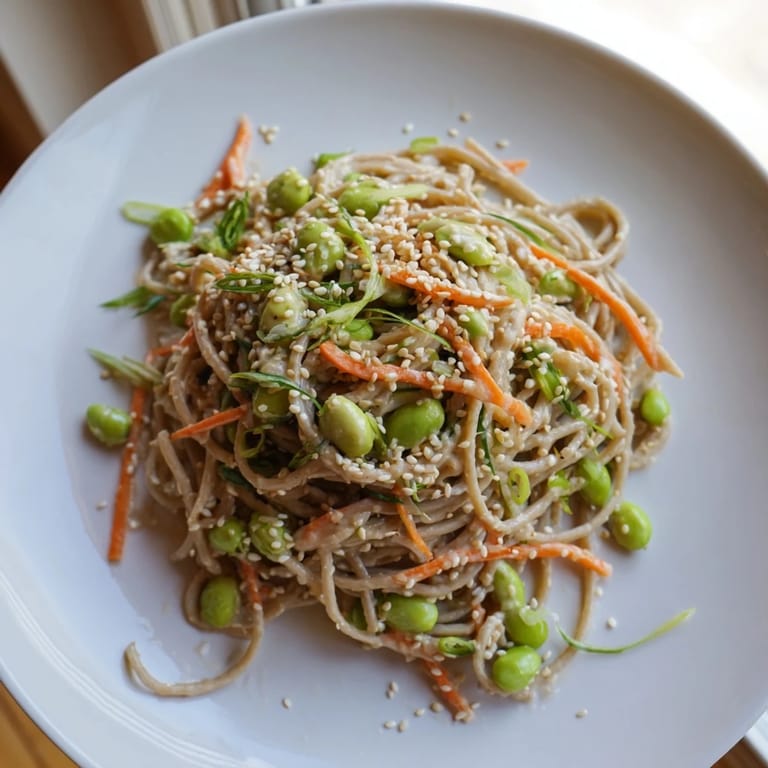
- Soba noodles or thin spaghetti (250 g): Soba has that nutty flavor that pairs beautifully with sesame, but honestly, any thin noodle works—I've used rice noodles when I needed gluten-free and the result was just as good.
- Cucumber, julienned: The crunch matters here; it keeps the whole dish from feeling heavy and one-note.
- Carrots, julienned: Their natural sweetness balances the savory dressing, plus they hold up better than other vegetables if you're making this a day ahead.
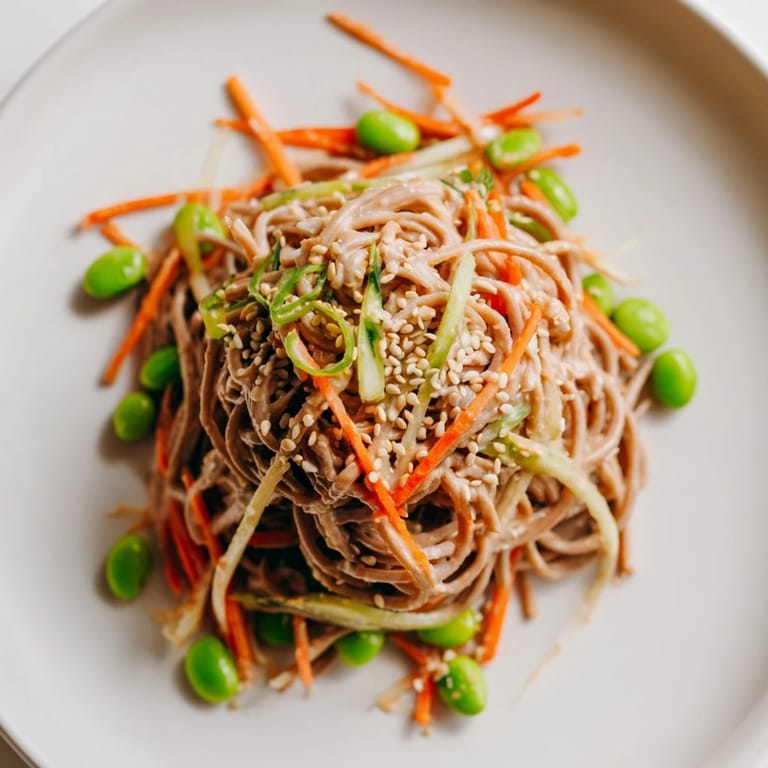
- Edamame (1 cup, cooked and cooled): This adds protein and a pop of color—buy them already shelled from the frozen section if you want to save 15 minutes.
- Spring onions, thinly sliced: These go in at the end so they stay bright and sharp; add them too early and they soften into the dressing.
- Toasted sesame seeds (2 tbsp): Toast them yourself if you can—the smell alone is worth it, and homemade toasted seeds have more flavor than the pre-toasted ones.
- Tahini or toasted sesame paste (3 tbsp): This is the backbone of your dressing; toasted sesame paste is richer if you can find it, but tahini works beautifully too.
- Soy sauce or tamari (2 tbsp): Use tamari if you need gluten-free, and don't skip the good stuff—the salty-umami foundation matters.
- Rice vinegar (1 tbsp): This gives brightness without being too sharp; regular vinegar will overpower the delicate flavors.
- Toasted sesame oil (1 tbsp): A little goes a long way here—the flavor is intense and wonderful.
- Honey or maple syrup (1 tbsp): Just enough to round out the flavors; too much and the dressing becomes candy.
- Fresh ginger and garlic: These should be freshly grated and minced—jarred versions work in a pinch, but fresh makes a real difference in how alive the dish tastes.
- Water (2-3 tbsp): You'll adjust this depending on how thick your tahini is and how much dressing you like on your noodles.
Tired of Takeout? 🥡
Get 10 meals you can make faster than delivery arrives. Seriously.
One email. No spam. Unsubscribe anytime.
Instructions
- Cook the noodles until just tender:
- Boil them according to the package instructions, then drain and rinse under cold water—this stops them from cooking further and gets them refreshingly cool. Let them sit for a few minutes so they finish cooling completely.
- Whisk your dressing into silky submission:
- In a large bowl, combine the tahini, soy sauce, rice vinegar, sesame oil, honey, ginger, and garlic. The tahini will look thick and suspicious at first, but keep whisking and it'll become creamy. Add water gradually until it reaches a pourable consistency—think salad dressing, not peanut butter.
- Bring everything together gently:
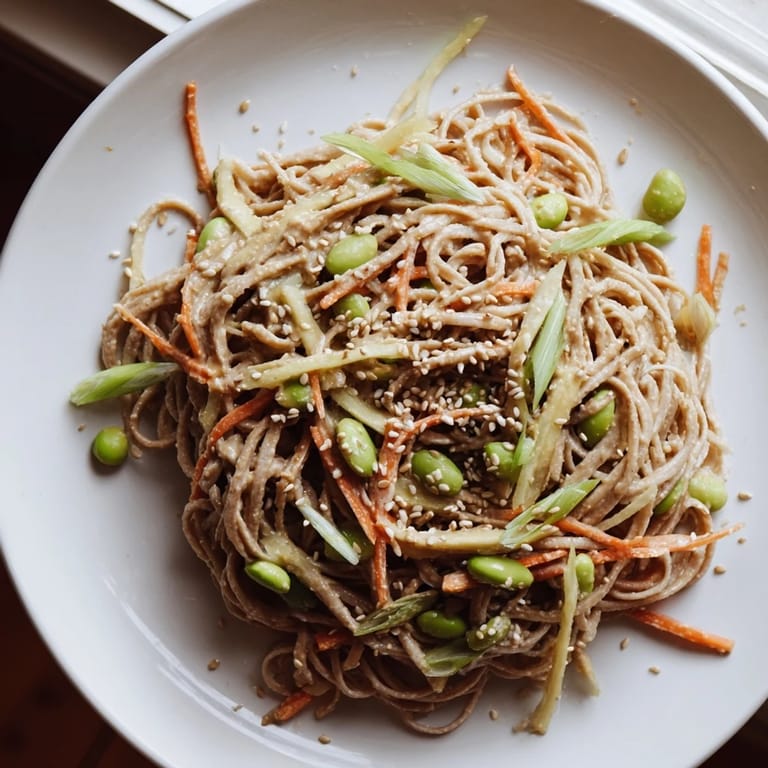
- Add the cooled noodles, cucumber, carrots, and edamame to the bowl and toss everything with the dressing. Use a light hand; this isn't about aggressive mixing, just making sure every noodle gets coated.
- Top with the finishing touches:
- Scatter the spring onions and toasted sesame seeds across the top. This is when you add any optional garnishes—cilantro, mint, peanuts, cashews, or lime wedges, depending on what you're craving.
- Let it chill and marry together:
- Give it at least 10 minutes in the fridge before serving. The flavors mellow and blend beautifully during this time, and the cold brings out a refreshing quality that warm noodles don't quite deliver.
 Pin It
 I made this salad for my partner one night when they were overwhelmed with work stress, and somehow a cold bowl of noodles and the fact that I'd remembered to toast the sesame seeds made everything feel a little less heavy. It's one of those dishes that reminds me why I cook—not because anyone's asking, but because feeding someone something thoughtful is its own kind of love.
How to Make This Your Own
The beauty of this salad is that it adapts to whatever you have in your kitchen or whatever sounds good that day. Swap the cucumber for thinly sliced bell peppers or radishes if you want a different crunch, add shredded cooked chicken or crumbled baked tofu for more protein, or throw in some finely shredded purple cabbage for earthiness and color. The sesame dressing is forgiving enough to work with almost any vegetable combination, so don't feel locked into my version.
Serving and Pairing Ideas
This salad works beautifully as a light lunch on its own, or as a side dish next to grilled fish, roasted chicken, or crispy tofu. It's also ideal for meal prepping because it actually tastes better the next day as the flavors settle. If you're thinking about drinks, a crisp white wine like Sauvignon Blanc or even a cold beer cuts through the richness of the sesame dressing perfectly.
The Dressing Secret and Make-Ahead Tips
The dressing is honestly where all the magic happens—it's creamy without cream, nutty without being heavy, and it comes together in less than two minutes if you have the ingredients ready. I like to make extra dressing and keep it in a jar in the fridge because it works just as well on roasted vegetables or grain bowls later in the week. If you're making this salad ahead of time, keep the dressing separate from the noodles and vegetables until just before serving, otherwise the noodles will absorb all the liquid and the salad will taste a bit dry by the next day—unless that's exactly how you like it, in which case, do your thing.
- Store leftover dressing in an airtight jar for up to five days and use it on literally anything.
- If the noodles sit in the fridge overnight, you can add a splash of water when you're ready to eat and toss everything again to freshen it up.
- The sesame seeds stay crunchiest if you add them right before serving, but honestly, slightly softened sesame seeds are still delicious.
 Pin It
 This is the kind of salad that feeds you and makes you feel good about what you're eating, all at the same time. Keep it simple or go wild with toppings—either way, it's a win.
Recipe FAQs
- → What noodles work best in this salad?
Soba noodles or thin spaghetti provide ideal texture and absorb the sesame dressing well. Rice noodles can be used for a gluten-free option.
- → How is the sesame dressing prepared?
The dressing combines tahini, soy sauce, rice vinegar, toasted sesame oil, honey, ginger, and garlic whisked with water to a smooth consistency.
- → Can this dish be served warm?
It's best served chilled to enhance the refreshing crispness of the vegetables and the creamy dressing.
- → What garnishes complement the salad?
Fresh cilantro or mint leaves, crushed peanuts or cashews, and lime wedges add vibrant flavor and texture contrasts.
- → How can protein be added to the dish?
Adding shredded cooked chicken or tofu increases protein content without altering the dish's freshness.