 Pin It
 There's something about assembling a bowl that feels less like cooking and more like creating art on a plate. I discovered this Mediterranean Buddha Bowl during a particularly hot summer when the thought of standing over a stove felt unbearable, yet I craved something that tasted vibrant and alive. The beauty of it is how each ingredient shines on its own while somehow becoming greater together—kind of like a well-functioning dinner table full of different personalities. What started as a way to use up roasted vegetables in my fridge became my go-to answer whenever someone asked what I was making for lunch. Now, it's the first thing I suggest to friends tired of the same rotation.
I made this for my sister during one of her visits, and watching her mix the hummus with the yogurt and feta into her own unique dressing taught me that the best recipes are the ones people make their own. She added way more lemon than I would have, and somehow it was exactly right for her version. That's when I realized this bowl isn't really about following a formula—it's about giving yourself permission to play.
Ingredients
- Quinoa (1 cup, rinsed): This grain has a subtle, slightly nutty flavor and cooks fluffy if you remember to rinse it first—something I skipped once and regretted the chalky texture.
- Water (2 cups): Use filtered or good-quality water since it directly affects the quinoa's final taste.
- Zucchini (1 medium, chopped): Cut into roughly the same size pieces so everything roasts evenly and develops that beautiful golden edge.
- Red bell pepper (1, chopped): The sweetness it brings becomes even more pronounced when roasted; don't skip this one.
- Red onion (1 small, sliced): It mellows when roasted and adds a subtle sweetness that balances the other flavors.
- Cherry tomatoes (1 cup, halved): These burst slightly in the oven and create little pockets of concentrated flavor throughout the bowl.
- Olive oil (2 tablespoons): Use a good quality oil since it's a main flavor player here, not just a cooking medium.
- Dried oregano (1/2 teaspoon): This is what makes it feel Mediterranean; don't substitute with Italian seasoning.
- Ground cumin (1/2 teaspoon): It adds warmth and earthiness that ties everything together.
- Salt and black pepper: Season in layers—on the vegetables before roasting, then taste and adjust again at the end.
- Canned chickpeas (1 can, 15 oz, drained and rinsed): Draining and rinsing removes excess sodium and the starchy liquid that can make them gummy.
- Kalamata olives (1/2 cup, pitted and halved): These briny gems are essential; they provide umami depth that elevates the whole bowl.
- Hummus (1/2 cup): Homemade is wonderful if you have time, but good store-bought works beautifully too.
- Greek yogurt (1/2 cup): It acts as a cooling agent and adds creaminess without heaviness.
- Feta cheese (1/2 cup, crumbled): The tanginess is crucial; it's what makes people taste this bowl and immediately say it's special.
- Fresh parsley (1/4 cup, chopped): Added at the very end so it stays bright and herbaceous rather than wilting into obscurity.
- Lemon wedges: These are not optional—squeeze them over your bowl just before eating for acidity that makes everything pop.
Tired of Takeout? 🥡
Get 10 meals you can make faster than delivery arrives. Seriously.
One email. No spam. Unsubscribe anytime.
Instructions
- Heat your oven and prepare the vegetables:
- Turn your oven to 425°F and spread out your chopped zucchini, bell pepper, onion, and tomatoes on a baking sheet in a single layer. You want them to have room to roast, not steam, so don't overcrowd the pan.
- Season and roast:
- Drizzle everything with olive oil and sprinkle on the oregano, cumin, salt, and pepper, then toss with your hands until every piece glistens. Roast for 20-25 minutes, stirring halfway through, until the edges start to caramelize and char slightly—this is where the magic happens.
- Start the quinoa while vegetables roast:
- Rinse your quinoa under cold water (this removes the bitter coating) and combine it with 2 cups of fresh water in a saucepan. Bring it to a boil, then reduce the heat to low, cover, and let it simmer quietly for 15 minutes.
- Rest the quinoa:
- Remove the pan from heat and let it sit covered for 5 minutes—this finishing step lets the grains absorb any remaining liquid and become tender. Fluff it gently with a fork before dividing it among your bowls.
- Warm the chickpeas:
- While the vegetables finish roasting, add your drained chickpeas to a small skillet over medium heat for just 2-3 minutes, stirring occasionally. A light seasoning of salt brings out their nuttiness.
- Assemble your bowls:
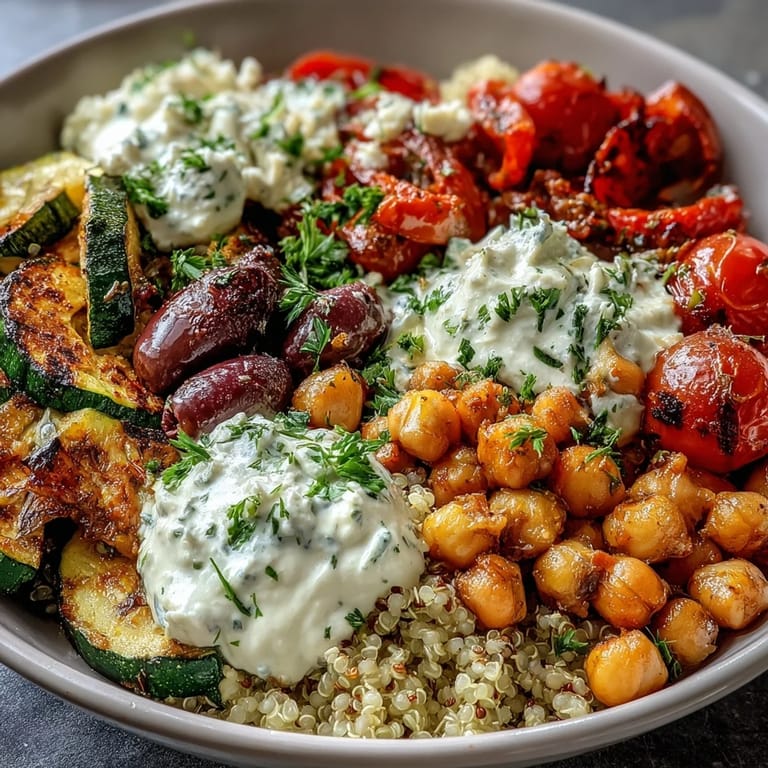
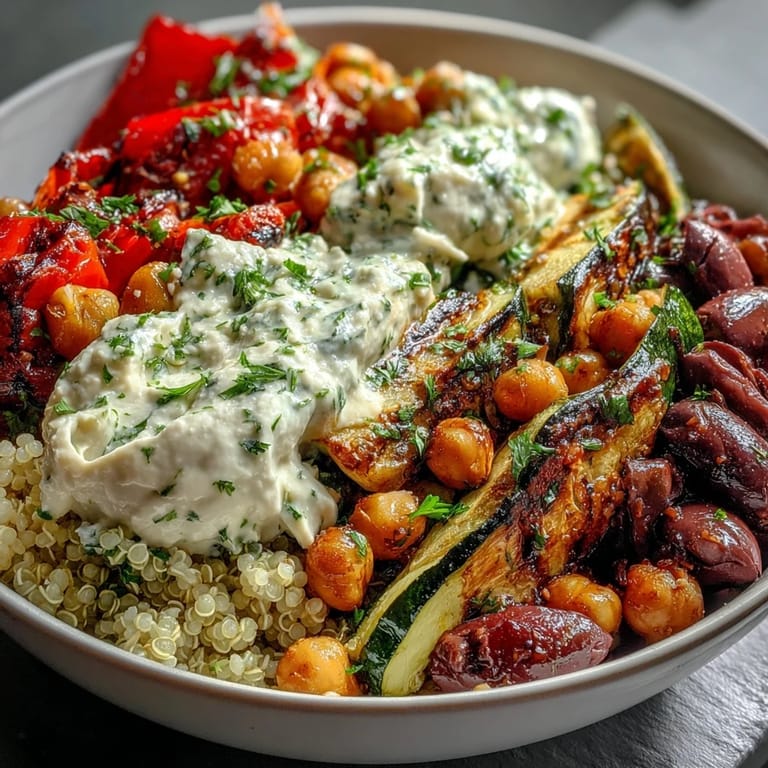
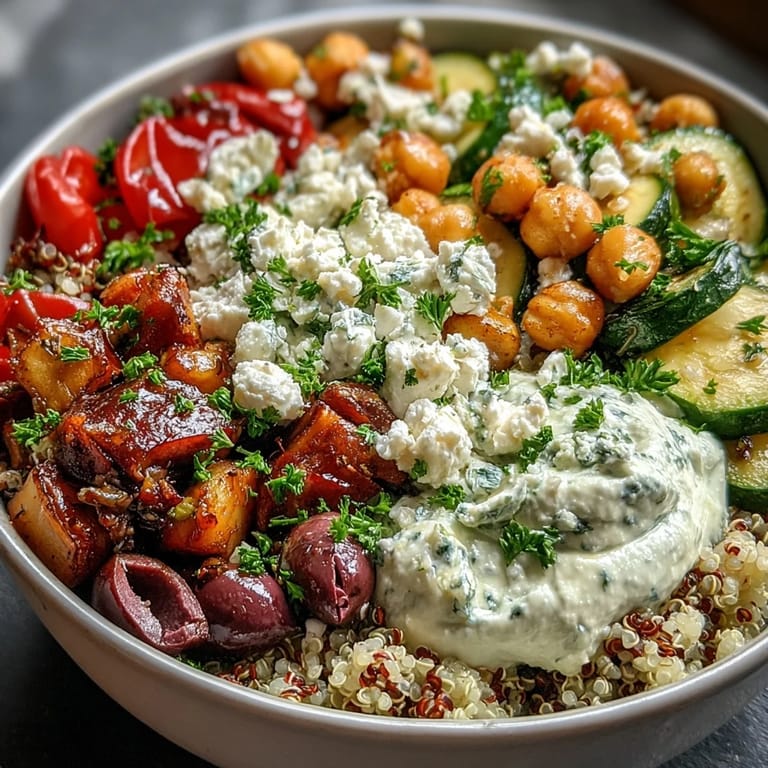
- Divide the fluffy quinoa among four bowls as your foundation, then arrange the roasted vegetables, warm chickpeas, olives, hummus, Greek yogurt, and crumbled feta around it like you're creating something beautiful. Leave room for the garnish and squeeze of lemon.
- Finish and serve:
- Scatter the fresh parsley over the top and place a lemon wedge on the side of each bowl. Encourage whoever is eating it to squeeze that lemon over everything—it's the final touch that brings all these flavors into focus.
 Pin It
 I'll never forget when my nephew, a picky eater by every definition, asked for seconds of this bowl and then a third helping. His mother and I exchanged that knowing glance—sometimes good food doesn't require convincing, it just requires presence on the plate.
How to Make This Your Own
The architecture of this bowl is flexible, and that's its greatest strength. I've made it with roasted sweet potatoes instead of zucchini on cooler days, and it shifted the entire flavor profile into something more autumnal and comforting. My neighbor swears by adding crispy chickpeas instead of warm ones—she tosses them in olive oil, paprika, and salt, then roasts them alongside the vegetables until they're crunchy enough to sound like they're breaking in your mouth. The hummus and Greek yogurt combination can be thinned with lemon juice to create a dressing rather than dollops, and honestly, once you try it that way, you might never go back.
The Protein Question
While the chickpeas and combined dairy provide substantial protein for a vegetarian bowl, this is actually the perfect canvas for additions if you want something more substantial. Grilled chicken thighs hold up beautifully here without drying out, and if you're near the ocean, shrimp takes on the Mediterranean flavors like it was made for this moment. A poached egg would bring richness and that golden yolk as a natural sauce—I've done this on mornings when I wanted breakfast to feel less ordinary.
Storage and Make-Ahead Strategy
The beauty of this bowl is that almost everything can be prepared in advance, making it ideal for busy weeks or meal prep days. I typically roast the vegetables the night before and store them in an airtight container, cook the quinoa in a batch, and keep the chickpeas warm just before assembly. The only thing I never do ahead is crumble the feta or scatter the fresh parsley—these need to stay crisp and bright, and they'll thank you for the last-minute timing.
- Store roasted vegetables and cooked quinoa separately for up to five days, and assemble fresh when hunger strikes.
- If you do assemble the whole bowl ahead, keep the dressing (hummus and yogurt) separate and add it just before eating so the bowl doesn't become soggy.
- The lemon wedge is non-negotiable—serve it on the side and squeeze it in right before the first bite for maximum impact.
 Pin It
 This bowl has become my answer to so many questions—what's for dinner, what can I bring to a potluck, how do I feed people with different dietary needs at the same table. It's nourishing without feeling austere, flavorful without being heavy, and somehow it makes you feel like you're eating something special even on an ordinary Tuesday.
Recipe FAQs
- → Can I make this bowl ahead of time?
Yes, prepare components in advance. Store quinoa, roasted vegetables, and chickpeas separately in airtight containers for up to 4 days. Assemble bowls fresh and add toppings before serving.
- → What vegetables work best for roasting?
Zucchini, red bell pepper, red onion, and cherry tomatoes are ideal. They roast beautifully at 425°F, becoming tender and slightly caramelized while maintaining their structure.
- → How can I add more protein?
Grilled chicken, shrimp, or extra chickpeas boost protein content. For plant-based options, add lentils or tofu cubes when roasting vegetables.
- → What grain alternatives can I use?
Farro, brown rice, or couscous work well as substitutes. Adjust cooking time accordingly—farro takes about 30 minutes, while couscous cooks in just 5 minutes.
- → Is this suitable for meal prep?
Absolutely. Portion components into separate containers. Reheat quinoa and vegetables gently, then top with fresh hummus, yogurt, feta, and parsley when ready to eat.