 Pin It
 My first proper bowl of miso soup came on a grey Tokyo morning when I was too tired to think, sitting at a tiny counter while steam rose from a ceramic cup. The shop owner—who barely spoke English—just slid it across without asking, as if she knew exactly what I needed. Years later, I realized she'd given me more than breakfast; she'd shown me how something this simple, made with just a handful of ingredients, could feel like a complete comfort. Now when I make it at home, that same magic happens in my own kitchen, and it takes maybe twenty minutes from start to finish.
I made this for my roommate once when she came home stressed about work, and she sat at our kitchen table just breathing in the steam without saying anything. After two spoonfuls, her shoulders dropped. That's when I understood why this soup shows up in Japanese homes during illness, celebration, and every ordinary Tuesday in between.
Ingredients
- Dashi stock (4 cups): This fragrant, delicate broth is the soul of the soup; vegetarian dashi made from kombu seaweed and shiitake mushrooms works beautifully if you want to skip fish entirely.
- White or yellow miso paste (3 tablespoons): Choose a miso that's mild and slightly sweet rather than aggressive, since you're not cooking it long; I've learned that whisking it into a cool spoon of broth first prevents lumps that can ruin the texture.
- Silken tofu (200 g): Cut it into half-inch cubes just before cooking so it doesn't absorb excess moisture and turn grainy; silken specifically, not firm, because you want that custard-like texture that barely holds its shape.
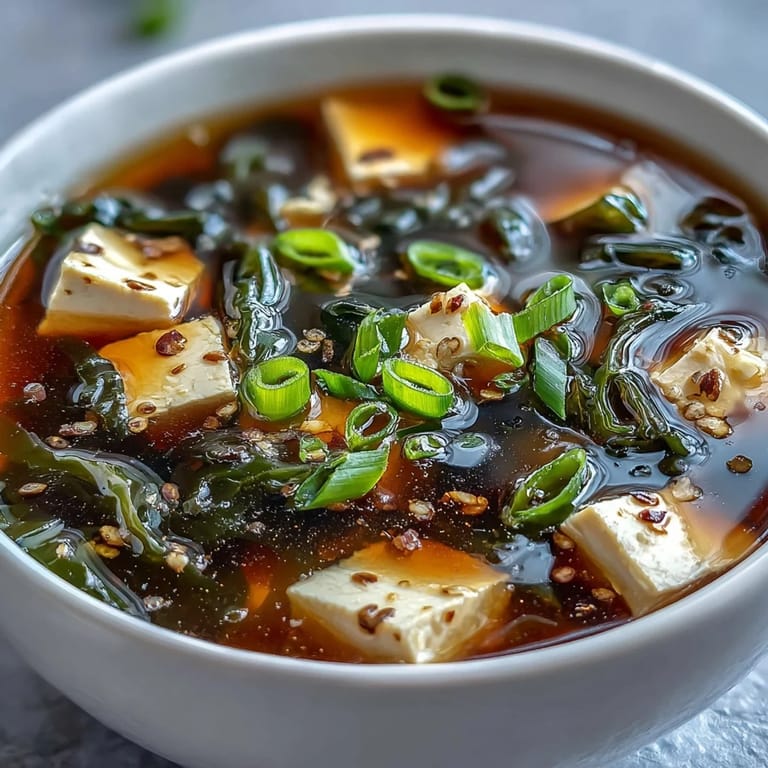
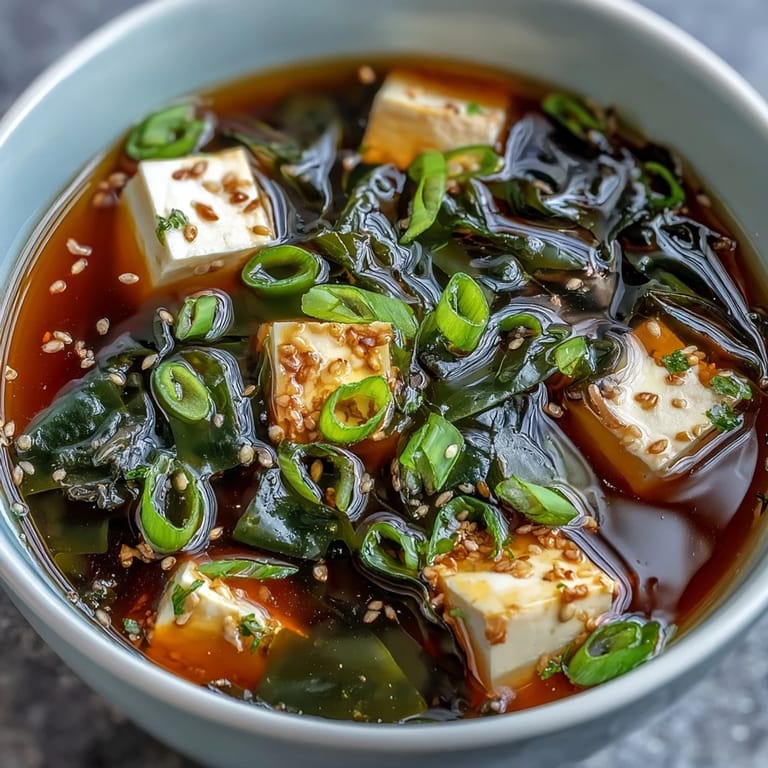
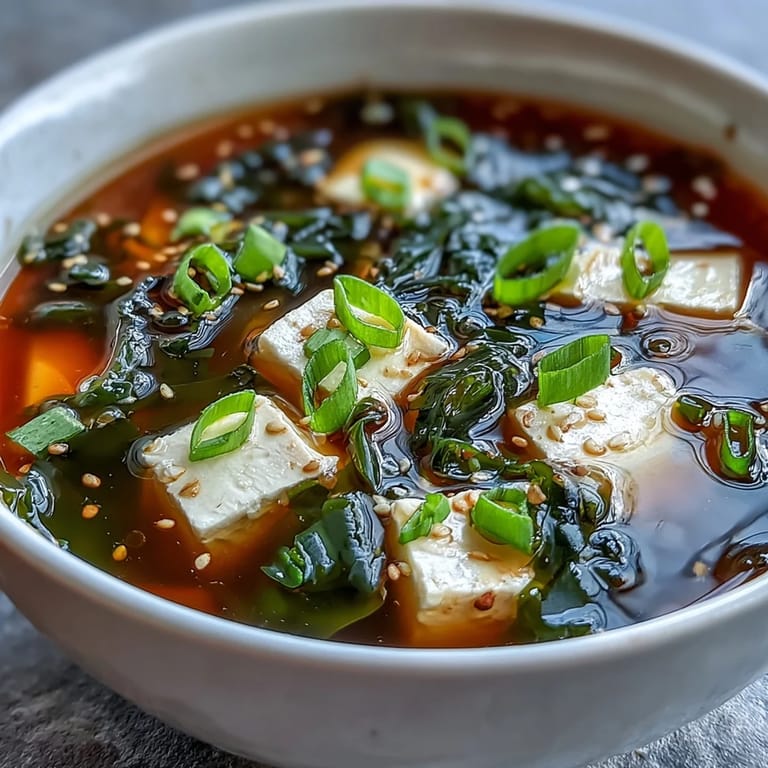
- Dried wakame seaweed (2 tablespoons): This unfurls into tender ribbons that add umami and a hint of ocean without overpowering; soaking it first makes it tender in seconds instead of sitting tough in hot liquid.
- Scallions (2, finely sliced): Add these only at the very end so they stay bright and sharp, bringing a whisper of freshness that cuts through the soup's richness.
Tired of Takeout? 🥡
Get 10 meals you can make faster than delivery arrives. Seriously.
One email. No spam. Unsubscribe anytime.
Instructions
- Warm your foundation gently:
- Pour the dashi into a medium saucepan and let it heat over medium until small bubbles dance across the bottom; you'll notice the aroma deepens as it warms, which is your signal things are moving in the right direction.
- Prepare the seaweed while you wait:
- Drop the dried wakame into cold water and set a timer for five minutes; it'll soften and double in size, ready to slip into the hot broth without any resistance.
- Create a smooth miso base:
- Scoop the miso paste into a small bowl and use a ladle to pull some of the hot broth into it, whisking gently until there are no lumps; this step is everything, because miso needs this introduction to heat rather than being dumped straight in, where it balls up.
- Layer in the delicate ingredients:
- Pour the miso mixture back into the simmering dashi and stir gently, then add the tofu cubes and drained wakame; let these warm for just two or three minutes, watching the tofu bob like little clouds rather than pressing or stirring aggressively.
- Honor the final moment:
- Pull the pot away from the heat the moment everything is warmed through, because boiling miso destroys the beneficial probiotics and flattens the flavor into something one-dimensional; this restraint is the difference between soup and something special.
- Finish with intention:
- Ladle the soup into waiting bowls and scatter the fresh scallions across the surface so they stay raw and bright; serve immediately while the steam is still rising.
 Pin It
 There's something almost sacred about how a bowl of miso soup can anchor your entire day. My grandmother used to say soup is where you put your intentions, and now I understand exactly what she meant.
When to Serve This
This soup belongs at the start of a Japanese meal, easing your palate and warming your belly before rice and other dishes arrive. But it's equally at home as a light lunch on a day when you need something nourishing without heaviness, or as a quiet dinner when you're cooking just for yourself. I've served it to friends feeling under the weather, and I've made it on Sunday mornings when nothing else seemed right.
Making It Your Own
The beauty of this soup is its flexibility within simplicity. Try blending white miso with a smaller spoonful of red miso for deeper complexity, or add thinly sliced mushrooms that will absorb the broth's flavor while staying tender. Fresh spinach wilts in seconds, and some people add a whisper of ginger or yuzu if they want brightness without changing the soul of the dish.
A Moment in the Kitchen
The most honest thing about miso soup is that it asks almost nothing of you and returns everything. It teaches you that some of the most satisfying food comes not from complexity but from respecting simple ingredients and knowing exactly when to stop. This is how you learn to cook intuitively—by making the same thing enough times to feel when it's right, to understand the language of steam and aroma instead of relying only on timers.
- If your dashi tastes thin, you might need kombu or shiitake brewed longer, not more miso paste stirred in at the end.
- Keep your miso paste in the refrigerator so it stays fresh and doesn't develop strange flavors over time.
- Always taste a small spoonful before serving so you can adjust the miso balance if needed, since different brands vary in saltiness.
 Pin It
 Making miso soup has become my way of saying I care—whether to myself on a difficult morning or to someone I love. It's proof that you don't need much time or fancy technique to make something that heals.
Recipe FAQs
- → What type of miso works best?
White or yellow miso paste offers a milder, sweeter flavor ideal for this soup. Red miso provides a deeper, more intense taste if preferred. For added complexity, blend both varieties together.
- → Why shouldn't I boil the miso?
Boiling miso paste destroys the beneficial probiotics and can create a gritty texture. Always dissolve it off the heat using hot broth, then stir it in gently just before serving.
- → Can I make this vegan?
Use vegetarian dashi made from kombu seaweed and dried shiitake mushrooms instead of traditional bonito flakes. Most miso pastes are naturally vegan, but always check labels to confirm.
- → How do I store leftovers?
Store in an airtight container in the refrigerator for up to 2 days. Reheat gently over low heat without boiling, and add fresh garnishes before serving. The tofu may become slightly softer after storage.
- → What vegetables can I add?
Thinly sliced shiitake mushrooms, baby spinach, chopped bok choy, or snow peas all complement the miso broth beautifully. Add heartier vegetables earlier in the simmering process.