 Pin It
 I was standing in my kitchen on a Tuesday night, exhausted and convinced I had nothing to make for dinner. Then I spotted eggs, a block of Parmesan, and some pancetta I'd forgotten about. Twenty minutes later, I was twirling the creamiest, most satisfying pasta I'd made in weeks. It wasn't planned, wasn't fancy, but it felt like a small victory. That's when I realized carbonara isn't about perfection, it's about transforming a few humble ingredients into something that tastes like you spent hours on it.
The first time I made this for my roommate, she wandered into the kitchen halfway through and asked what smelled so good. I handed her a fork straight from the pan, and she went quiet for a moment, then said it tasted like something her nonna would make. I'm not Italian, and I'd only just learned the trick of tempering eggs with pasta water, but that comment stuck with me. Food has a way of feeling like home even when it's brand new.
Ingredients
- Spaghetti or linguine: Use good quality pasta, it holds the sauce better and has a nicer chew when cooked al dente.
- Eggs: These create the creamy base, make sure they're room temperature so they blend smoothly without scrambling.
- Parmesan cheese: Freshly grated is non-negotiable here, the pre-shredded stuff won't melt the same way.
- Heavy cream: Not traditional, but it gives you a little insurance against scrambled eggs if you're nervous.
- Black pepper: Crack it fresh, the sharpness cuts through the richness and wakes up every bite.
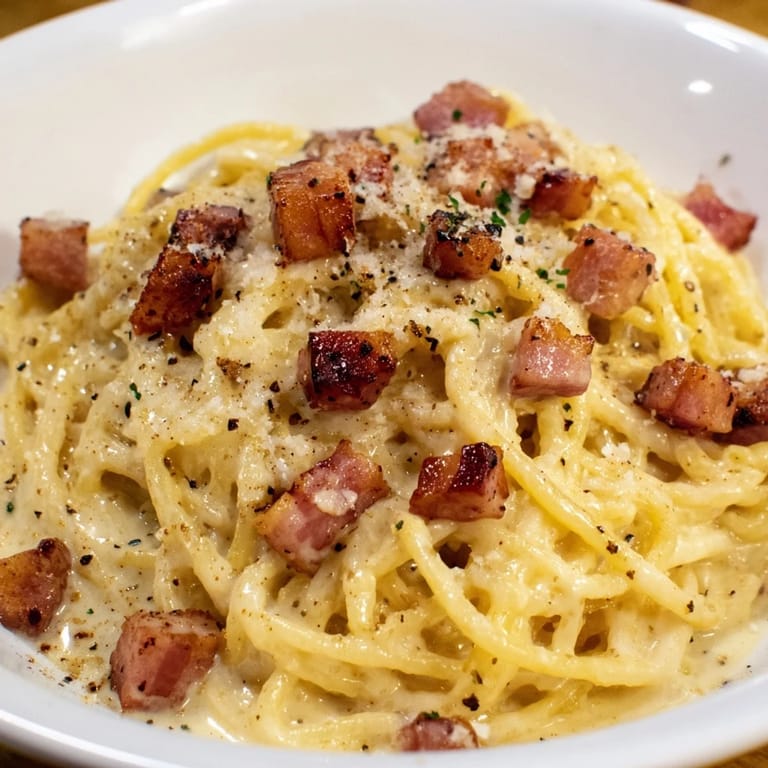
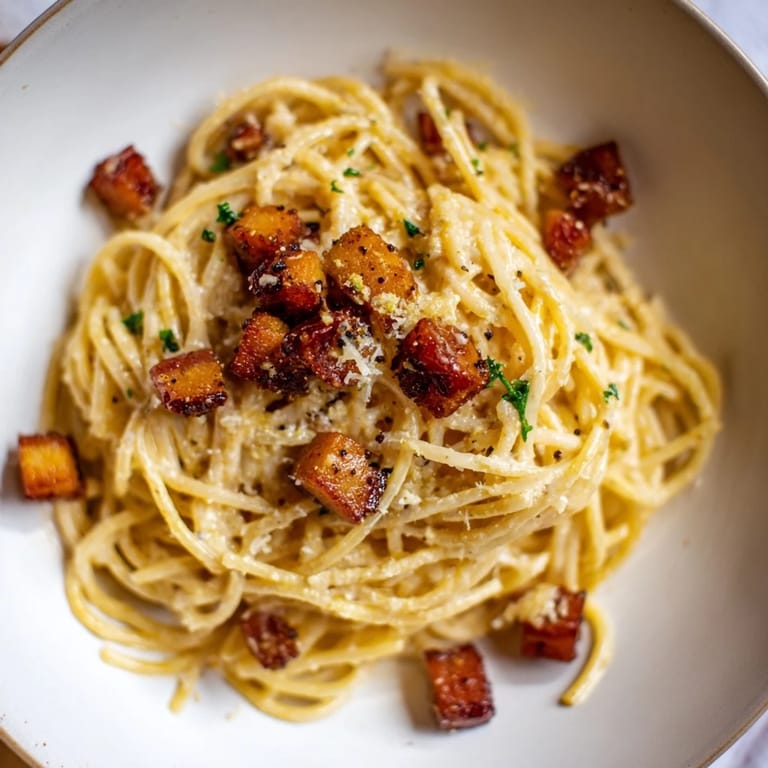
- Pancetta or guanciale: This is where the smoky, salty magic happens, cook it until the edges are crispy and golden.
Tired of Takeout? 🥡
Get 10 meals you can make faster than delivery arrives. Seriously.
One email. No spam. Unsubscribe anytime.
Instructions
- Boil the pasta:
- Get your water aggressively salted, it should taste like the sea. Cook the pasta just until it has a slight bite, then scoop out half a cup of that starchy water before draining.
- Crisp the pancetta:
- Let it sizzle in a dry skillet over medium heat, stirring now and then until the fat renders and the edges turn golden. The smell alone will make you hungry.
- Mix the sauce base:
- Whisk the eggs, Parmesan, cream, salt, and a generous amount of black pepper until it's completely smooth. This is your silky foundation.
- Toss the pasta with pancetta:
- Add the hot drained pasta directly into the skillet with the pancetta and toss it around so every strand gets coated in that rendered fat. Pull the skillet off the heat now.
- Create the creamy sauce:
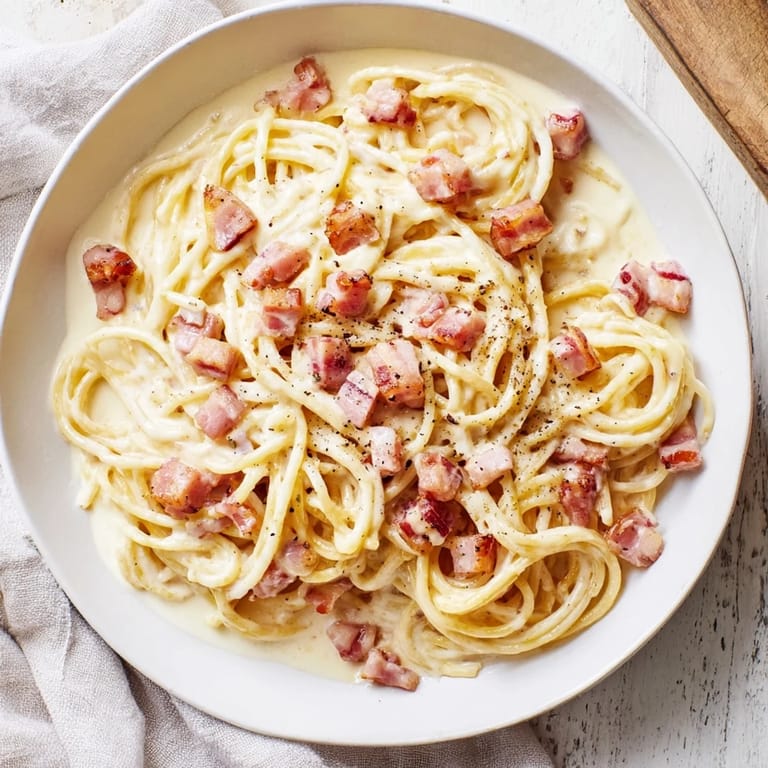
- Pour the egg mixture over the pasta and toss like your life depends on it, the residual heat will cook the eggs gently. Drizzle in the reserved pasta water a little at a time until the sauce turns glossy and clings to every noodle.
- Serve immediately:
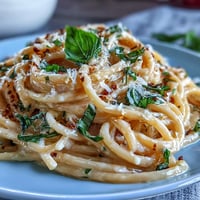
- Plate it up while it's still steaming, then shower it with extra Parmesan and a scattering of parsley if you have it.
 Pin It
 I remember making this late one night after a long shift, sitting on the kitchen floor with the bowl in my lap because I was too tired to move to the table. It tasted better than it had any right to, and I realized that sometimes the best meals aren't the ones you plan, they're the ones you throw together when you're running on empty and still manage to surprise yourself.
What to Do If the Sauce Gets Clumpy
If your sauce starts to look grainy or the eggs scramble a bit, don't panic. Immediately add a splash of the reserved pasta water and toss vigorously off the heat. The starch will help bring it back together, and honestly, even a slightly imperfect carbonara still tastes incredible. I've been there, and I've eaten every bite anyway.
How to Make It More Authentic
Traditionalists will tell you to skip the cream entirely and rely only on eggs, cheese, and pasta water for the sauce. I've made it both ways, and the no-cream version is lighter and more delicate, but it requires a little more confidence with your timing. If you're feeling brave, give it a try. If not, the cream version is still absolutely delicious and nothing to apologize for.
Storing and Reheating Leftovers
Carbonara is best eaten immediately, but if you have leftovers, store them in an airtight container in the fridge for up to two days. Reheat gently in a skillet over low heat with a splash of milk or cream to loosen the sauce, stirring constantly so it doesn't dry out. It won't be quite as silky as the first time, but it's still worth eating.
- Add a drizzle of olive oil when reheating to keep it from sticking.
- A handful of fresh arugula tossed in at the end brightens up day-old carbonara.
- If the sauce breaks, whisk in a tablespoon of warm water until it smooths out again.
 Pin It
 This is the kind of recipe that makes you feel capable, even on nights when you're running on fumes. It's fast, it's forgiving, and it never fails to make me feel like I've done something good for myself.
Recipe FAQs
- → What type of pasta works best for carbonara?
Spaghetti or linguine are ideal for coating the creamy sauce evenly and providing a classic texture.
- → Can I make carbonara without cream?
Yes, traditional carbonara uses only eggs and Parmesan for the sauce, making it lighter and more authentic.
- → How do I prevent the eggs from scrambling?
Remove the skillet from heat before adding the egg mixture and toss vigorously; the residual heat gently cooks the sauce.
- → Is pancetta essential in this dish?
Pancetta adds a savory, crisp element, but thick-cut bacon can be used as a substitute for similar flavor.
- → How can I adjust the sauce consistency?
Reserve some pasta water when draining and add little by little to reach a creamy, glossy texture.