 Pin It
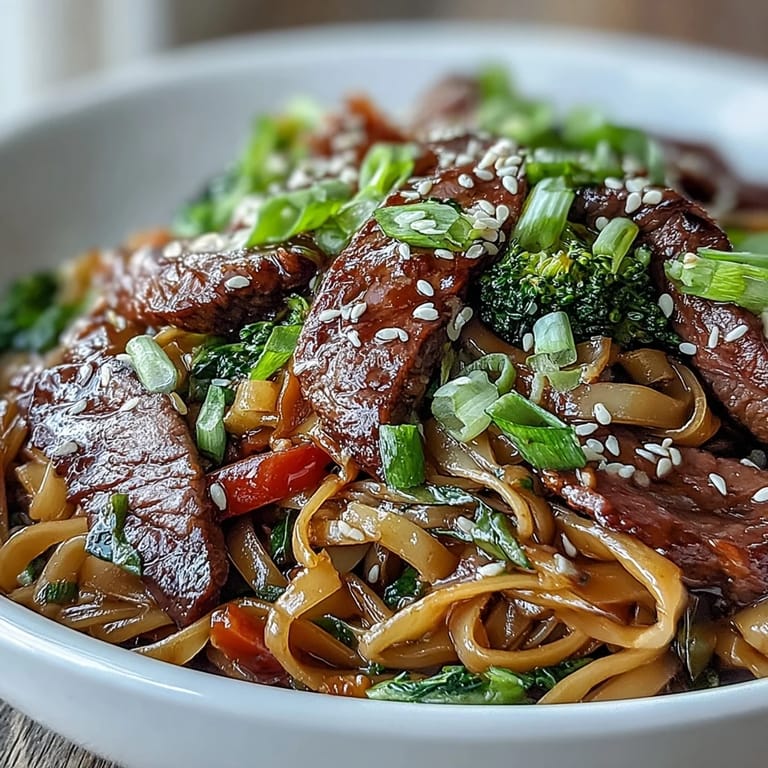
 My wok was still cold when I smelled the ginger from across the kitchen, sharp and clean, cutting through the afternoon heat. I'd bought flank steak on a whim that morning, remembering a noodle dish a coworker had described during lunch break, and suddenly I was slicing it thin, fingers dusty with cornstarch I hadn't even planned to use. The rice noodles sat in their package like a quiet dare. By the time the first sizzle hit the pan, I knew this was going to be one of those recipes that sticks around.
I made this for my sister on a Tuesday night when she was between jobs and needed something warm that didn't feel like leftovers. She stood at the counter, stealing pieces of bell pepper while I tossed the noodles, and we didn't talk much, just listened to the sizzle and the scrape of the spatula. When she asked for seconds, I knew it had done its job. It wasn't fancy, but it felt like care in a bowl.
Ingredients
- Rice noodles: These soften quickly and soak up sauce without getting mushy, but don't overcook them or they'll clump together in the skillet.
- Flank steak: Slicing it thin against the grain is the only way to keep it tender, and freezing it for 15 minutes before cutting makes the job so much easier.
- Broccoli florets: They add a satisfying crunch and hold up well under high heat, just make sure they're dry so they sear instead of steam.
- Bell pepper: Red or yellow brings sweetness and color, and slicing them into even strips means they cook at the same rate as the carrot.
- Carrot: Julienned carrots look elegant and cook fast, but if you're short on time, just use a peeler to make ribbons.
- Green onions: Chopped fresh right before serving, they add a bright, sharp finish that balances the richness of the sauce.
- Garlic: Minced fine so it blooms in the oil without burning, filling the kitchen with that unmistakable savory warmth.
- Ginger: Grated fresh releases more fragrance than the jarred stuff, and a little goes a long way in lifting the whole dish.
- Soy sauce: The backbone of the sauce, salty and deep, but use low sodium if you're sensitive to salt or the dish can tip over the edge.
- Brown sugar: Just enough to balance the soy without making it sweet, and it helps the sauce cling to the noodles in a glossy coat.
- Sesame oil: A teaspoon adds nutty depth, but don't cook with it alone or it'll taste bitter, always mix it into the sauce.
- Vegetable oil: High smoke point and neutral flavor, perfect for getting the skillet screaming hot without any off flavors.
- Sesame seeds: Toasted if you have them, they add a quiet crunch and make the bowl look finished.
Tired of Takeout? 🥡
Get 10 meals you can make faster than delivery arrives. Seriously.
One email. No spam. Unsubscribe anytime.
Instructions
- Soften the noodles:
- Cook the rice noodles according to the package directions, usually just a few minutes in boiling water until they're tender but still have a little chew. Drain them well and toss with a tiny drizzle of oil so they don't stick together while you work on everything else.
- Sear the beef:
- Heat the vegetable oil in a large skillet or wok over medium-high heat until it shimmers, then add the thinly sliced flank steak in a single layer. Let it sear undisturbed for about a minute before stirring, so it gets a nice brown crust, then cook another minute or two until just cooked through and remove it to a plate.
- Wake up the aromatics:
- In the same hot skillet, add the minced garlic and grated ginger, stirring constantly for about 30 seconds until the fragrance blooms and fills the kitchen. Don't let them brown or they'll turn bitter.
- Stir-fry the vegetables:
- Toss in the broccoli, bell pepper, and julienned carrot, stirring frequently so everything gets coated in the garlic-ginger oil. Cook for about 5 minutes, keeping the heat high so the vegetables stay crisp and pick up a little char on the edges.
- Mix the sauce:
- While the vegetables are cooking, whisk together the soy sauce, brown sugar, and sesame oil in a small bowl until the sugar dissolves completely. The sauce should look glossy and smell rich.
- Bring it all together:
- Return the beef to the skillet along with any juices that collected on the plate, then pour the sauce over everything and stir to coat. Add the cooked rice noodles and gently toss with tongs until every strand is coated and everything is heated through, about 2 minutes.
- Finish and serve:
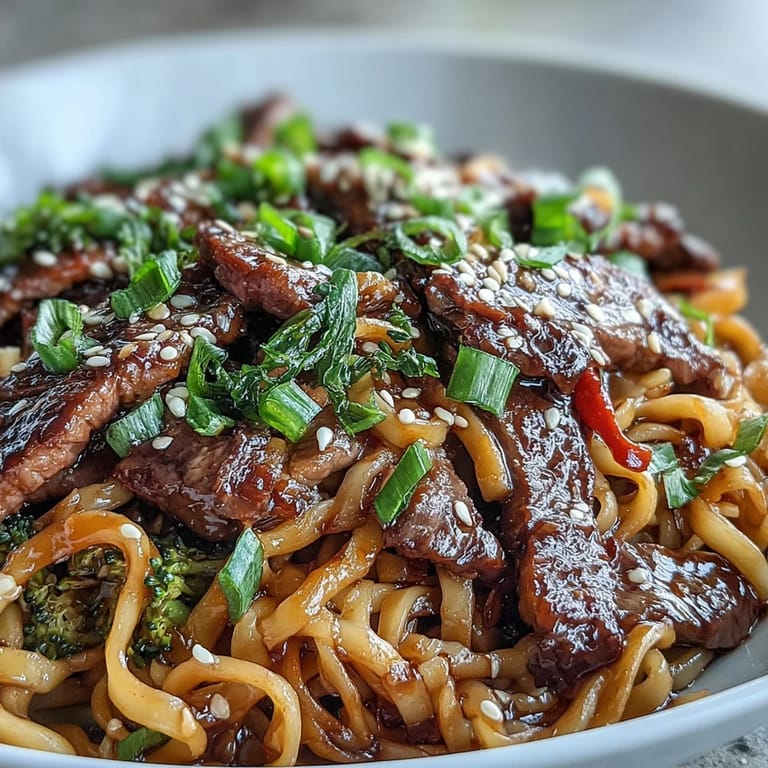
- Sprinkle the chopped green onions and sesame seeds over the top, then serve immediately while the noodles are still silky and the vegetables are bright. The garnishes add color and a fresh bite that wakes up every forkful.
 Pin It
 The first time I brought this to a potluck, someone asked if I'd ordered takeout and just transferred it to a nice bowl. I took it as a compliment. It tastes like the kind of dish you'd crave on a cold night or after a long day, something that feels indulgent but comes together fast enough that you don't resent the process. Now it's my go-to when I want to feel capable in the kitchen without breaking a sweat.
Customizing Your Bowl
You can swap in snap peas, zucchini, or even thinly sliced cabbage if that's what you have on hand, and the dish will still taste cohesive. If you want heat, stir a spoonful of gochujang or a few dashes of sriracha into the sauce before pouring it over the beef and vegetables. For a different protein, chicken thighs or firm tofu work just as well, though tofu benefits from a quick pan-fry to get the edges crispy before you toss it in. The recipe is flexible enough to handle whatever direction you want to take it.
Storing and Reheating
Leftovers keep in an airtight container in the fridge for up to three days, and honestly, the flavors deepen overnight as the noodles absorb more of the sauce. Reheat gently in a skillet over medium heat with a splash of water or broth to loosen everything up, stirring frequently so the noodles don't stick. The microwave works in a pinch, but the skillet gives you back some of that fresh-cooked texture. If the noodles seem dry, a drizzle of sesame oil or soy sauce brings them back to life.
Serving Suggestions
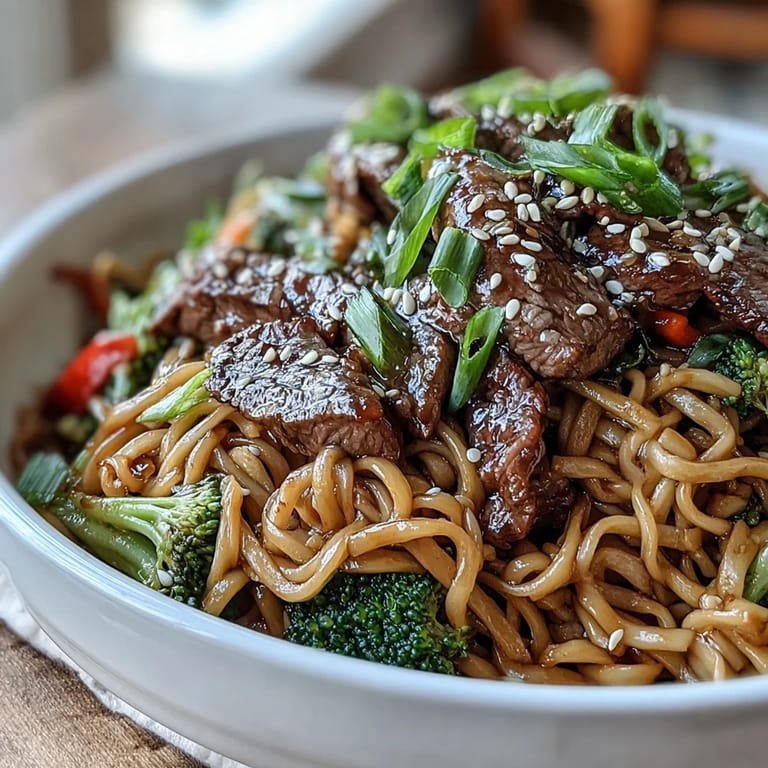
This dish is filling enough to stand alone, but sometimes I'll serve it with a simple cucumber salad dressed in rice vinegar and a pinch of sugar to cut through the richness. A cold beer or iced green tea on the side makes it feel like a complete meal, especially in warmer months. If you're feeding a crowd, double the recipe and serve it family-style in a big shallow bowl so everyone can dig in.
- Top with a fried egg for extra richness and a runny yolk that acts like an additional sauce.
- Serve alongside kimchi or pickled radishes for a tangy, crunchy contrast.
- Garnish with fresh cilantro or Thai basil if you want an herbal, aromatic finish.
 Pin It
 This is the kind of recipe that makes you look like you know what you're doing, even if you're winging half of it. Keep the ingredients simple, trust the heat, and don't overthink it.
Recipe FAQs
- → Can I use other proteins besides flank steak?
Yes, you can substitute sliced chicken breast, shrimp, or firm tofu. Adjust cooking times accordingly—chicken may need 4-5 minutes, shrimp cooks in 2-3 minutes, and tofu absorbs flavors beautifully when crisped first.
- → How do I prevent rice noodles from sticking?
Rinse cooked noodles under cold water to stop cooking and remove excess starch. Toss with a teaspoon of sesame oil before adding to the skillet. This keeps them separate and glossy.
- → What vegetables work best in this dish?
Beyond the suggested broccoli, bell peppers, and carrots, try snap peas, zucchini, bok choy, or shiitake mushrooms. Add quick-cooking vegetables last so they stay crisp-tender.
- → Can I make this spicy?
Absolutely. Stir in 1-2 teaspoons of gochujang or sriracha into the sauce, or add sliced Thai chilies during aromatics. Start with less and adjust to your heat preference.
- → How should I store leftovers?
Keep in an airtight container for up to 3 days. Reheat gently in a skillet with a splash of water or broth. Note that noodles will absorb more sauce over time, so you may want to add extra soy sauce when reheating.
- → Is this dish gluten-free?
Use certified gluten-free rice noodles and tamari instead of soy sauce. Check all ingredient labels, especially the sesame oil and garnishes, to ensure they're gluten-free.