 Pin It
 My aunt Zohra stood at her kitchen window in Algiers, steam rising from a massive pot, and told me that chorba was never really about following a recipe—it was about knowing when the house smelled right. That moment stuck with me for years, until I finally understood what she meant: the exact second when cumin and cinnamon dance together, when lamb has given everything to the broth, when you can taste home in a single spoonful. This soup arrived at our family table during winter, or after someone had been sick, or simply when the world felt too loud and we needed comfort in a bowl.
The first time I made this alone in my own kitchen, I burned the tomato paste—just for a moment—and panicked that the whole thing was ruined. But my neighbor, smelling that slightly caramelized undertone wafting through our shared hallway, knocked on my door and said it actually sounded perfect. She was right; that deeper note became the foundation everything else built on. Some of my favorite meals have started with tiny mistakes that turned into exactly what was needed.
Ingredients
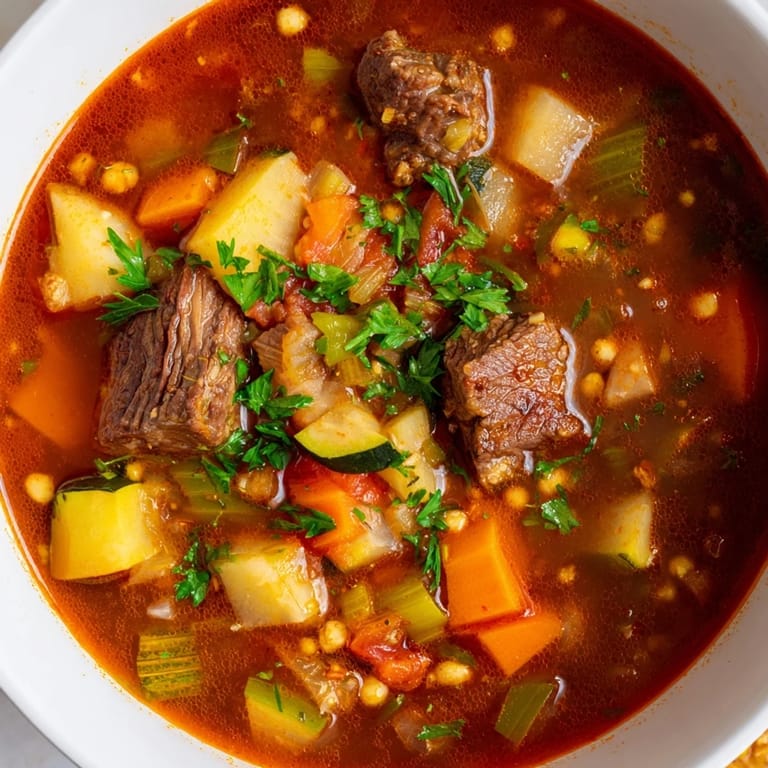
- Lamb shoulder: Choose meat with visible marbling—it breaks down into silky threads as the soup simmers, creating the soul of this dish.
- Onion, carrots, celery: These three are your base, the quiet workers that build flavor before anything else even enters the pot.
- Fresh tomatoes and canned: The fresh ones add brightness; the canned ones provide body and acidity that makes everything sing.
- Ground cumin and coriander: Toast these in your mind before they hit the pot—their warmth is what people will taste first.
- Paprika, cinnamon, turmeric: This combination is the signature; don't skimp or substitute, as they create that unmistakable North African depth.
- Garlic and tomato paste: Garlic gets soft and sweet; the paste, when cooked for just a minute, becomes almost caramel-like and anchors everything.
- Fresh coriander and parsley: Reserve a handful for the end—these herbs arrive as a last-minute brightness that makes you suddenly understand the whole dish.
- Vermicelli pasta: It softens into the broth without disappearing, adding a gentle texture that catches the spices.
- Olive oil and stock: Use good olive oil and stock you'd taste on its own; they're not just vehicles here, they're part of the flavor itself.
Tired of Takeout? 🥡
Get 10 meals you can make faster than delivery arrives. Seriously.
One email. No spam. Unsubscribe anytime.
Instructions
- Sear the lamb:
- Heat olive oil until it moves like liquid silk across the pot bottom, then add lamb cubes and listen for that immediate sizzle. Let them sit untouched for a minute so they develop a golden crust—this is where the depth begins.
- Build the base:
- Once the lamb is browned, add onions, garlic, carrots, celery, and potato, stirring occasionally as they soften and begin to release their sweetness. You're building layers here, each vegetable contributing something the others need.
- Bloom the spices:
- Stir in tomato paste and all your spices, cooking for just two minutes until the kitchen fills with that warm, toasted aroma that tells you everything is awakening. This brief cooking step transforms ground spices from powder into something alive.
- Add the tomatoes:
- Mix in the fresh diced tomato, canned tomatoes, and zucchini, letting them settle into the golden base you've created. The acidity of the tomatoes will brighten everything that comes next.
- Simmer the foundation:
- Pour in your water or stock, bring everything to a boil, then lower the heat to a gentle bubble and cover the pot. Let it simmer for a full hour, occasionally skimming any foam that rises—this patience is where tenderness happens.
- Finish with pasta:
- Add vermicelli and cook for 10 to 12 minutes until just tender, then taste and adjust salt carefully—sometimes the stock is already generous with it. The pasta will catch and hold the flavors in each spoonful.
- Complete with herbs:
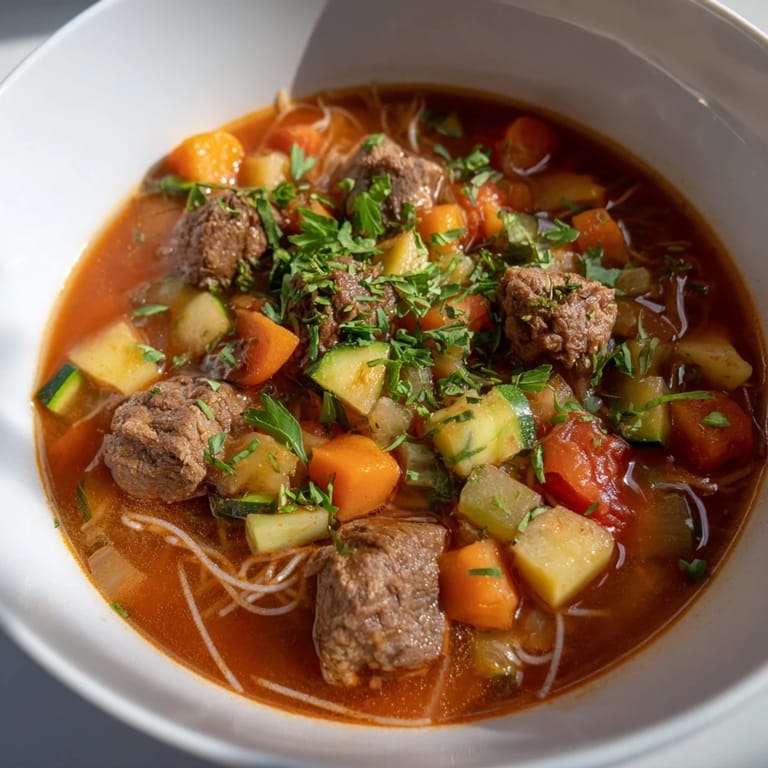
- Stir in your reserved fresh coriander and parsley at the very end, letting them soften just enough to release their brightness without losing their freshness. This final step is when the soup becomes something more than the sum of its parts.
 Pin It
 Years after my aunt taught me this soup, I made it for someone going through a difficult time, and they came back days later just to tell me they'd made it again. That's when I realized she wasn't teaching me a recipe at all—she was teaching me how to give someone a bowl of belonging, wrapped in warmth and spices that carry generations.
The Soul of North African Cooking
Chorba exists at the intersection of practicality and celebration in Algerian kitchens, where lamb gets stretched through a generous pot of vegetables and stock, turning one piece of meat into nourishment for a whole table. The spice combination—cumin, coriander, cinnamon, turmeric—isn't random; these spices have traveled the same trade routes for centuries, arriving in North Africa with traders and settling into the region's bones. When you cook them together, you're not just making dinner; you're honoring routes and histories and the simple fact that food connects us across time.
Reading the Pot as It Cooks
One of the most important skills in making chorba is learning to trust what you see and smell rather than rigid timing. The lamb should break apart easily when you press it with a spoon after an hour of simmering; if it still resists, give it another ten minutes and stop worrying about the clock. The broth should smell layered—you'll catch the cinnamon first, then underneath it the earthiness of cumin, then the brightness of fresh tomato.
Serving and Variations
Chorba is flexible in the way traditional soups are, bending to what's available and what your body needs on any given day. Some families add chickpeas for extra heartiness; others add a splash of harissa paste for a spicy kick; a few even stir in a beaten egg at the very end to create silken threads through the broth. The soup keeps beautifully, deepening in flavor as it sits, and actually tastes better the next day when all the spices have had time to settle into every corner of the pot.
- Serve with thick slices of crusty bread or warm flatbread for soaking up every drop.
- A wedge of lemon on the side lets each person brighten it to their preference.
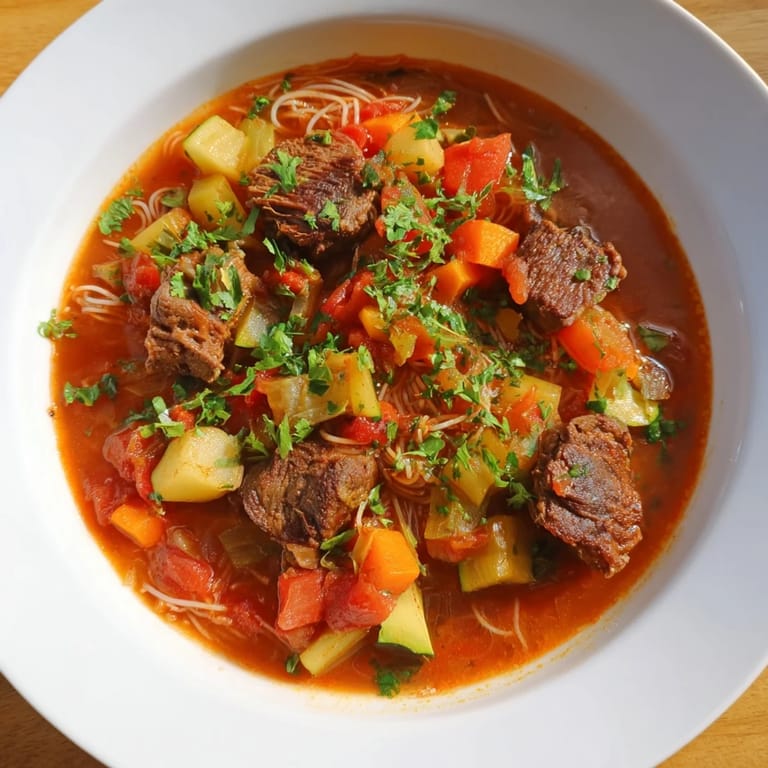
- Finish with a generous handful of fresh herbs—they're not garnish here, they're essential.
 Pin It
 Chorba is the soup that teaches you patience tastes like comfort, and that the simplest moments—just you, a pot, and the smell of cumin filling your kitchen—are sometimes the richest ones. Make it often, and it becomes yours.
Recipe FAQs
- → What kind of meat is used in Algerian Chorba?
Traditionally, lamb shoulder cut into cubes provides tenderness and rich flavor to the dish.
- → Can I substitute the meat for a lighter option?
Yes, chicken is a common alternative that results in a lighter but still flavorful broth.
- → Which spices give this soup its distinctive taste?
A blend of cumin, coriander, paprika, cinnamon, turmeric, and optional chili flakes creates the aromatic and warm profile.
- → How is the texture of the soup enhanced?
Adding vermicelli or small pasta introduces a pleasant bite complementing the tender vegetables and meat.
- → What garnishes are recommended for finishing the dish?
Fresh chopped parsley and coriander are sprinkled on top, along with a squeeze of lemon to brighten the flavors.
- → Is this dish suitable for dairy-free diets?
Yes, the soup contains no dairy ingredients, making it suitable for dairy-free preferences.