 Pin It
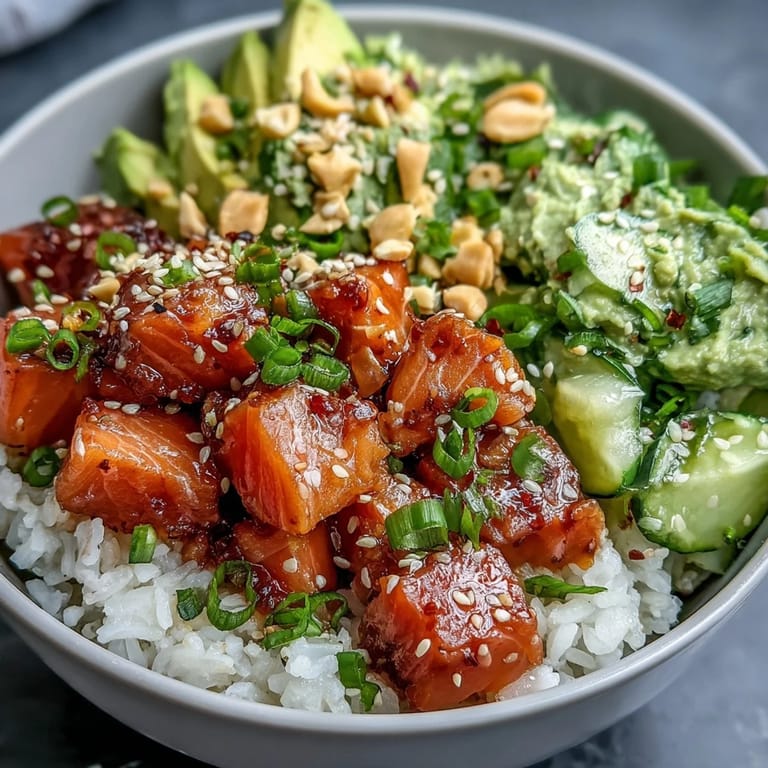
 My friend Sarah showed up at my place one afternoon with a container of the most beautiful salmon and avocado bowl I'd ever seen, and I was instantly hooked. She'd learned to make it at a small fusion restaurant tucked away in the city, and the chef had given her the rough outline of how to build it. What struck me wasn't just how good it tasted, but how alive it felt on the plate—each ingredient singing its own note. Since that day, I've made it countless times, tweaking it based on what's in my kitchen and what my mood demands.
I made this for my mom on a quiet Sunday morning when she was feeling under the weather, and watching her face light up when she tasted the combination of wasabi heat and creamy avocado was worth every minute of prep. She asked me to make it again the next week, and now it's become our little tradition when we need something that feels both nourishing and exciting at the same time.
Ingredients
- Fresh salmon fillet: Use the highest quality you can find—this is the star, so 250 grams of skinless, cubed salmon makes all the difference.
- Tamari sauce: It's got a deeper, smoother flavor than regular soy sauce, and that earthiness really anchors the whole bowl.
- Toasted sesame oil: Just one teaspoon, but it carries so much warmth and nuttiness that you'll taste it in every bite.
- Rice vinegar: This keeps things bright and prevents the bowl from feeling heavy or one-note.
- Honey or agave syrup: A touch of sweetness to balance the salty and spicy elements.
- Cooked sushi rice: About 200 grams cooked (roughly one cup uncooked) forms the foundation—it's sticky enough to hold everything together.
- Ripe avocado: One large one, and let it ripen until it yields gently to pressure or it won't have that buttery, creamy quality you're after.
- Roasted peanuts: Two tablespoons chopped gives you that crucial crunch factor that makes this bowl feel special.
- Chili oil: Adjust this based on your heat tolerance, but it adds a beautiful fruity spice that builds as you eat.
- Wasabi paste: A teaspoon does it, though some mornings I'm braver than others.
- Nori sheets: Sliced into strips, they add a briny, oceanic note that connects everything.
- Cucumber: One small one, thinly sliced, for refreshing contrast.
- Spring onions: Two of them, sliced, bring a gentle bite and color.
- Toasted sesame seeds: One tablespoon sprinkled across the top catches the light and adds nutty depth.
- Fresh cilantro or microgreens: Optional but they brighten the whole bowl with something green and alive.
- Lime wedges: Always serve them on the side—that squeeze of citrus is the final punctuation mark.
Tired of Takeout? 🥡
Get 10 meals you can make faster than delivery arrives. Seriously.
One email. No spam. Unsubscribe anytime.
Instructions
- Make the marinade and coat your salmon:
- Whisk together two tablespoons tamari, one teaspoon toasted sesame oil, one teaspoon rice vinegar, and one teaspoon honey in a medium bowl. Add your 250 grams of salmon cubes and toss them gently until they're completely coated. Cover and refrigerate for 10 to 15 minutes—this is when the salmon starts to absorb all those savory, slightly sweet flavors.
- Season the rice while it's still warm:
- In a separate bowl, mix your cooked sushi rice with one tablespoon rice vinegar, half a teaspoon sugar, and a pinch of salt. The warmth helps the rice absorb the seasoning, and you want it to stay slightly warm so it contrasts beautifully with the cool, creamy toppings.
- Get all your toppings ready:
- Slice your avocado, chop the peanuts, cut nori into strips, and slice your cucumber and spring onions. This is the kind of mise en place moment that makes assembly stress-free and lets you focus on building something beautiful.
- Build the foundation:
- Divide the seasoned rice between two serving bowls, creating an even base. I like to gently press it down so it stays in place and the toppings don't slide around.
- Arrange the main components:
- Layer your marinated salmon, avocado slices, cucumber, and spring onions over the rice. There's no wrong way to do this, but I usually start with salmon in the center and fan the avocado around it.
- Add heat and umami:
- Drizzle with chili oil and dot small amounts of wasabi paste around the bowl. You can always add more, but you can't take it back, so be gentle at first.
- Finish with texture and garnish:
- Sprinkle roasted peanuts, sesame seeds, and nori strips across the top. Add a handful of cilantro or microgreens if you have them, and serve with lime wedges on the side so everyone can adjust the brightness to their taste.
 Pin It
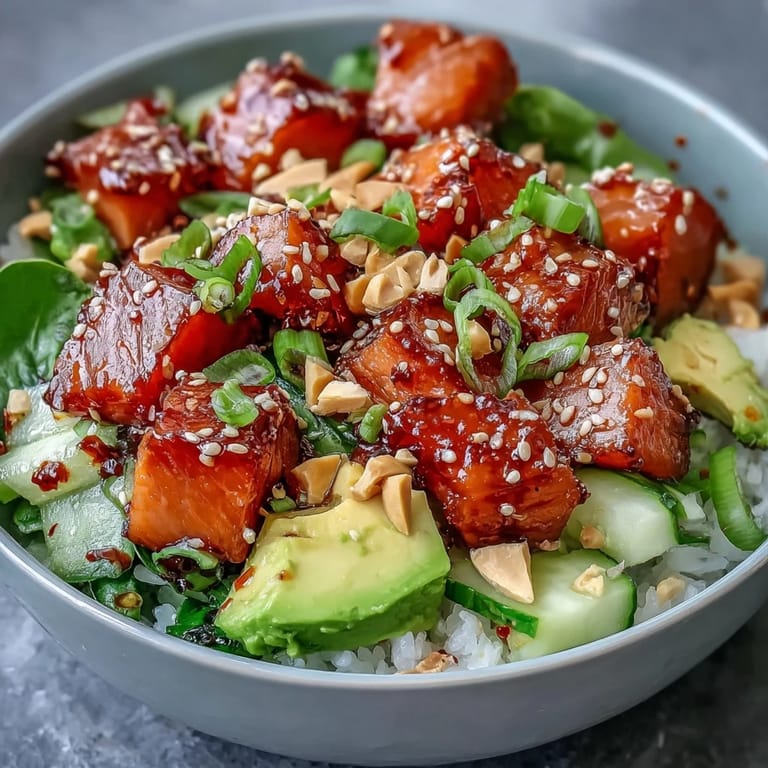
 There was this moment when my partner took his first bite and just closed his eyes, and I realized this bowl isn't just lunch—it's a small act of care you give yourself or someone else. Every texture, every flavor is there for a reason, and when it all comes together, it feels like more than food.
The Salmon Question: Raw or Cooked
I've made this with both raw and gently pan-seared salmon, and both work beautifully in different ways. If you're using raw salmon, make absolutely certain it's sushi-grade and from a trusted fishmonger. The marinating liquid won't cook it, but the acidity does something interesting to the texture—it becomes slightly firmer and more custard-like. If you prefer cooked salmon, sear your cubes in a hot pan with a little sesame oil for just 60 to 90 seconds per side until they're barely cooked through, then toss them in the marinade while they're still warm.
Rice Preparation That Actually Matters
The seasoned sushi rice is the glue that holds this whole bowl together, literally and flavor-wise. If you don't have a rice cooker, bring a pot of water to a boil, add your rice, reduce the heat, cover, and let it steam for 15 minutes. The vinegar-sugar-salt mixture should be added while the rice is still warm so it absorbs everything completely. Some people think seasoning cold rice works fine, but trust me—it doesn't taste nearly as cohesive or alive.
Customization and Substitutions That Work
This is the kind of bowl that celebrates flexibility, so don't hesitate to swap things around. For a vegetarian version, marinate firm tofu or tempeh in the same mixture and either serve it raw or pan-fry it first. Cashews work beautifully instead of peanuts, and if you're avoiding nuts entirely, substitute with more sesame seeds or crispy chickpeas. You can even add pickled ginger, edamame, or roasted broccoli if you want extra texture and flavor.
- Keep extra chili oil and wasabi on the side so everyone can build their own heat level as they eat.
- If avocado isn't in season or ripe, sliced cucumber or even crispy tofu can fill that creamy role.
- Don't underestimate the lime wedge—that final squeeze transforms the whole experience from good to unforgettable.
 Pin It
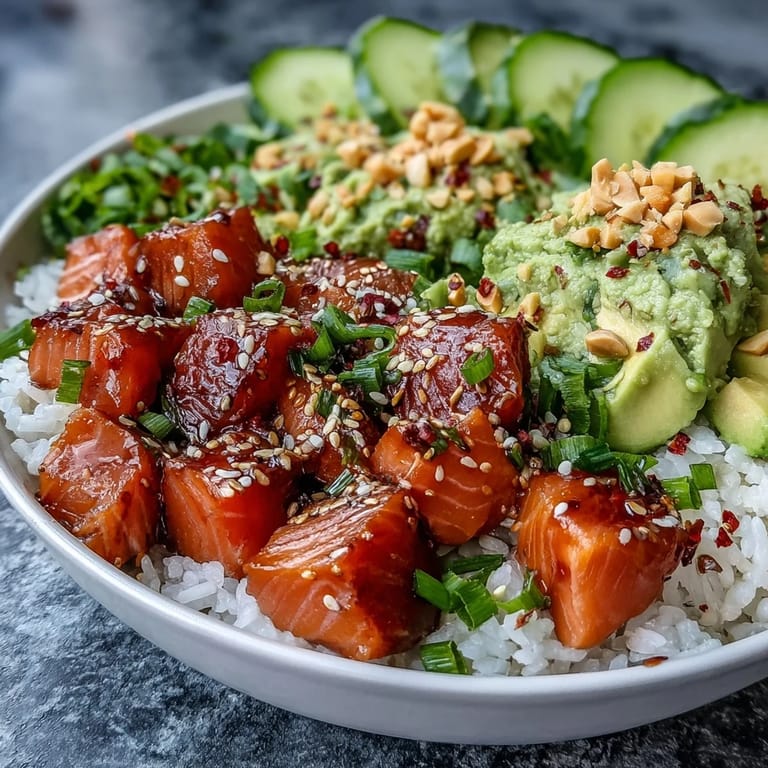
 This bowl became my answer to the question of what to eat when I want something that tastes like I've traveled somewhere beautiful and tasted something real. Make it once and you'll understand why it keeps calling you back to the kitchen.
Recipe FAQs
- → Can I make this ahead of time?
Prepare components up to 24 hours in advance. Store rice, salmon, and toppings separately in airtight containers in the refrigerator. Assemble just before serving to maintain texture and freshness.
- → What's the best way to cook the salmon?
This version uses marinated raw salmon cubes similar to poke. For fully cooked salmon, pan-sear or bake the cubes for 8-10 minutes at 200°C before assembling the bowl.
- → Can I use brown rice instead?
Absolutely. Brown rice adds nutty flavor and extra fiber. Cook according to package directions and season with the same vinegar mixture. Adjust cooking time as brown rice takes longer.
- → How spicy is this bowl?
The spice level is easily adjustable. Start with 1 teaspoon each of chili oil and wasabi, then add more to taste. The heat balances beautifully with creamy avocado and savory salmon.
- → What other proteins work well?
Try marinated tofu, tempeh, or cooked shrimp. Grilled chicken or edamame also make excellent substitutions while maintaining the bowl's flavor profile.