 Pin It
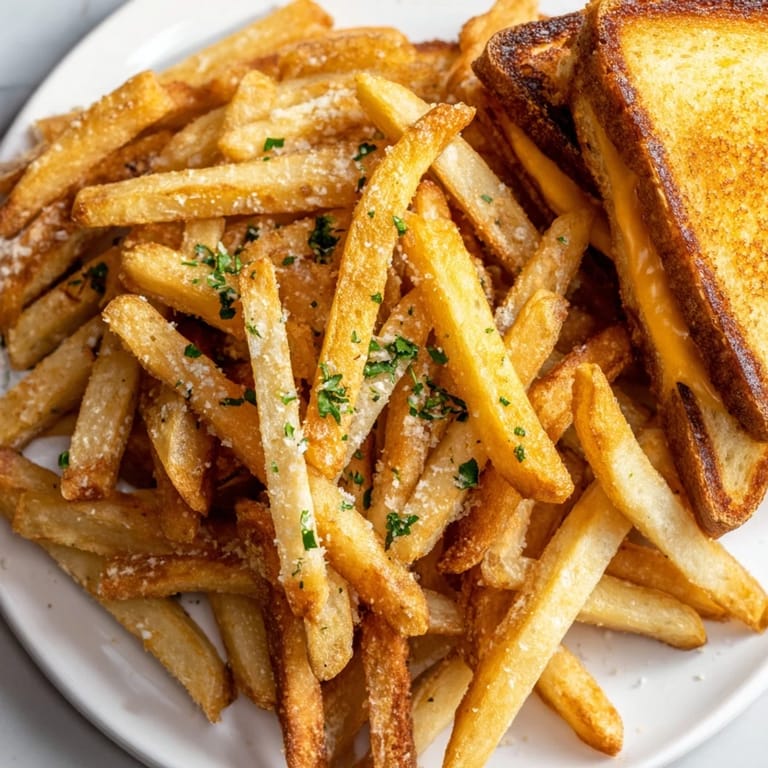
 There's something about the combination of crispy, golden fries and a melty grilled cheese that stopped me in my tracks one rainy Tuesday afternoon. I was testing beef tallow for frying—something I'd been curious about for months—and the moment those fries hit the hot fat, the kitchen filled with this rich, savory aroma that made me realize I couldn't serve them alone. A grilled cheese seemed like the obvious answer, something warm and comforting to balance the luxurious crispness of the fries. What started as an experiment turned into the meal I now make whenever I want to feel genuinely taken care of.
I remember making this for my partner after they mentioned craving something 'really good but not complicated.' We were both tired, the kitchen was barely warm, and I knew if I committed to beef tallow fries, I had to go all the way with them. Watching their face when they bit into that first fry—when they realized how different beef tallow made everything taste—that moment made the whole process worthwhile.
Ingredients
- Russet potatoes: These have the right starch-to-moisture ratio for fries that crisp up properly; waxy potatoes like reds won't give you that same shatter factor.
- Beef tallow: It's rendered beef fat, and yes, it makes a genuine difference in flavor and crispiness that vegetable oil doesn't replicate, though duck fat is an excellent alternative.
- Kosher salt: Use this instead of table salt because the larger crystals distribute more evenly and you can taste the fries rather than just salt.
- Sourdough bread: The tang and structure hold up to butter and heat without getting soggy, though brioche works beautifully too if you prefer something richer.
- Sharp cheddar cheese: Sharp varieties melt smoothly while still having real flavor; mild cheddar gets lost against the savory fries.
- Unsalted butter and mayonnaise: Butter browns and crisps the exterior while mayo adds richness and helps achieve that extra-golden crust if you're after restaurant-level results.
Tired of Takeout? 🥡
Get 10 meals you can make faster than delivery arrives. Seriously.
One email. No spam. Unsubscribe anytime.
Instructions
- Soak and prepare the potatoes:
- Cut your potatoes into ¼-inch sticks and let them sit in cold water for at least 30 minutes—this removes surface starch so they crisp beautifully instead of steaming. Drain thoroughly and pat them completely dry with paper towels; any moisture will cause splattering and prevent that golden exterior.
- First fry at lower temperature:
- Heat your beef tallow to 325°F and fry the potatoes in small batches for 4 to 5 minutes until they're tender but still pale. They'll look like they're barely done; that's exactly right. Remove them to paper towels and let them cool slightly while you prepare for the second fry.
- Second fry for the crispiness:
- Increase the heat to 375°F and fry the potatoes again in batches for 2 to 3 minutes until they turn golden and shatter when you bite them. Season immediately with salt and pepper while they're still hot so the seasoning sticks.
- Build your grilled cheese:
- Spread softened butter on one side of each bread slice, and if you're using it, add a thin layer of mayo to the buttered side for extra richness and browning. Layer cheese between two slices with the buttered sides facing outward so they make direct contact with the skillet.
- Grill until perfect:
- Heat your skillet over medium heat and cook each sandwich for about 3 to 4 minutes per side, pressing gently with a spatula to ensure even browning and help the cheese melt completely. You're aiming for golden-brown bread with an audible crunch and melted cheese that doesn't ooze out.
- Serve right away:
- Plate everything while the fries are still crispy and the cheese still feels warm; this meal loses its magic if it sits even for a few minutes.
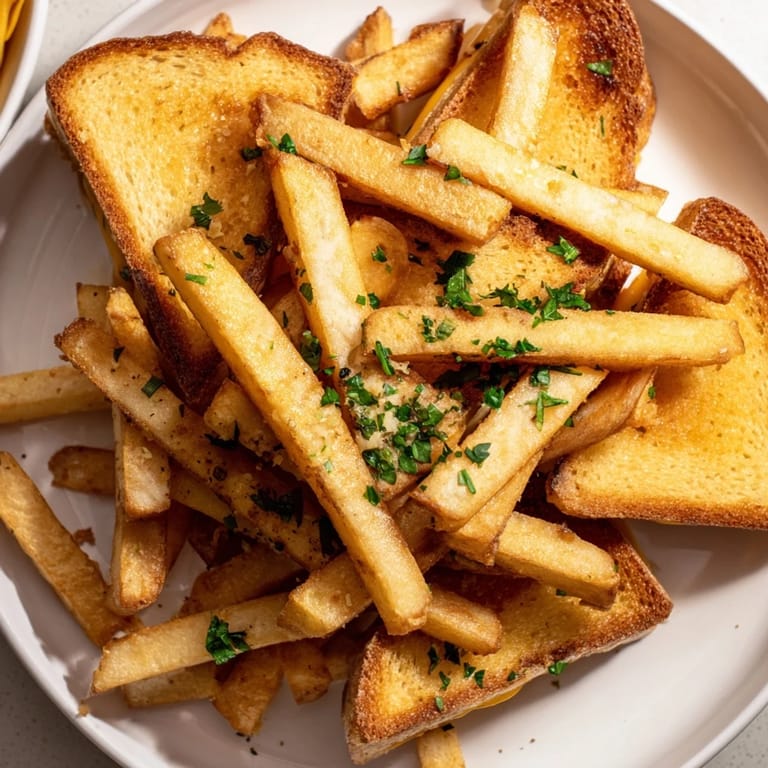 Pin It
 What I didn't expect was how this simple meal became a ritual—something I reach for when I need comfort that doesn't require hours of work. There's something grounding about frying potatoes twice and watching bread turn golden in a hot skillet, like you're creating something honest and real.
Why Beef Tallow Changes Everything
Beef tallow has a higher smoke point than vegetable oil and a distinct savory quality that comes from the fat's natural beef flavor. When you fry potatoes in it, they don't just get crispy—they develop a subtle meaty richness that makes even simple salt and pepper taste like something special. The first time I used it, I understood why old-school restaurants would never give up their rendered beef fat; it's genuinely a different product.
Cheese Choices That Matter
Sharp cheddar is my default because it has personality and melts smoothly, but the recipe truly opens up when you start experimenting. Gruyère adds a subtle nuttiness, aged gouda brings caramel notes, and a combination of sharp cheddar with a little mozzarella creates this perfect balance of flavor and melt. I've also discovered that cold cheese slices straight from the fridge melt at just the right pace to match your bread browning—warm cheese from the counter melts too fast and leaves you with an undertoasted sandwich.
The Art of the Perfect Golden Crust
The butter-mayo combination is a small detail that absolutely transforms your results. Butter provides the flavor and browning, while mayo's emulsifiers help create that impossibly golden, nearly lacquered exterior that looks like it came from a diner. The mayo also has a higher smoke point than butter alone, so you can cook a little more aggressively without burning anything. Some people swear by a touch of garlic powder or dried oregano mixed into the butter, which I've tried and loved, though there's also something pure about letting the cheese and bread be the stars.
- If you don't have mayo on hand, a small amount of sour cream works similarly for creating that extra-golden crust.
- Let your butter come to room temperature so it spreads evenly without tearing the bread.
- Cast iron holds heat more consistently than a regular skillet, creating more even browning if you have one available.
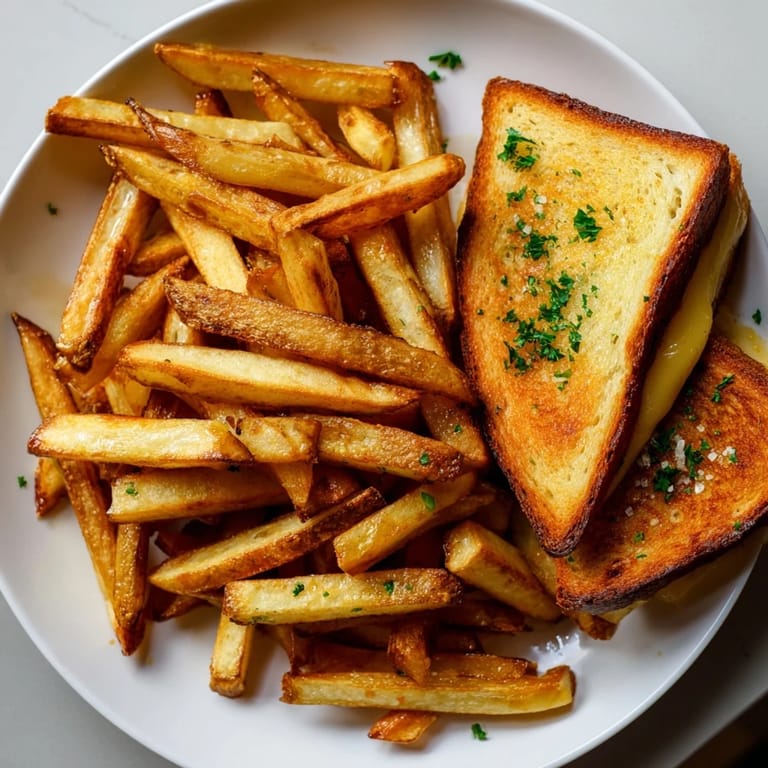 Pin It
 This is the kind of meal that satisfies in ways that go beyond hunger—it's honest food that makes you feel looked after. Make it for someone you care about, or make it for yourself on a day when you deserve something really good.
Recipe FAQs
- → Why soak the potatoes before frying?
Soaking removes excess starch from the potatoes, helping to achieve a crispier fry texture after cooking.
- → What is the purpose of frying fries twice?
Frying first at a lower temperature cooks the potato through, while the second hotter fry crisps the surface for crunchiness.
- → Can beef tallow be substituted?
Yes, duck fat or vegetable oil can be used as alternatives depending on dietary preferences.
- → How to get the grilled cheese extra crispy?
Spreading a thin layer of butter, or mayonnaise optionally, on the bread before toasting helps achieve a golden, crispy exterior.
- → What cheeses work well in this grilled sandwich?
Sharp cheddar is classic, but blends like Gruyère and mozzarella can add depth and meltiness.