 Pin It
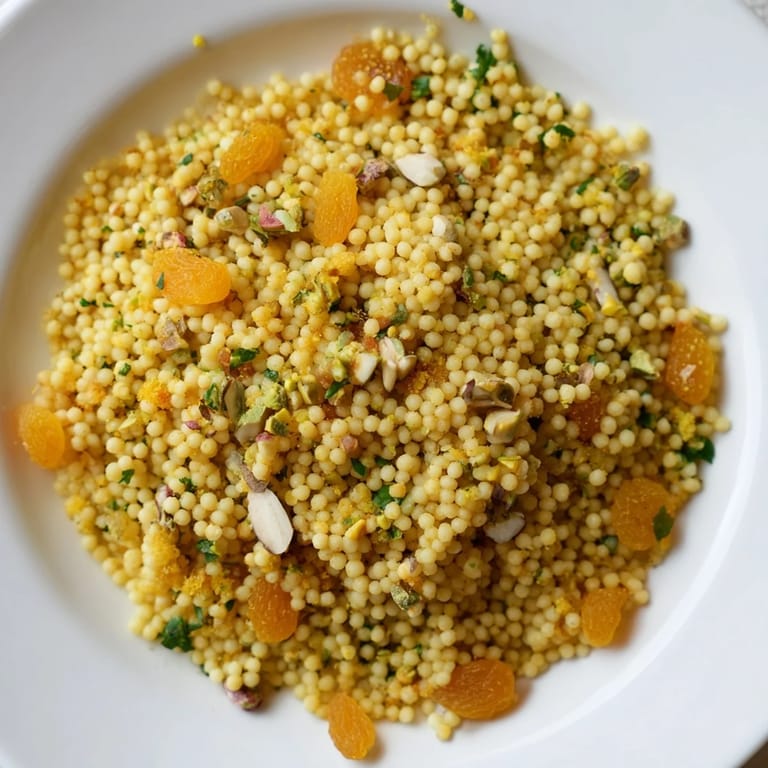
 My neighbor handed me a bowl of this over the fence one summer evening, still warm and smelling like something I couldn't place but wanted more of. She told me it was just couscous, but the mix of sweet fruit and toasted nuts made it feel like a celebration. I asked for the recipe that night and have been tweaking it ever since. It's become my go-to when I need something impressive that doesn't require much effort. The spices fill the kitchen with warmth that makes everyone wander in asking what's cooking.
I made this for a dinner party once and forgot to mention it had nuts. One guest couldn't eat it, so I quickly boiled plain couscous and tossed it with butter and herbs. She ended up asking for that recipe too, which made me laugh. Now I always keep the nuts on the side so everyone can customize their bowl. It's a small adjustment that makes the dish more flexible without losing any of the magic.
Ingredients
- Couscous: Use the regular kind, not Israeli couscous, since it absorbs the broth quickly and fluffs up perfectly without any fuss.
- Vegetable broth: This is where all the flavor starts, so use a good quality broth or even homemade stock if you have it on hand.
- Dried apricots: Their natural sweetness balances the warm spices, and chopping them small helps distribute the flavor throughout.
- Golden raisins: I prefer these over dark raisins because they're milder and blend in without overpowering the dish.
- Slivered almonds: Toasting them first is non-negotiable because it brings out a deep nutty flavor that raw almonds just don't have.
- Pistachios: They add a pop of green color and a slightly different texture from the almonds, plus they taste amazing with the spices.
- Olive oil: A fruity olive oil works best here since it adds another layer of richness to the base.
- Onion: Finely chopped so it melts into the background and sweetens as it cooks down with the garlic.
- Garlic: Two cloves is enough to add depth without making the dish taste like garlic bread.
- Ground cumin: This is the backbone spice that gives the pilaf its warm, earthy foundation.
- Ground cinnamon: Just a hint adds sweetness and complexity that pairs beautifully with the dried fruit.
- Ground coriander: It's subtle but rounds out the cumin and keeps the spice blend from feeling one-dimensional.
- Ground turmeric: Adds a golden color and a slight bitterness that balances all the sweetness.
- Black pepper: Freshly ground is best, and it adds a gentle heat that doesn't overwhelm.
- Salt: Start with half a teaspoon and adjust after tasting since broths vary in saltiness.
- Fresh parsley: Stirred in at the end, it adds brightness and a pop of green that makes the dish look alive.
- Fresh mint: Optional but worth it if you have it, since it brings a cool contrast to the warm spices.
- Lemon wedges: A squeeze of lemon right before serving wakes up all the flavors and cuts through the richness.
Tired of Takeout? 🥡
Get 10 meals you can make faster than delivery arrives. Seriously.
One email. No spam. Unsubscribe anytime.
Instructions
- Soften the aromatics:
- Heat the olive oil in a large saucepan over medium heat and add the chopped onion, letting it cook until it turns soft and translucent. Toss in the garlic and stir for about a minute until the smell makes you lean over the pan.
- Bloom the spices:
- Add the cumin, cinnamon, coriander, turmeric, black pepper, and salt, stirring constantly for about 30 seconds. The heat will release their oils and the kitchen will smell incredible.
- Add the fruit:
- Stir in the chopped apricots and raisins, coating them in the spiced oil. This step lets the fruit start to soften and soak up all those flavors.
- Bring the broth to a boil:
- Pour in the vegetable broth and turn the heat up until it reaches a rolling boil. Once it's bubbling, you're ready for the couscous.
- Steam the couscous:
- Remove the pan from the heat, stir in the couscous, and immediately cover it with a tight-fitting lid. Let it sit undisturbed for exactly 5 minutes so the grains can absorb all that flavorful liquid.
- Fluff and fold:
- Use a fork to fluff the couscous, breaking up any clumps and making it light and airy. Gently fold in the toasted almonds, pistachios, parsley, and mint.
- Taste and serve:
- Give it a taste and add more salt or a squeeze of lemon if needed. Serve warm with extra nuts scattered on top and lemon wedges on the side.
 Pin It
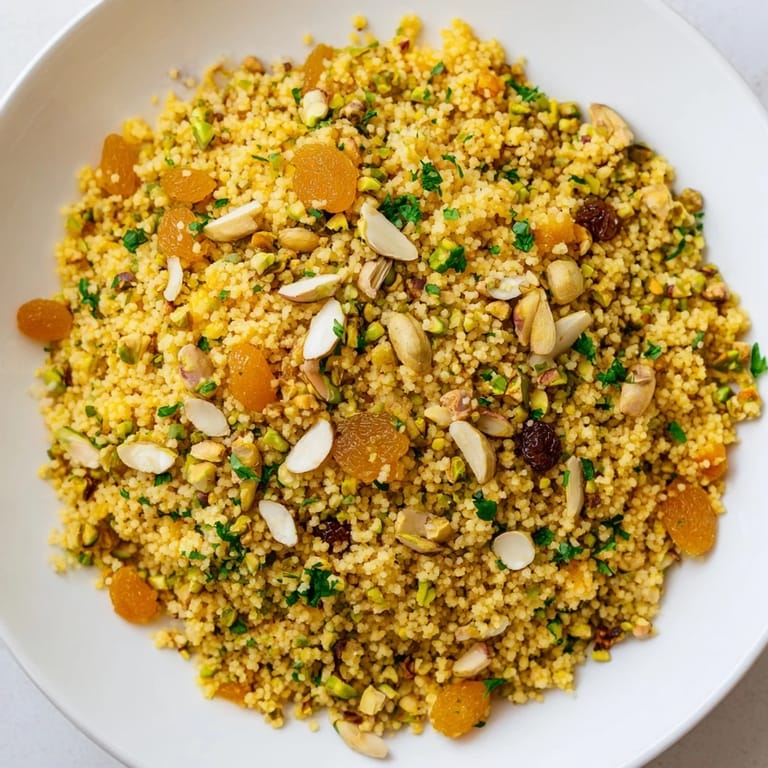
 I brought this to a barbecue once and set it on the table next to all the usual potato salads and coleslaw. By the end of the night, my bowl was empty and three people had texted me asking for the recipe. It's the kind of dish that surprises people because it looks and tastes more complicated than it actually is. Now I make a double batch whenever I know I'm feeding a crowd.
Making It Your Own
This recipe is forgiving and loves to be adapted. I've swapped dried cranberries for raisins in the fall, added chopped dates when I want it sweeter, and even stirred in cooked chickpeas to make it more of a meal. You can use chicken broth instead of vegetable if you're not keeping it vegetarian, and any mix of nuts works as long as you toast them first. The spices are the constants, but everything else can shift based on what's in your pantry.
Serving Suggestions
I love this pilaf alongside grilled chicken or lamb, where the sweetness plays off the char and smoke. It also works beautifully as a base for roasted vegetables or as a light main course on its own with a dollop of yogurt on top. Leftovers are great stuffed into pita bread with some greens, or eaten cold straight from the fridge when you need a quick lunch. The flexibility is one of the reasons it's stayed in my regular rotation.
Storage and Reheating
Store leftovers in an airtight container in the fridge for up to four days. The flavors actually deepen overnight, so don't be surprised if it tastes even better the next day. To reheat, add a splash of broth or water and warm it gently in a covered pan over low heat, fluffing with a fork as it heats through.
- You can also microwave it in 30-second bursts, stirring between each one to keep it from drying out.
- If it seems a little dry after storing, a drizzle of olive oil or a squeeze of lemon will bring it back to life.
- This doesn't freeze well because the couscous gets mushy, so plan to eat it within a few days.
 Pin It
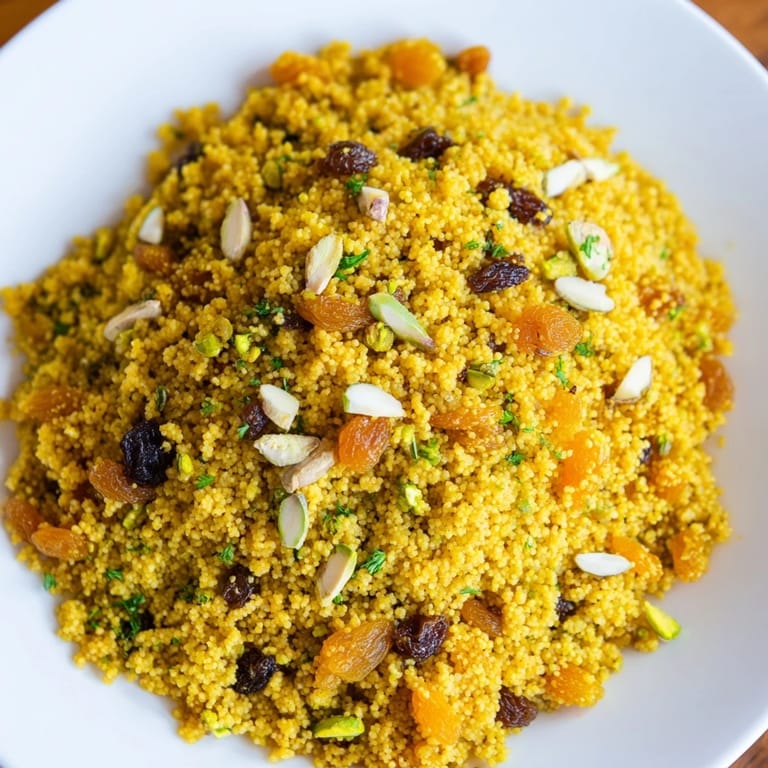
 This pilaf has a way of making ordinary weeknights feel a little more special without adding any stress to your evening. I hope it becomes one of those recipes you reach for when you want something comforting, colorful, and just a little bit different.
Recipe FAQs
- → Can I prepare this pilaf ahead of time?
Yes, you can cook it several hours in advance and gently reheat it with a splash of broth before serving. Store covered in the refrigerator for up to 3 days. The flavors actually deepen as it sits, making it an excellent make-ahead option.
- → What's the best way to toast the nuts?
Spread almonds and pistachios on a dry skillet over medium heat for 2-3 minutes, stirring occasionally until fragrant and lightly golden. This releases their natural oils and enhances their flavor significantly compared to using raw nuts.
- → Can I substitute the dried fruits?
Absolutely. Dried cranberries, cherries, dates, or figs work wonderfully. Use the same quantity and chop them to similar sizes. Each adds its own distinct sweetness and character to the pilaf.
- → How do I keep the couscous from becoming mushy?
The key is using the exact liquid-to-grain ratio and letting it rest covered for exactly 5 minutes. Don't stir during the resting period. After fluffing with a fork, the grains will be perfectly tender and separate.
- → What proteins pair well with this pilaf?
Grilled chicken, roasted lamb, and pan-seared fish complement these spices beautifully. For vegetarian meals, add cooked chickpeas or lentils directly to the pilaf. The warm spices work well with most Mediterranean and Middle Eastern proteins.
- → Is this suitable for vegan diets?
Yes, simply use vegetable broth instead of chicken broth. All other ingredients are plant-based. The couscous itself is typically vegan, but always check packaging for any hidden animal products or additives.