 Pin It
 My roommate came home one night with a jar of kimchi and a challenge: make something fast that actually tastes like something. I had cold rice, a few vegetables, and no plan. Twenty minutes later, we were scraping our bowls clean, and I realized I'd stumbled onto something I'd crave for years. The tang, the heat, the way everything clings to each grain of rice—it felt less like cooking and more like alchemy.
I made this for a friend going through a breakup, and she sat at my kitchen counter in silence until halfway through her second bowl. She looked up and said it tasted like comfort with a backbone. That's exactly what it is—bold enough to wake you up, but warm enough to feel like a hug. I've served it to picky eaters, adventurous eaters, and people who claimed they didn't like kimchi, and every single one asked for the recipe.
Ingredients
- Cooked short-grain rice (2 cups, preferably day-old): Day-old rice is drier and fries up beautifully without turning mushy—if you only have fresh rice, spread it on a plate and let it cool uncovered for 20 minutes.
- Napa cabbage kimchi (1 cup chopped, plus 2 tbsp juice): The funky, tangy backbone of the dish—don't skip the juice, it's where all the fermented magic lives.
- Yellow onion (½ cup, finely chopped): Adds sweetness and body to balance the heat and acidity.
- Carrot (½ cup, diced): A little crunch and color that holds up to high heat.
- Green onions (2, sliced, whites and greens separated): Whites cook down for depth, greens stay fresh and bright when stirred in at the end.
- Gochujang (1 tbsp): Korean chili paste brings umami, sweetness, and a slow-building heat—start with less if you're cautious, you can always add more.
- Soy sauce (1 tbsp): The salty glue that ties everything together.
- Toasted sesame oil (1 tsp): A few drops at the end add a nutty richness that smells like comfort.
- Sugar (½ tsp): Just enough to round out the sharpness without making it sweet.
- Black pepper (⅛ tsp, freshly ground): A subtle bite that sharpens the other flavors.
- Vegetable oil (2 tbsp): High smoke point for stir-frying without burning.
- Toasted sesame seeds (1 tsp): A tiny crunch and visual finish that makes it look intentional.
- Fried eggs (2, optional): The runny yolk mixing into the rice is optional only in theory.
Tired of Takeout? 🥡
Get 10 meals you can make faster than delivery arrives. Seriously.
One email. No spam. Unsubscribe anytime.
Instructions
- Start with the aromatics:
- Heat 1 tablespoon of vegetable oil in a large skillet or wok over medium-high heat until it shimmers. Add the chopped onion, carrot, and white parts of the green onion, and sauté for 2 to 3 minutes until they soften and the onion turns translucent at the edges.
- Bring in the kimchi:
- Toss in the chopped kimchi and let it cook for another 2 to 3 minutes, stirring occasionally. You'll know it's ready when the edges start to caramelize and the kitchen smells tangy and toasted.
- Build the sauce:
- Stir in the gochujang, soy sauce, kimchi juice, sugar, and black pepper. Cook for about 1 minute, stirring constantly so everything coats the vegetables evenly and the sauce darkens slightly.
- Fold in the rice:
- Add the cooked rice and break up any clumps with your spatula. Toss and stir-fry for 3 to 4 minutes until every grain is coated in the sauce and the rice is heated through with a little crisp on the edges.
- Finish with brightness:
- Drizzle the sesame oil over the rice and toss in the green parts of the green onion. Stir well so the oil perfumes everything and the greens stay vibrant.
- Fry the eggs (optional but encouraged):
- In a separate pan, heat the remaining oil over medium heat and fry the eggs to your liking—crispy edges and a runny yolk work best here.
- Serve it hot:
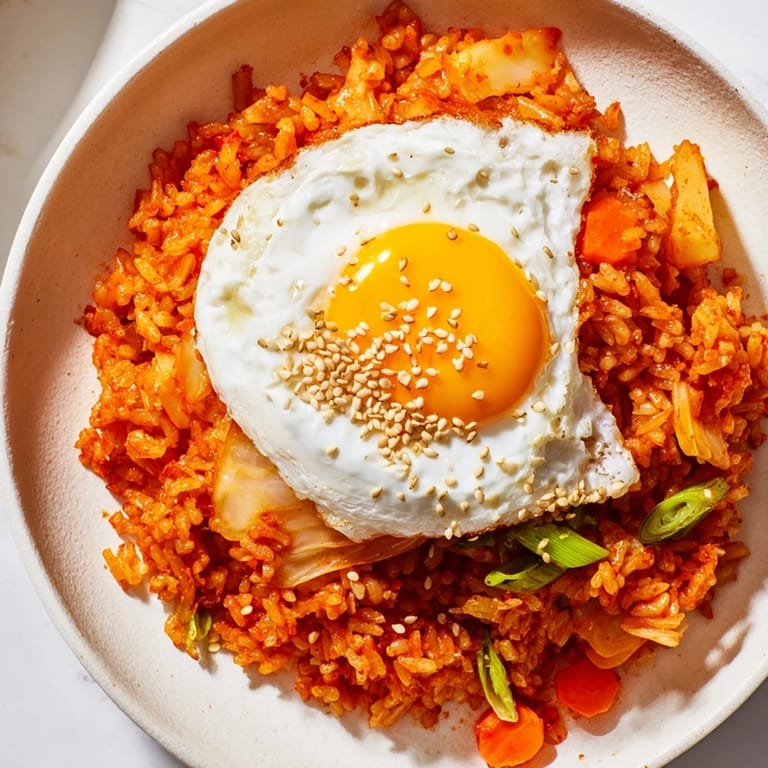
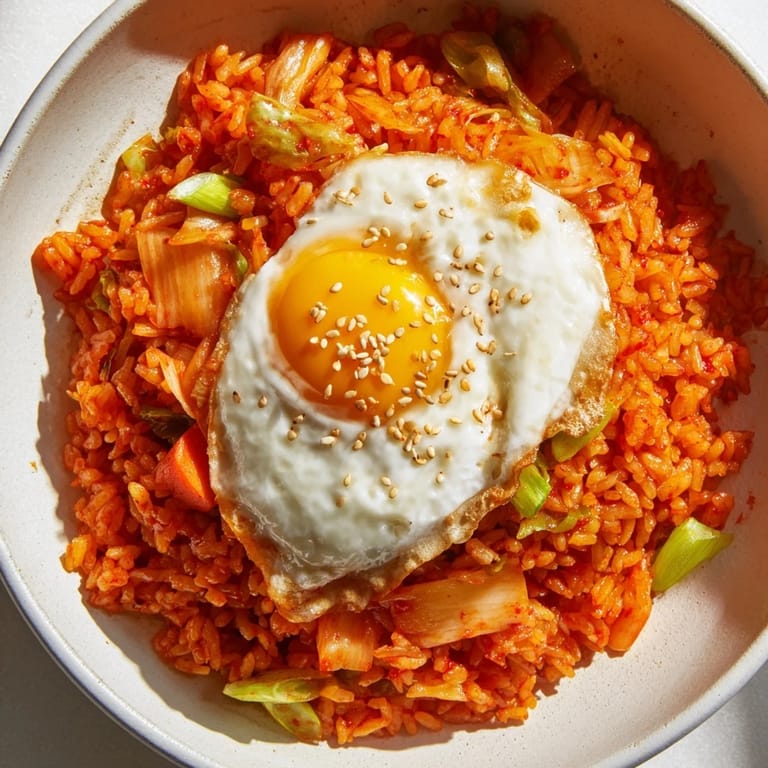
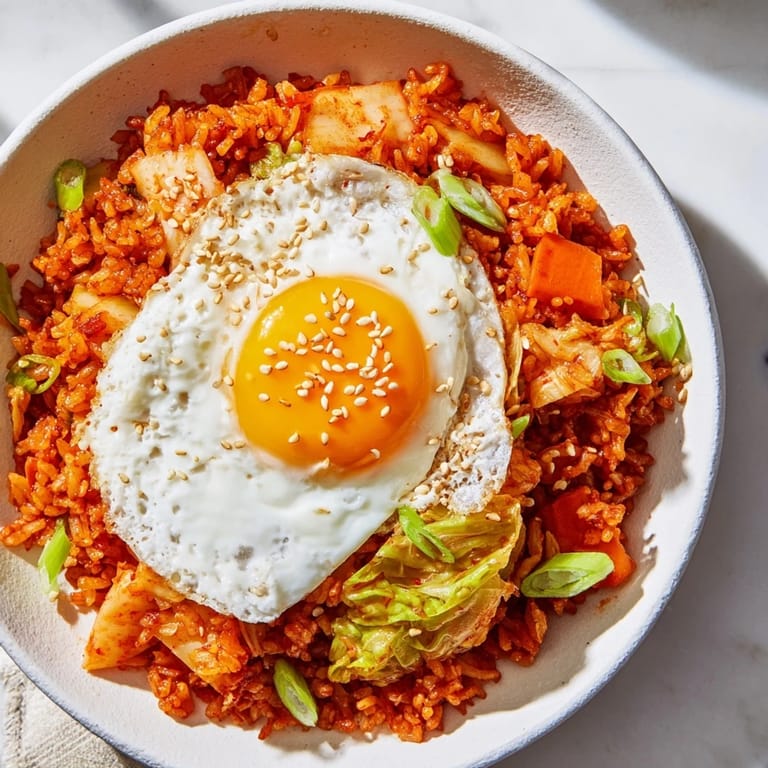
- Divide the kimchi fried rice into bowls, top each with a fried egg, and sprinkle with sesame seeds.
 Pin It
 One winter evening, I made a huge batch of this after a long day and ate it straight from the pan while standing at the stove. My partner walked in, grabbed a fork, and joined me without a word. We stood there in the warm kitchen, the windows fogged up, the sesame oil hanging in the air. It wasn't fancy, but it was exactly what we needed—something bold and alive that reminded us food doesn't have to be complicated to feel like everything.
Making It Your Own
This recipe is a framework, not a rulebook. I've added diced tofu for protein, tossed in leftover roasted vegetables, and even stirred in a handful of spinach at the end. One time I used brown rice and it held up beautifully, giving the dish a nuttier chew. If you want it spicier, add more gochujang or a sprinkle of gochugaru (Korean chili flakes). If you're feeding someone who can't handle heat, dial back the gochujang and let them add hot sauce on their own terms.
Storing and Reheating
Leftovers keep in an airtight container in the fridge for up to three days, though the rice will firm up as it cools. To reheat, add a splash of water or broth and warm it in a skillet over medium heat, stirring frequently until heated through. The microwave works too, but the skillet brings back a little of that crispy edge. I don't recommend freezing it—the texture of the rice changes too much and the kimchi loses its punch.
Pairing and Serving Suggestions
I love serving this with a simple cucumber salad dressed in rice vinegar and a pinch of sugar—it cuts through the richness and adds a cool crunch. A cold lager or sparkling water with lime works perfectly to cleanse your palate between bites. If you're making it for a crowd, set out small bowls of extra kimchi, sesame seeds, and sliced green onions so people can customize their bowls.
- Top with crumbled nori for an extra layer of umami.
- Serve alongside steamed edamame or miso soup for a fuller meal.
- Drizzle with a little sriracha mayo if you want creamy heat.
 Pin It
 This dish taught me that the best meals don't need a long ingredient list or hours of prep—they just need a little heat, a little funk, and the willingness to let bold flavors speak for themselves. I hope it becomes a staple in your kitchen the way it has in mine.
Recipe FAQs
- → Can I use fresh rice instead of day-old rice?
Day-old rice works best because it's drier and won't clump together. If using fresh rice, spread it on a plate to cool and dry for 30 minutes before stir-frying.
- → How spicy is this dish?
The heat level depends on your gochujang and kimchi. Start with 1 tablespoon gochujang and add more to taste. You can also reduce the kimchi juice for a milder version.
- → What's the best way to cook the fried eggs?
Heat oil in a separate pan over medium-high heat and crack eggs directly into it. Fry until whites are set but yolks remain runny, about 3-4 minutes. This creates a luxurious topping.
- → Can I make this vegan?
Yes, simply skip the fried egg or use a plant-based alternative. All other ingredients are naturally vegan. Check gochujang labels for vegan certification.
- → What proteins work well with this dish?
Diced tofu, cooked chicken, shrimp, or even crispy chickpeas complement the flavors. Add protein after the vegetables are softened and before the rice goes in.
- → How do I store leftovers?
Store in an airtight container in the refrigerator for up to 3 days. Reheat gently in a skillet with a splash of water or sesame oil to restore moisture and texture.