 Pin It
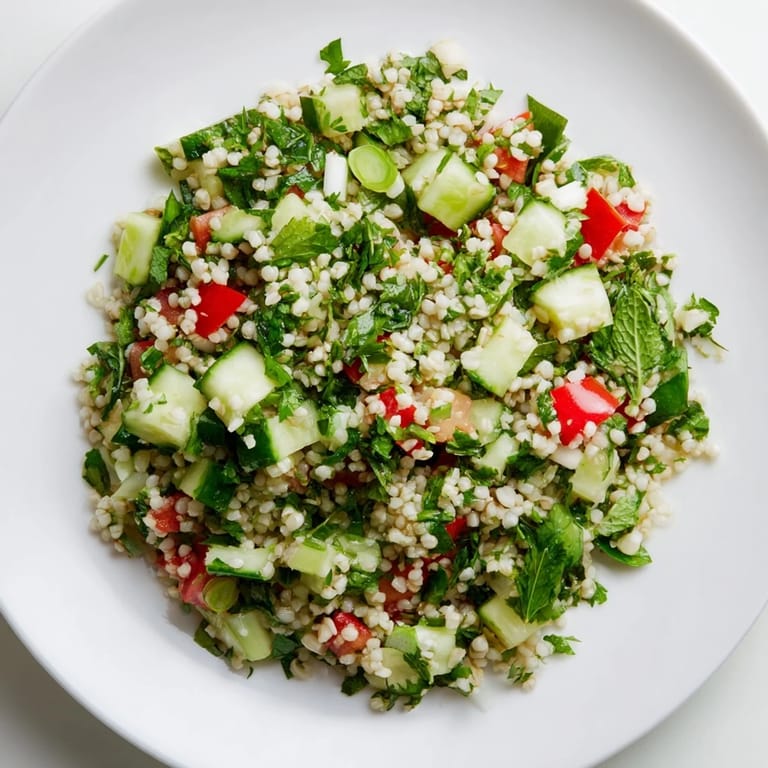
 The first time I made tabbouleh, I was standing in a cramped kitchen in Beirut with my friend's grandmother, who moved with such fluid precision that chopping seemed like a dance. She handed me a massive bunch of parsley and said, "More than you think you need," which became the golden rule. That salad tasted like sunshine and minerality, and I realized I'd been eating sad salads my whole life. Now whenever I make it, I chase that memory of bright green herbaceousness and the way the lemon cut through everything like a clarifying moment.
I once brought this to a potluck where everyone was nervous about their contributions, and watching people go back for thirds with genuine surprise on their faces taught me something about simplicity. The herb-to-grain ratio seems almost reckless until you taste it, and then you understand why parsley isn't just a garnish here. That night, the salad disappeared while hot dishes sat untouched, and someone asked for the recipe on a napkin.
Ingredients
- Fine bulgur wheat: This absorbs the dressing perfectly without turning mushy, creating a tender base that doesn't overwhelm the herbs.
- Flat-leaf parsley: Use only this variety (never the curly kind) because it has a cleaner, more delicate flavor that actually tastes herbaceous rather than bitter.
- Fresh mint: It should smell bright and almost cooling when you crush a leaf, signaling freshness.
- Spring onions: Their mild bite prevents the salad from feeling one-dimensional and adds a gentle sharpness.
- Tomatoes: Choose ones that are ripe and fragrant, then seed them to prevent the salad from becoming watery and diluting all your careful work.
- Cucumber: Keep the skin on for texture and don't over-chop it, or it releases water and makes everything soggy.
- Extra-virgin olive oil: This isn't the place to skimp, because the oil is half your dressing and it should taste golden and peppery.
- Lemon juice: Freshly squeezed makes a dramatic difference in brightness and prevents that tinny bottled taste.
Tired of Takeout? 🥡
Get 10 meals you can make faster than delivery arrives. Seriously.
One email. No spam. Unsubscribe anytime.
Instructions
- Hydrate the bulgur gently:
- Pour boiling water over the bulgur and cover it like you're tucking it in for a nap. The steam does all the work, and after 10-15 minutes you'll have tender grains that still have a slight chew. Fluff it with a fork to separate the grains and let any steam escape.
- Prep your herbs with intention:
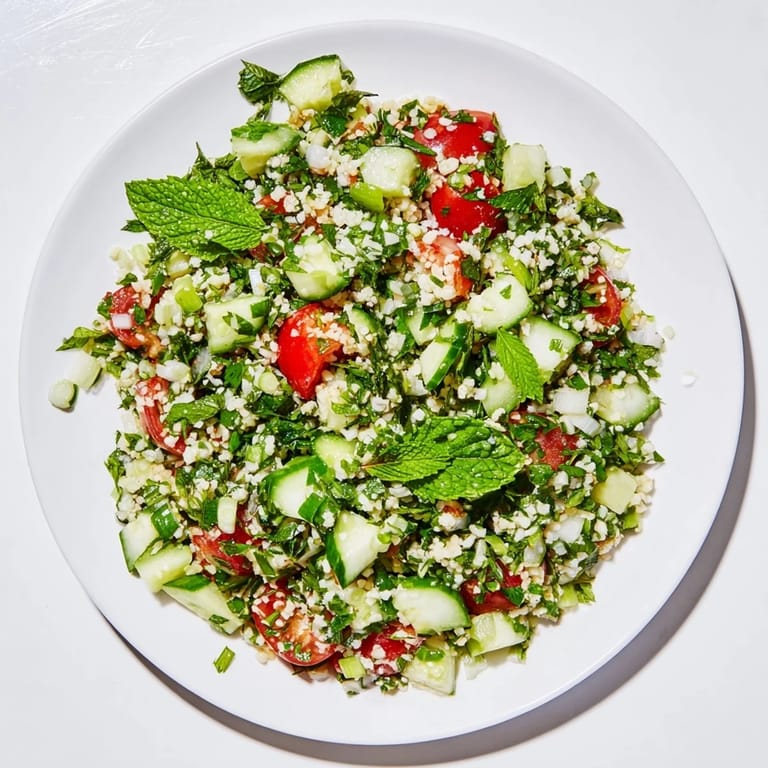
- Chop the parsley and mint finely by hand if you can, because a food processor bruises them and releases bitterness. You want to see individual ribbons of green, not a wet paste.
- Build the base:
- Toss the parsley, mint, spring onions, seeded tomatoes, and cucumber together in a large bowl so every piece gets coated and they start releasing their aromatics together.
- Combine everything:
- Add the cooled bulgur to the vegetables and herbs, then immediately dress it while everything still feels alive and hasn't sat long enough to oxidize and dull.
- Make the dressing count:
- Whisk the olive oil and lemon juice together so they emulsify slightly, then taste it on its own before adding salt and pepper so you understand the balance. This dressing should make you want to drink it.
- Finish with restraint:
- Toss everything gently so the herbs stay intact and visible, then taste and adjust the salt or lemon based on your tomatoes' sweetness. Serve cold or at room temperature, but never straight from the fridge.
 Pin It
 There was a moment during that first summer of making tabbouleh when I stopped thinking of it as just a recipe and started thinking of it as a way to celebrate vegetables at their peak. Something about the simplicity of the preparation made me pay attention to what I was buying, where it came from, and whether it actually tasted like anything. That shift changed how I cook altogether.
The Herb-Forward Philosophy
Traditional tabbouleh breaks every rule of Western salad-making by letting herbs be the star instead of a supporting player. The parsley isn't a garnish scattered on top; it's the foundation, the reason the salad exists. This means you're not just tossing in some greenery for nutrition, you're celebrating the flavor of fresh herbs as a primary ingredient. Once you understand this perspective, your whole approach to salads shifts.
Timing and Temperature
The best tabbouleh sits for exactly 15 minutes after dressing, which gives the bulgur time to absorb all that lemon and oil without falling apart. If you rush it, the flavors feel separate and bright but slightly harsh. If you wait too long, everything starts to merge and it loses its vibrant distinction. Temperature matters too: cold feels refreshing but mutes flavor, while room temperature lets every ingredient shine in its own way.
Variations and Extensions
The beauty of tabbouleh is that it adapts to what's available while staying true to its herbaceous soul. I've made versions with quinoa for people avoiding gluten, added pomegranate seeds for a hint of tartness, or doubled the mint when it was especially fragrant that season. The structure is flexible as long as the herbs remain dominant and the dressing stays balanced.
- For a protein-forward meal, serve it alongside grilled chicken, roasted chickpeas, or crumbled feta to make it feel more substantial.
- If you're making this ahead for a gathering, keep the bulgur separate and dress it just before serving to prevent sogginess.
- Taste your tomatoes first, because if they're extra sweet or acidic, adjust your lemon juice and salt accordingly so nothing gets thrown off balance.
 Pin It
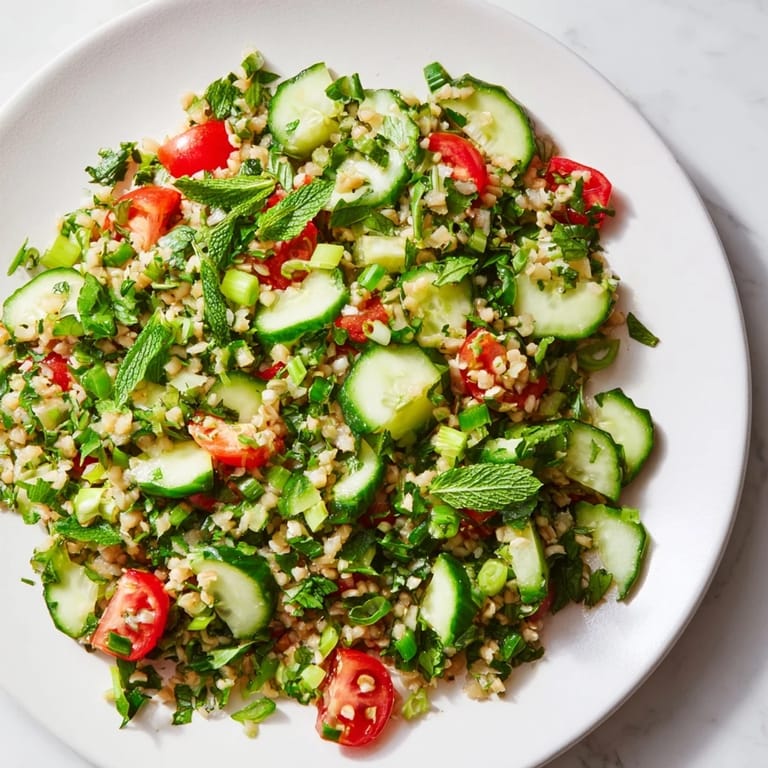
 This salad tastes like generosity and simplicity, like someone saying, "eat this, you'll feel better." Make it when you want to taste summer in a bowl, or when someone important is coming to dinner and you want to give them something that feels both effortless and deeply intentional.
Recipe FAQs
- → What is the main grain used in Lebanese tabbouleh?
Fine bulgur wheat is used as the primary grain, soaked in boiling water until tender.
- → Can I make a gluten-free version of this dish?
Yes, replacing bulgur with cooked quinoa creates a gluten-free alternative without compromising texture.
- → Which herbs are essential for authentic flavor?
Flat-leaf parsley and fresh mint contribute the bright, aromatic essence typical to this salad.
- → How is the dressing prepared?
A simple mix of extra-virgin olive oil, freshly squeezed lemon juice, salt, and pepper is whisked together and tossed with the salad.
- → What is the best way to serve this salad?
Serve chilled or at room temperature, pairing well with grilled meats, falafel, or as part of a mezze platter.
- → How long can the salad be stored?
It is best enjoyed fresh but can be refrigerated for up to 2 days without losing flavor or texture.