 Pin It
 The first time I truly understood falafel was standing in my friend Rima's kitchen in Beirut, watching her mother work with such ease, as if her hands already knew where to go. She never measured the herbs—just grabbed fistfuls of parsley and cilantro, tossed them into the food processor with soaked chickpeas, and somehow knew the exact moment to stop. That texture, coarse but holding together, was the secret I'd been missing in every batch I'd made at home. When I finally got it right weeks later, the smell of cumin and coriander hitting hot oil, I understood why this humble chickpea fritter had traveled across continents and still tasted like home to so many people.
I made these for a potluck once and watched them disappear in minutes, faster than the hummus, faster than the bread. A guy I barely knew came back to the kitchen asking for the recipe, and I realized falafel had this power—it broke through the awkwardness of being new to a group, turned a plate of appetizers into a conversation starter.
Ingredients
- Dried chickpeas (1 cup): Don't use canned—they'll make your falafel mushy and heavy. The dried ones, after a good soak, give you that exact texture Rima's mother understood by feel alone.
- Fresh parsley and cilantro (1 cup parsley, 1/2 cup cilantro): These aren't just garnish here; they're the soul of the thing. Use them packed into your measuring cup, and don't skip either one.
- Onion and garlic (1 small onion, 3 cloves): Fresh and raw, they'll perfume the whole batch with a sharp, clean bite that keeps everything from tasting one-dimensional.
- Ground cumin and coriander (2 tsp and 1 tsp): Toast them in a dry pan first if you have time—it wakes them up and deepens their flavor in ways you'll feel the moment you bite in.
- Cayenne pepper (1/2 tsp, optional): This is your heat control; start with less and taste as you go, since it gets stronger once everything's mixed.
- Baking powder (1 tsp): This is what gives you that light, almost fluffy interior—skip it and you'll end up with hockey pucks.
- All-purpose flour (3 tbsp): Use chickpea flour if you're keeping things gluten-free; it works just as well and adds a subtle nuttiness.
- Vegetable oil: You'll need enough to fill your pot 2 inches deep; use something neutral that won't overpower the herbs.
Tired of Takeout? 🥡
Get 10 meals you can make faster than delivery arrives. Seriously.
One email. No spam. Unsubscribe anytime.
Instructions
- Soak the chickpeas:
- Rinse your dried chickpeas and cover them with cold water—make sure the water level is way above them because they'll absorb a lot as they plump up overnight. This step can't really be rushed; the chickpeas need those 8–12 hours to become tender but still hold their shape.
- Pulse everything together:
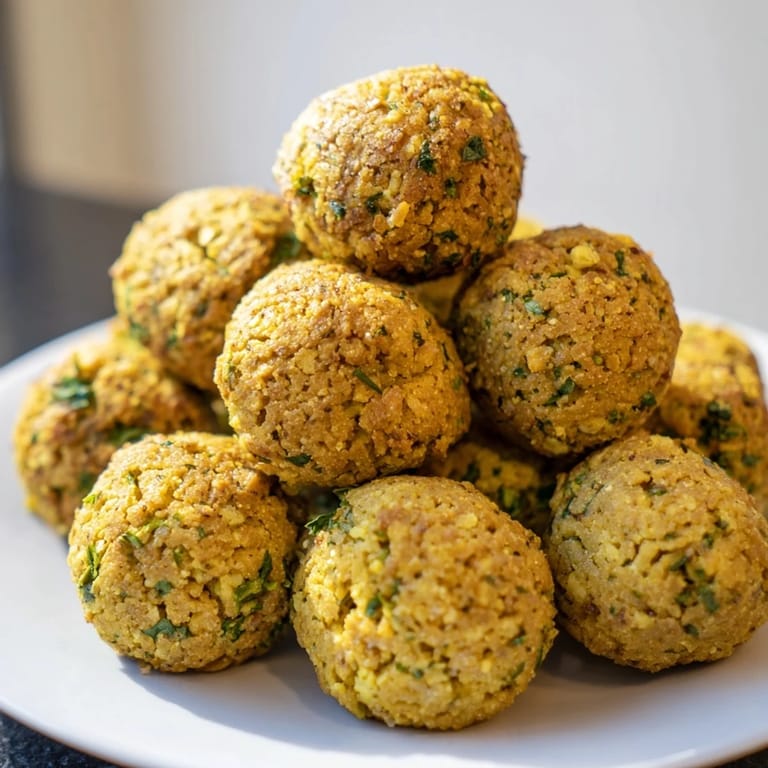
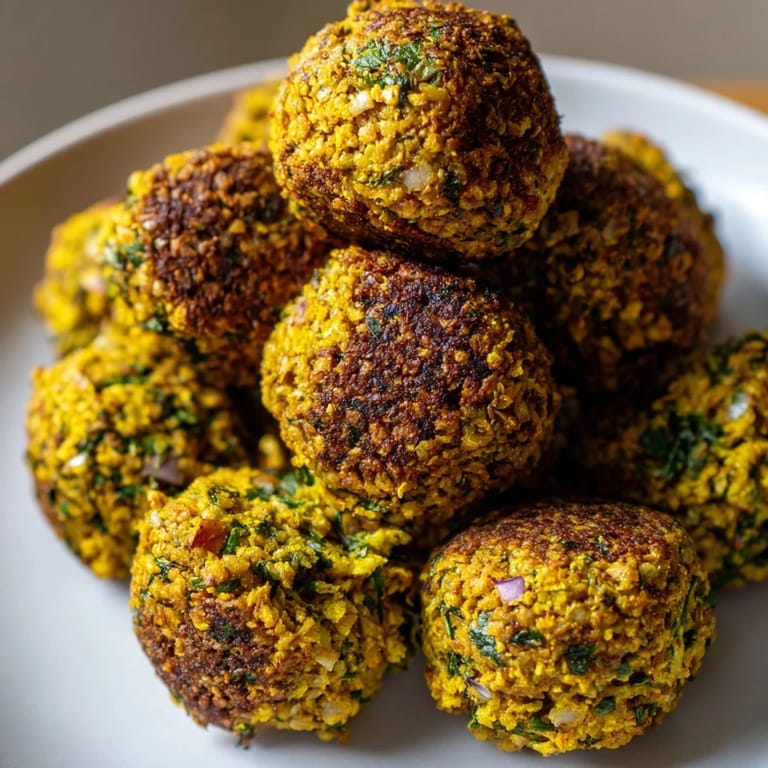
- Drain and pat your chickpeas dry, then put them in the food processor with the onion, garlic, parsley, and cilantro. Pulse—don't blend—until it looks coarse and chunky, like wet sand that holds together when you squeeze it. This texture is everything.
- Season and bind:
- Add your cumin, coriander, cayenne, baking powder, salt, pepper, and flour, then pulse again just until combined. You're looking for even distribution without overdoing it; overprocessing turns your falafel dense.
- Form into balls:
- Wet your hands—this keeps the mixture from sticking—and roll it into balls about the size of a grape or walnut. If the mixture feels too loose and won't hold, add another tablespoon of flour and mix again.
- Heat your oil:
- Fill your pot with 2 inches of vegetable oil and use a thermometer to get it to 350°F (175°C). If you don't have a thermometer, drop a small piece of bread in; if it browns in about 60 seconds, you're ready.
- Fry in batches:
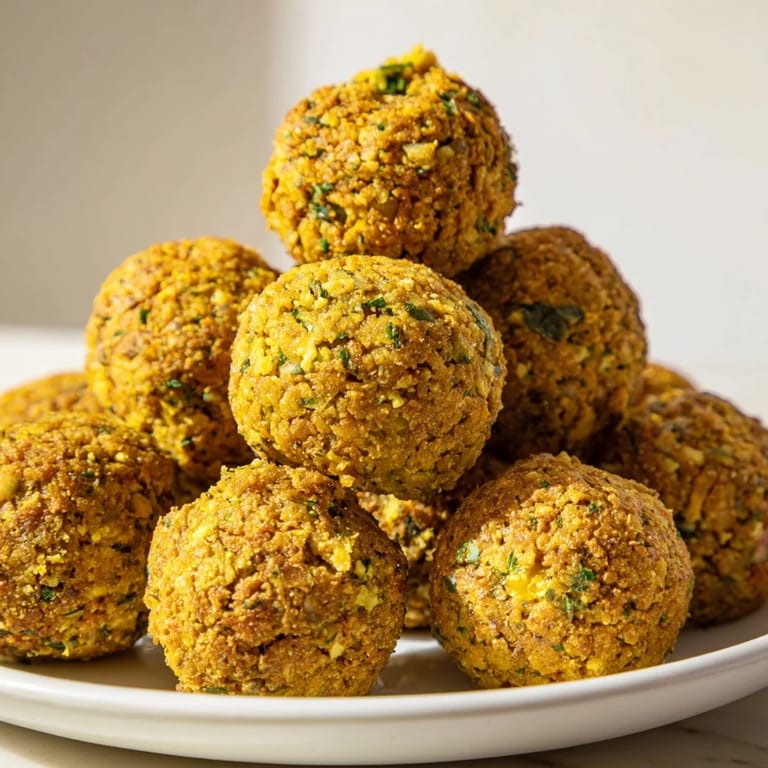
- Don't crowd the pot—fry 4–5 falafel at a time so the oil stays hot. They'll take 3–4 minutes, and you'll know they're done when they're deep golden brown and crispy on the outside. A slotted spoon is your friend here.
- Drain and serve:
- Lift them out with that slotted spoon and set them on paper towels to drain. They're best served warm, still a little steaming, tucked into pita bread with tahini sauce, fresh tomato, cucumber, and pickles.
 Pin It
 I made these for my partner after a long week, just the two of us at the kitchen counter with some hummus and warm pita bread. We didn't say much, just ate quietly, and somehow that felt like more than a meal—it felt like care, like a small moment of peace we both needed.
The Herb Question
People always ask me if they can substitute the herbs or use dried ones instead of fresh. The short answer is no—not if you want the real thing. Fresh parsley and cilantro bring a brightness and freshness that dried herbs simply can't replicate; they're not interchangeable here. If you hate cilantro with a passion, you can reduce it or skip it entirely, but don't replace it with something else. The herbs aren't a background flavor; they're literally what makes falafel taste like falafel.
Baking Versus Frying
I understand the appeal of a baked version—less oil, less mess, less standing over a hot pot. And yes, you can brush these with oil and bake them at 400°F for 20–25 minutes, turning halfway through. But I'm honest about it: they won't be the same. They'll be good, maybe even great if you're careful, but they won't have that crispy exterior and light, almost creamy interior that comes from a quick dip in hot oil. If you're frying, you're getting the real experience; if you're baking, you're making a compromise, and there's nothing wrong with that—just know what you're choosing.
Serving and Storage
Warm falafel in pita with tahini sauce, fresh tomato, cucumber, pickles, and a handful of greens is the obvious move, but they're also incredible as part of a mezze platter or crumbled over a salad. Leftovers freeze beautifully for up to a month; just fry them straight from frozen and add a minute or two to the cooking time. You can also refrigerate them for a few days and reheat them in a low oven to get the crispiness back.
- Make them a few hours ahead if you're bringing them to someone's house—they travel well and taste good at room temperature, though reheating never hurts.
- If you want to add extra flavor, mix in 1/2 tsp ground cardamom or sumac before forming the balls; it's subtle but shifts the whole thing in an interesting direction.
- Serve them while they're still warm enough to steam slightly inside the pita—that's when they're at their best.
 Pin It
 These falafel are simple, honestly, but they carry so much history and care in every bite. Once you've made them this way, you'll understand why people keep coming back.
Recipe FAQs
- → What is the best way to soak chickpeas for falafel?
Soak dried chickpeas in plenty of cold water overnight (8-12 hours) to soften them and ensure an even texture.
- → Can falafel balls be baked instead of fried?
Yes, brush the balls with oil and bake at 400°F (200°C) for 20-25 minutes, turning halfway for even cooking.
- → How do fresh herbs affect the flavor?
Fresh parsley and cilantro provide brightness and herbal notes, balancing the spices for a vibrant taste.
- → What oils are recommended for frying falafel?
Use vegetable oil or any neutral oil with a high smoke point to achieve crispy, golden results.
- → How to ensure falafel balls hold together well?
Add flour as a binder and pulse carefully to maintain a coarse texture that sticks when pressed but isn't pureed.
- → Are these falafel balls suitable for vegan diets?
Yes, made entirely from plant-based ingredients including chickpeas, herbs, and spices without animal products.