 Pin It
 There's something about the smell of tahini hitting the food processor that takes me straight to a small kitchen in Beirut, watching my neighbor make hummus without ever measuring anything. She'd just know when the chickpeas had become cloud-like, when the lemon was singing just right. Years later, I realized the magic wasn't in some secret technique—it was in patience and listening to what the blender was telling me. This version captures that same philosophy: simple ingredients, no fuss, just pure creamy comfort that somehow tastes like home no matter where you're making it.
I made this for a dinner party once and forgot the paprika garnish until the very last second—grabbed the paprika tin in a mild panic, dusted it on, and suddenly everyone was asking what made it look so stunning. It's funny how presentation and taste can turn a simple dip into the thing people remember most about the meal.
Ingredients
- Cooked chickpeas: Use canned if you're short on time, but rinse them well so the liquid doesn't cloud your hummus.
- Tahini: The backbone of everything—stir it well before measuring because the oil separates, and a good tahini makes all the difference.
- Freshly squeezed lemon juice: Bottled won't give you that brightness that makes people ask what you did differently.
- Garlic: One small clove is enough; hummus should whisper garlic, not shout it.
- Cold water: Keep it nearby because you'll likely need it to adjust the texture as you blend.
- Ground cumin: It adds warmth without being loud, grounding all the other flavors.
- Fine sea salt: Taste as you go because everyone's salt tolerance is different.
- Extra virgin olive oil: Save your good bottle for this—the drizzle on top is where people taste quality.
- Sweet paprika or sumac: More than just color, it adds a gentle sweetness or tang depending on which you choose.
- Fresh parsley: Chop it just before serving so it stays bright and alive on the plate.
Tired of Takeout? 🥡
Get 10 meals you can make faster than delivery arrives. Seriously.
One email. No spam. Unsubscribe anytime.
Instructions
- Gather everything in the processor:
- Add chickpeas, tahini, lemon juice, minced garlic, cold water, cumin, and salt all at once. There's no order that matters here—the blender will find its way.
- Let it run:
- Blend on high until it shifts from grainy to glossy, stopping to scrape down the sides a few times. You're listening for the sound to change, watching for the transformation from meal to silk.
- Adjust to your liking:
- If it's too thick, add water one tablespoon at a time—patience here beats rushing. Taste it, and if it needs more lemon brightness or salt depth, now's the moment to add it.
- Create the canvas:
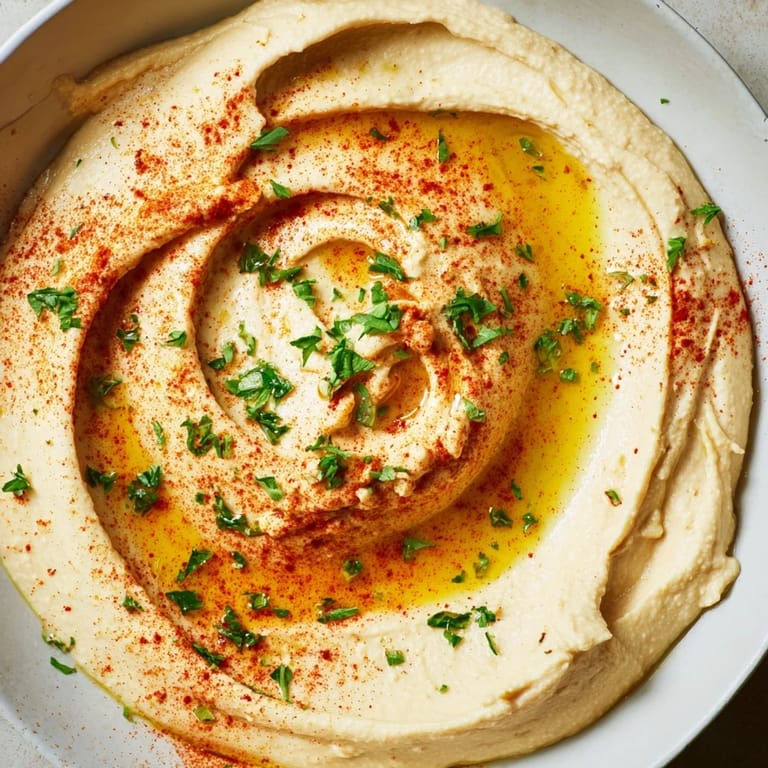
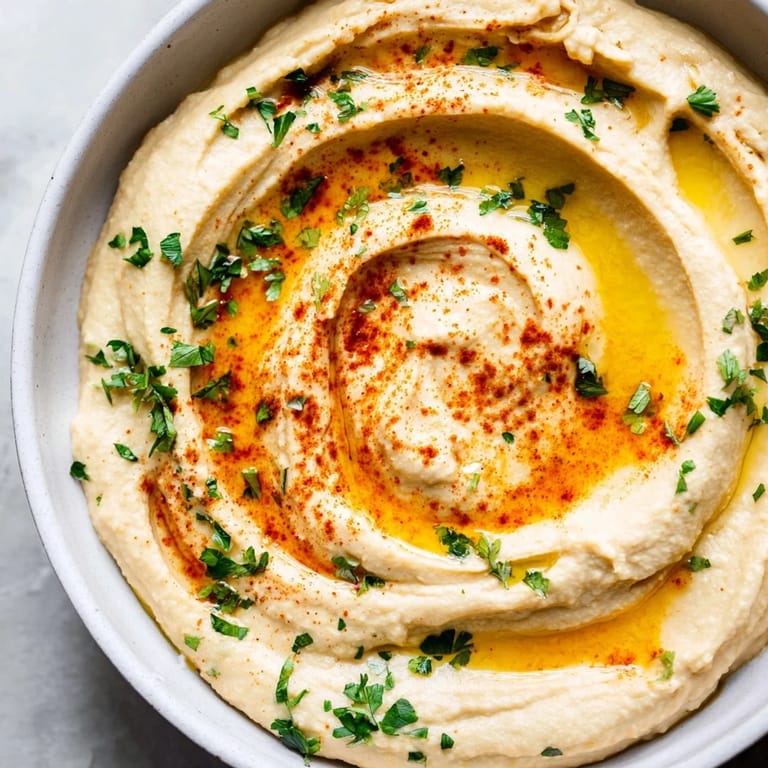
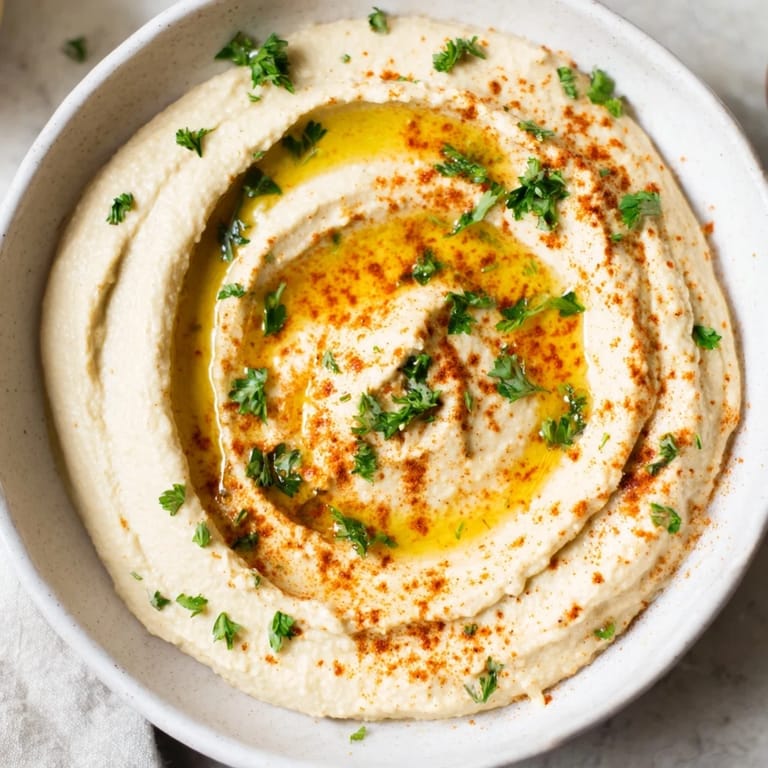
- Spread the hummus into a shallow dish and use the back of a spoon to make gentle swirls or a small well in the center—it's both functional and beautiful.
- Finish with intention:
- Drizzle olive oil into that well, dust with paprika or sumac, and scatter parsley across the top like you mean it.
- Serve while it matters:
- Bring it to the table with warm pita, vegetables, or whatever else is calling. Hummus is best when people gather around it while it's still cool and creamy.
 Pin It
 My best memory of hummus isn't eating it at some fancy restaurant—it's the quiet moment when a friend tasted mine for the first time and closed their eyes like she was tasting something she'd been missing without knowing it. That's when I understood this dish isn't really about technique; it's about feeding people in a way that feels genuine and unhurried.
The Texture Question
Hummus texture is personal and worth getting right. Some people want it almost pourable, others prefer it thick enough to hold a spoon. Don't let anyone convince you there's only one way—your kitchen, your blender, your preference. I've learned that the consistency I love changes with the season and what I'm serving it with, so stay flexible and keep that water nearby to adjust on the fly.
Tahini: The Make-or-Break Ingredient
Tahini can be finicky, and it took me a few batches to understand why. The quality varies wildly between brands, and some tahinis are so assertive they bully the other flavors. Others are so mild you wonder if they're doing anything at all. The best approach is to taste your tahini before committing it to the blender—if it tastes bitter or chalky on its own, that's a sign it won't improve once blended. Hunt for a tahini that tastes nutty and clean, and your hummus will speak for itself.
Serving and Storage
Hummus keeps beautifully for up to four days in an airtight container in the fridge, which makes it perfect for when you want something real to reach for. I sometimes drizzle it with a little extra olive oil before storing it—acts as a seal and makes it taste fresher when you pull it out. It also gives you permission to make hummus without an occasion, just because you want something good in your fridge waiting.
- Cold hummus straight from the fridge is lovely, but letting it sit at room temperature for 15 minutes brings out all its subtle flavors.
- If it's been in the fridge and seems stiff, a tiny bit of warm water and a good stir will bring it back to life.
- Serve it with whatever you have—pita, vegetables, bread, or just a spoon and good company.
 Pin It
 Make this hummus and you'll find yourself making it again, and again, until it becomes the thing people expect when they come to your kitchen. That's how it should be—not complicated, just honest and made with care.
Recipe FAQs
- → How can I make the spread smoother?
Peeling the chickpeas before blending results in a silkier, creamier texture.
- → What is the best way to adjust the consistency?
If the mixture is too thick, add cold water gradually, one tablespoon at a time, until the desired smoothness is reached.
- → Which spices enhance the flavor?
Ground cumin adds warmth, while paprika or sumac sprinkled on top provides a vibrant finish.
- → What are ideal accompaniments for serving?
Serve with warm pita bread, carrot sticks, cucumber slices, or as part of a mezze platter.
- → How long can this dish be stored?
Store in an airtight container in the refrigerator for up to four days to maintain freshness.