 Pin It
 The first time I understood what labneh truly was, I wasn't in a kitchen at all—I was sitting cross-legged on a friend's living room floor in Beirut, watching her grandmother move through her kitchen with the kind of ease that comes from fifty years of knowing exactly what she's doing. She handed me a small ceramic bowl filled with the creamiest, tangiest white cheese I'd ever tasted, drizzled with olive oil so green it seemed to glow, and told me it was just yogurt that had learned to be patient. That moment changed how I thought about cooking: sometimes the best dishes aren't about technique or fancy ingredients, but about time and trust.
I made labneh for the first time on a Tuesday evening when I was trying to impress someone who had just moved into my neighborhood—someone who kept mentioning how much they missed real Middle Eastern food. I didn't have a fancy recipe or special ingredients, just yogurt and patience and the faint hope that this would actually work. When I unwrapped that cheesecloth twenty-four hours later and saw the transformation, I felt like I'd discovered a small kitchen miracle. Serving it to them felt like handing over something real and honest, and somehow that mattered more than any complicated dish ever could.
Ingredients
- Full-fat plain yogurt (1 kg or about 4 cups): This is the entire foundation of your labneh, so quality matters more than you'd think—Greek yogurt or already-strained yogurt works beautifully and will save you time since it has less whey to begin with.
- Fine sea salt (½ tsp): This does more than flavor; it draws out moisture and helps preserve the finished cheese, so don't skip it or swap it for table salt.
- Extra-virgin olive oil (2 tbsp): The generous drizzle isn't just garnish—it's protection and flavor, so use something you actually enjoy tasting.
- Dried mint or zaatar (1 tsp, optional): These additions feel like the kitchen signature of whoever's serving it, so choose what speaks to you or what you have on hand.
- Aleppo pepper or sumac (a pinch, optional): Either one adds a whisper of color and a gentle flavor note that makes the whole bowl feel intentional.
Tired of Takeout? 🥡
Get 10 meals you can make faster than delivery arrives. Seriously.
One email. No spam. Unsubscribe anytime.
Instructions
- Stir salt into yogurt:
- Pour your yogurt into a bowl and sprinkle the salt over the top, then stir it in completely with a spoon until you can't see any white streaks anymore.
- Prepare your straining setup:
- Line a sieve or colander with cheesecloth folded in half, or use a clean, thin kitchen towel—whatever you choose, make sure it drapes over the sides so you'll have something to gather and tie later. Set it over a deep bowl that will catch all the whey that drains out.
- Transfer yogurt to cloth:
- Spoon or pour the salted yogurt into the lined sieve, then gather the cloth edges up and over the top like you're wrapping a small package, securing it gently so nothing spills but the whey can still escape underneath.
- Begin the waiting:
- Slide the whole setup into the refrigerator and let time do the work—twelve hours for something soft and spreadable, or the full twenty-four hours if you want a firmer, almost crumbly texture. You'll hear the occasional drip of whey hitting the bowl below, which is exactly what should be happening.
- Transfer to serving dish:
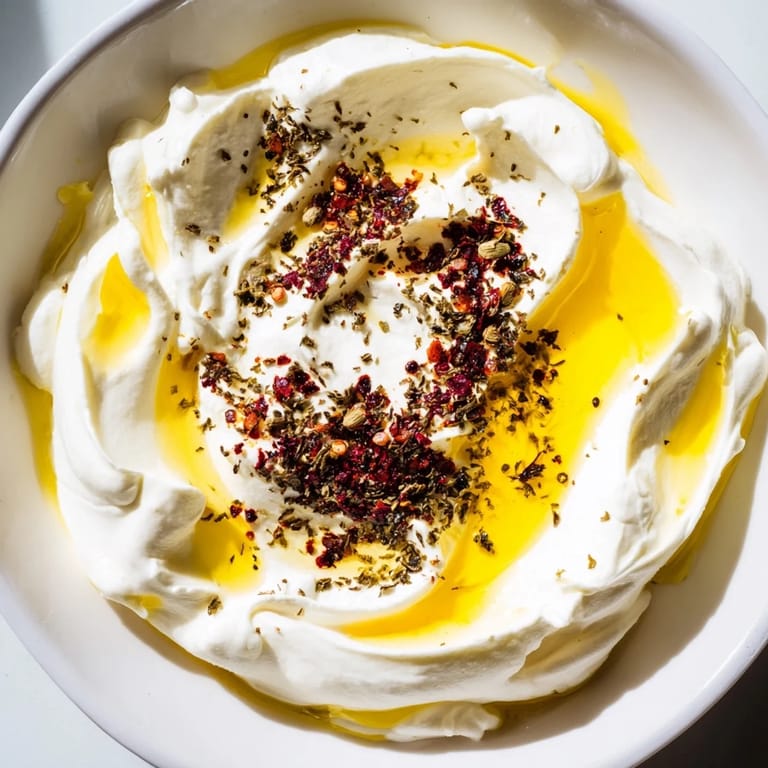
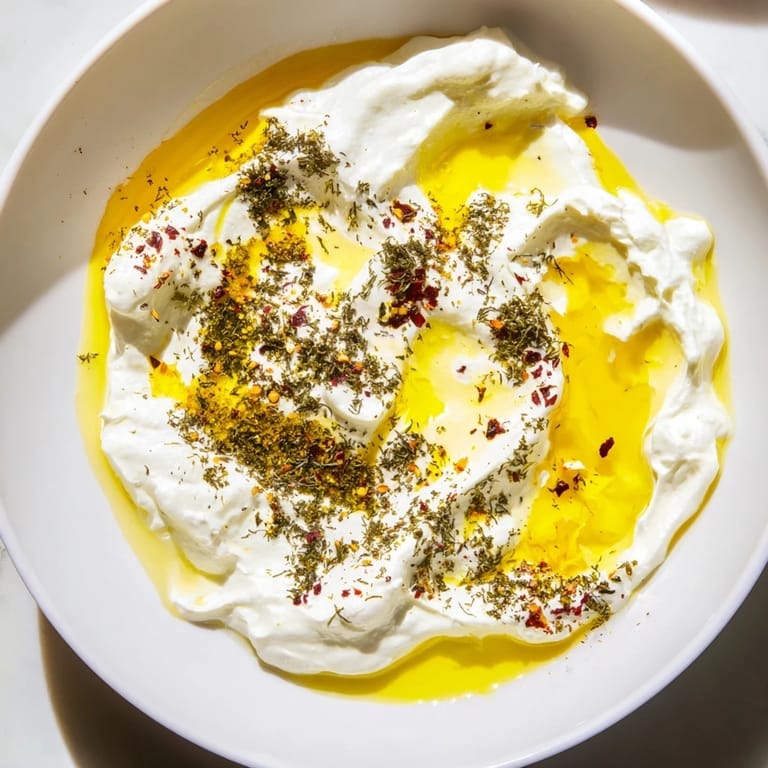
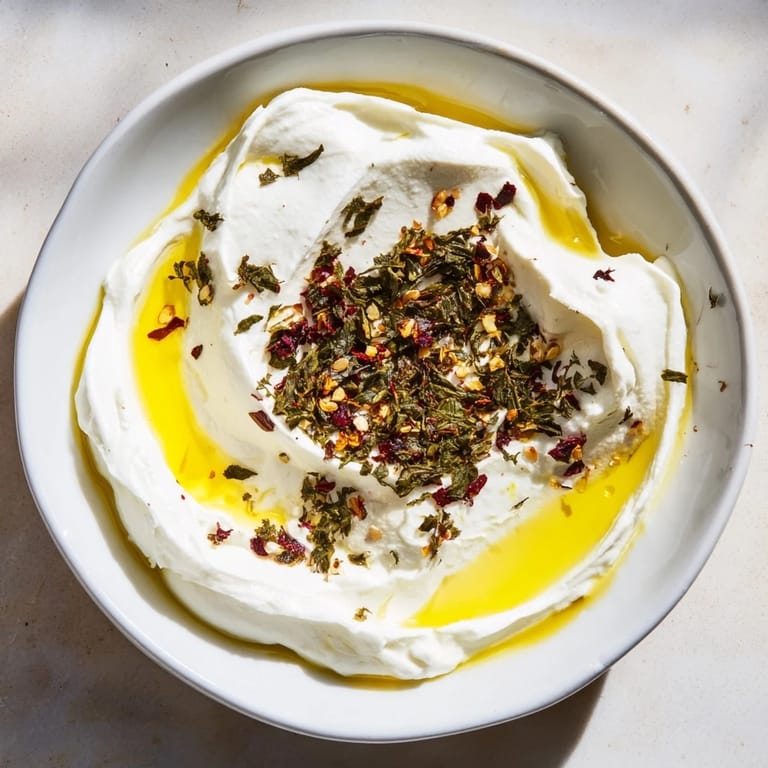
- Once the straining time is finished, unwrap the cheesecloth carefully and tip the thickened labneh into a shallow bowl or plate, creating a gentle well in the center if you want it to look intentional.
- Finish with oil and spices:
- Pour the olive oil slowly over the labneh, letting it pool slightly, then scatter your chosen garnish—mint, zaatar, or that whisper of Aleppo pepper—across the top like you mean it.
- Chill and serve:
- Keep it cold until you're ready to serve it alongside warm pita, fresh vegetables, or olives as part of a mezze spread.
 Pin It
 There's something almost meditative about opening the refrigerator and finding that your yogurt has become something entirely new, something that tastes like concentrated cream and tang and the promise of good eating ahead. The first spoonful always feels like a small celebration, even though all you really did was wait.
Why This Cheese Changed Everything for Me
Before labneh, I thought homemade cheese required special equipment and skill and probably some inherited knowledge I didn't possess. But labneh taught me that sometimes the most sophisticated flavors come from the simplest processes—just yogurt, salt, time, and cloth. It's humbling in the best way, and it makes you respect every spoonful.
Storage and Keeping
Once your labneh is finished, it'll keep in the refrigerator for up to five days, though it rarely lasts that long in my house. If you want to store it longer or give it as a gift, pack it into a clean jar and cover it completely with olive oil—the oil acts as a seal and also becomes infused with the cheese's flavor, which is a beautiful bonus.
Two Beautiful Variations to Try
If you want to shape labneh into small balls for a prettier presentation or for gifting, strain it for the full twenty-four hours until it's quite firm, then use a small spoon or melon baller to create walnut-sized spheres and nestle them in a jar covered with good olive oil, dried herbs, and maybe some chili flakes for color. For a vegan version that tastes almost identical, use a thick plant-based yogurt—coconut or oat work beautifully—and follow the exact same process, though it may need a few extra hours to reach the same thickness.
- Make sure your plant-based yogurt is truly thick to begin with, or it'll drain for days without reaching the right consistency.
- Labneh balls make an impressive addition to a mezze platter and look intentional without being fussy.
- Remember that homemade labneh will always be slightly tangier and less dense than store-bought versions, and that's actually the point.
 Pin It
 Make labneh because it's simple and because it's real, because it asks almost nothing of you except patience, and because once you taste it fresh and creamy with good olive oil pooling on top, you'll understand why it's been part of Levantine tables for generations.
Recipe FAQs
- → What type of yogurt is best for labneh?
Full-fat plain yogurt, preferably Greek or strained, yields the creamiest and richest labneh texture.
- → How long should I strain the yogurt?
Strain yogurt for 12 hours for a soft spreadable labneh or up to 24 hours for a firmer, sliceable texture.
- → Can labneh be made vegan?
Yes, using thick plant-based yogurt allows a vegan alternative while maintaining a similar texture.
- → What garnishes complement labneh?
Drizzling extra-virgin olive oil and sprinkling dried mint, zaatar, sumac, or Aleppo pepper enhances its flavor beautifully.
- → How should labneh be stored?
Keep labneh refrigerated in an airtight container; it stays fresh for up to five days.