 Pin It
 The first time I made kefta, I was in a cramped kitchen in Marrakech watching my host mother shape the meatballs with such ease that I felt clumsy attempting the same. Years later, I recreated that moment at home, and something clicked—the warm spices, the sizzle of those little spheres hitting the sauce, the way the whole apartment smelled like cumin and cinnamon for hours. Now I make it whenever I want to feel that same grounded calm, that sense of being somewhere between memory and present.
I remember my neighbor knocking on my door mid-cooking, drawn by the smell, and I ended up setting an extra place without planning for it. That's the magic of this dish—it's generous by nature, and somehow stretches itself to welcome whoever shows up.
Ingredients
- Ground beef or lamb: Lamb gives you that authentic North African depth, but beef works beautifully if that's what you have, and the difference is smaller than you'd think.
- Fresh parsley and cilantro: Don't skip these or use dried—they're what make the kefta taste bright and alive rather than just spiced.
- Ground cumin and coriander: Buy them whole and toast them briefly if you can; the flavor difference is real and worth the two extra minutes.
- Sweet paprika: This is different from smoked paprika—it's milder and adds color without that deep smokiness.
- Ground cinnamon: Just a touch keeps everything warm and rounded rather than sharp.
- Couscous: Use the regular kind, not instant if you have a choice, though honestly either works fine.
- Vegetable or beef broth: Homemade is lovely, but a good quality store-bought broth is absolutely fine here.
Tired of Takeout? 🥡
Get 10 meals you can make faster than delivery arrives. Seriously.
One email. No spam. Unsubscribe anytime.
Instructions
- Mix the kefta:
- Combine the ground meat with grated onion, garlic, herbs, and spices in a bowl and mix with your hands until everything is evenly distributed—don't squeeze too hard or the meatballs will be dense. Shape them into walnut-sized balls, which should give you around 20 to 24 pieces.
- Start the sauce base:
- Heat olive oil in a large pot and cook the sliced onion until it's soft and golden, which takes about five minutes. This is where the sauce gets its sweetness, so don't rush it.
- Build the vegetable layer:
- Add carrots, bell pepper, and zucchini, stirring occasionally for four to five minutes until they start to soften slightly. The goal is just to wake them up, not cook them completely.
- Add tomatoes and spices:
- Stir in diced tomatoes and minced garlic, cooking for about two minutes before adding all your spices—cumin, coriander, turmeric, cinnamon, paprika, and cayenne if you want the heat. The spices will bloom and perfume the whole kitchen.
- Pour in the broth:
- Add your broth and bring the mixture to a gentle simmer, then taste and adjust the salt and pepper. This is your sauce base, and it should smell incredible.
- Cook the kefta:
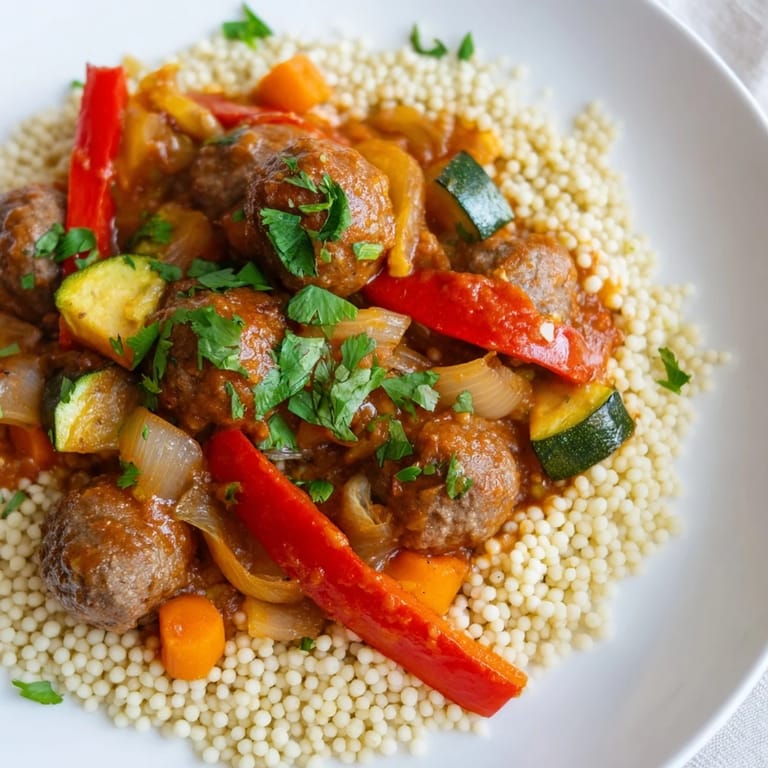
- Gently settle the meatballs into the simmering sauce, cover, and let everything cook for about 25 minutes, stirring gently halfway through. The kefta will firm up and the vegetables will become tender.
- Prepare the couscous:
- Place couscous in a bowl with salt and olive oil, pour over boiling water, cover tightly with a plate, and let it sit for five minutes. Fluff gently with a fork before serving.
- Plate and serve:
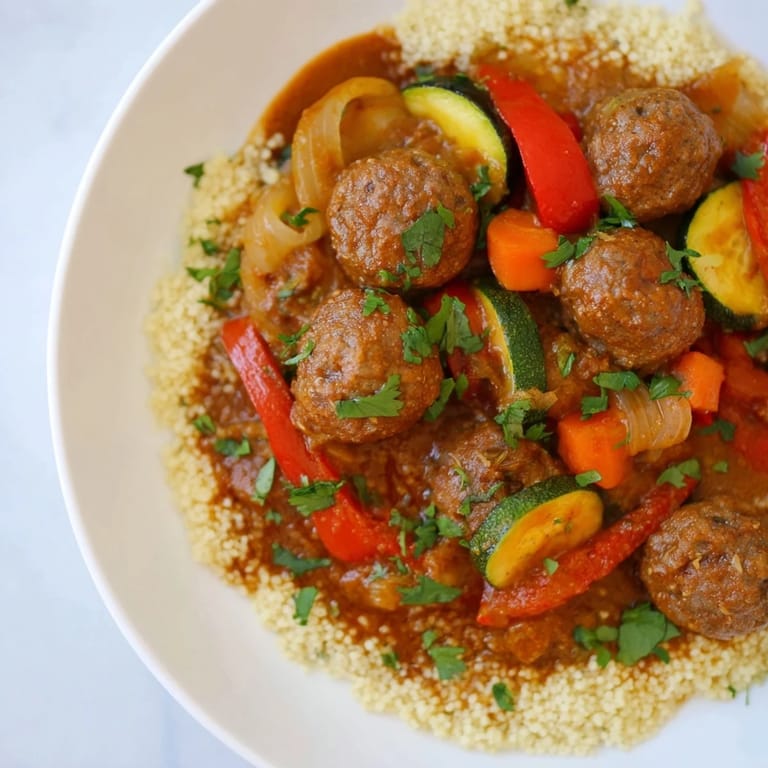
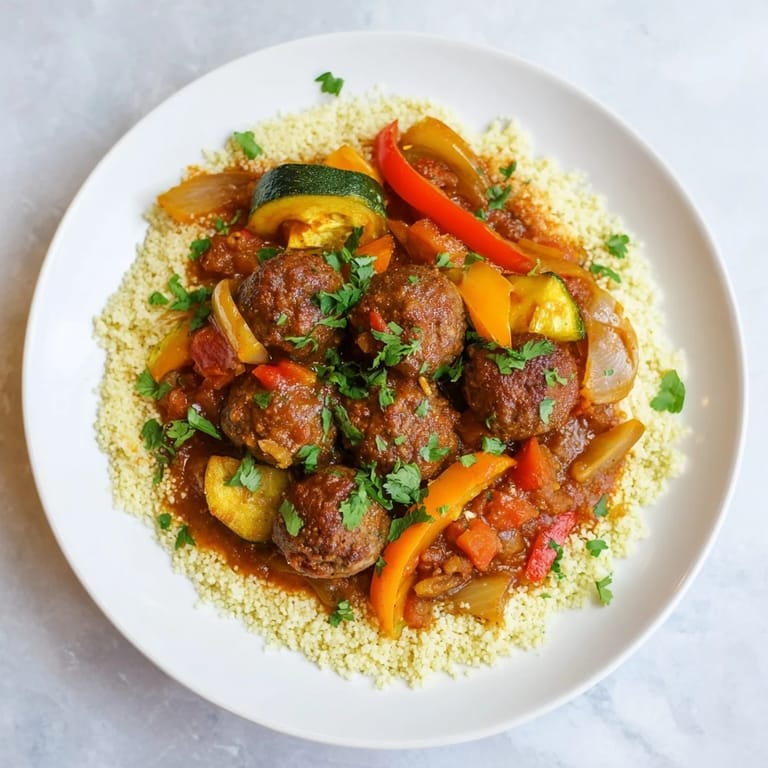
- Mound the couscous on plates or a large platter, then spoon the kefta, vegetables, and sauce generously over the top. Finish with fresh cilantro or parsley.
 Pin It
 What surprised me most was how this dish became my go-to when someone I cared about was going through a difficult time. There's something about serving it that feels like wrapping someone in warmth, and somehow people always lingered longer at the table.
The Spice Foundation
The real soul of kefta lives in the spice blend—it's not meant to be aggressive or one-note, but rather a warm, enveloping layer of flavor that ties the meat to the sauce. I learned this by accident once when I doubled the cayenne, thinking more heat meant more flavor, and ended up with something that tasted one-dimensional. Now I approach the spices like I'm building a room—each one has a role, and they matter most when they're working together quietly.
Couscous as Canvas
Couscous gets a bad rap for being boring, but that's only because it's often treated as an afterthought. When you let it absorb that olive oil and salt before adding the hot water, when you fluff it gently with a fork instead of stirring it to death, it becomes something almost delicate underneath all that rich sauce and tender meat. It's the quiet character that lets everything else shine.
Variations and Flexibility
The beauty of this dish is that it bends without breaking—I've made it with chicken when beef felt heavy, with extra chickpeas when I wanted more substance, and once even added a pinch of saffron just because I had it on hand and the result was revelatory. The vegetables can shift with the season or what's in your crisper drawer, and the sauce is forgiving enough to handle it all with grace.
- Lamb gives the most authentic flavor, but ground chicken or turkey also work wonderfully and taste lighter.
- Add a can of chickpeas in the last few minutes if you want extra protein and a different texture.
- A small pinch of saffron stirred into the broth before simmering the kefta brings an almost invisible richness that people will taste but never quite name.
 Pin It
 This is the kind of meal that tastes better the second day, that fills your home with a smell you'll remember long after you've eaten. Make it with someone if you can—there's something about shaping kefta together that invites conversation and slows everything down.
Recipe FAQs
- → What type of meat works best for the kefta?
Ground beef or lamb provide the best texture and flavor, but you can also substitute with chicken or plant-based mince for variation.
- → How do I achieve fluffy couscous?
Pour boiling water over couscous with olive oil and salt, cover tightly, let stand for 5 minutes, then fluff with a fork gently.
- → Can I add more protein to this dish?
Yes, adding chickpeas to the vegetable sauce adds extra protein and texture without altering the core flavors.
- → Which spices are essential for authentic flavor?
Cumin, coriander, paprika, cinnamon, and turmeric combine to create a warm, aromatic profile typical of North African dishes.
- → Is it possible to prepare this dish ahead of time?
Yes, the kefta and vegetable sauce can be made in advance and reheated gently before serving to blend the flavors well.