 Pin It
 The first time I made maklouba, I stood in my kitchen watching the pot steam under its tight foil seal, completely mesmerized by the promise of what was happening inside. My grandmother had described the moment of inversion so many times—the dramatic flip that turns everything inside out—that I half expected it to fail. But when I placed that platter on top and flipped it over, hearing the soft slide of rice and golden vegetables onto the dish, I understood why this meal feels like a small miracle every single time.
I made this for a dinner party on a cold November evening, and I remember my friend asking if I'd learned to cook professionally because the presentation was so striking. I hadn't—I'd just trusted the process, and the rice had cooperated beautifully. That's when maklouba became more than a recipe to me; it became my way of showing people I cared enough to attempt something that looked almost impossible.
Ingredients
- Bone-in chicken pieces (1.2 kg): Bones add incredible flavor to the broth that soaks into every grain of rice, and the meat stays juicy because it braises gently in spiced stock.
- Basmati rice (2 cups): The grains stay separate and fragrant, never mushy—soaking removes excess starch and ensures fluffy texture.
- Cauliflower florets: Frying gives them golden edges that stay crispy even after the inversion, providing textural contrast.
- Potatoes, sliced thin: They crisp beautifully on the bottom layer and become almost creamy in the center where they touch the broth.
- Onion, sliced: Sautéed until translucent, it dissolves into the spiced oil and flavors the entire dish.
- Spice blend (cumin, coriander, cinnamon, turmeric, allspice, cardamom): This combination is the soul of maklouba—warming, slightly sweet, deeply aromatic without overpowering the chicken.
- Chicken stock or water (5 cups): The cooking liquid must be flavorful enough to season the rice; homemade stock makes a noticeable difference.
- Pine nuts or almonds for garnish: Toasted nuts add a final layer of texture and elegance that feels like a celebration.
Tired of Takeout? 🥡
Get 10 meals you can make faster than delivery arrives. Seriously.
One email. No spam. Unsubscribe anytime.
Instructions
- Prepare the rice with intention:
- Rinse your basmati thoroughly under cold water until the water runs clear, then soak it with salt for 30 minutes. This step feels small but makes the difference between fluffy, separated grains and a starchy clump.
- Brown the chicken until it's golden:
- Heat olive oil in your pot and season the chicken generously with salt and pepper. Don't crowd the pan—give each piece space to develop a deep golden crust on all sides over medium-high heat, which takes about 6 minutes and fills your kitchen with an incredible aroma.
- Build the flavor base with spices:
- After removing the chicken, sauté your sliced onion until it's soft and translucent, then add all the spices at once. Stir constantly for about a minute so they bloom in the hot oil and release their essential oils—you'll smell the shift from raw to warm and toasted.
- Simmer the chicken gently:
- Return the chicken to the pot with your spiced onions, pour in the stock, and let everything bubble gently for 20 minutes. The chicken will cook through and the broth will absorb all those spice flavors.
- Fry the vegetables until they're golden:
- While the chicken simmers, heat vegetable oil in a separate pan and work in batches with the cauliflower and potato slices. Don't skip the frying step—it creates the crispy edges that make this dish special. Drain everything on paper towels so they're not greasy.
- Layer like you're building something precious:
- In a large heavy-bottomed pot, arrange potato slices on the bottom as your foundation, then chicken pieces, then fried cauliflower, and finally your drained rice on top. Press down gently so everything holds together, but don't compress it into cement.
- Cook covered without peeking:
- Pour your reserved broth over the rice until it's just covered, bring the liquid to a bubble over medium heat, then reduce to low and cover tightly with a lid or foil. This is the hardest part—resisting the urge to lift the cover for 35 to 40 minutes. Trust that it's working.
- Rest and gather your courage:
- Turn off the heat and let the pot sit undisturbed for 10 to 15 minutes. This resting time allows the rice to finish absorbing the broth and the whole dish to set slightly, making inversion easier.
- Execute the dramatic flip:
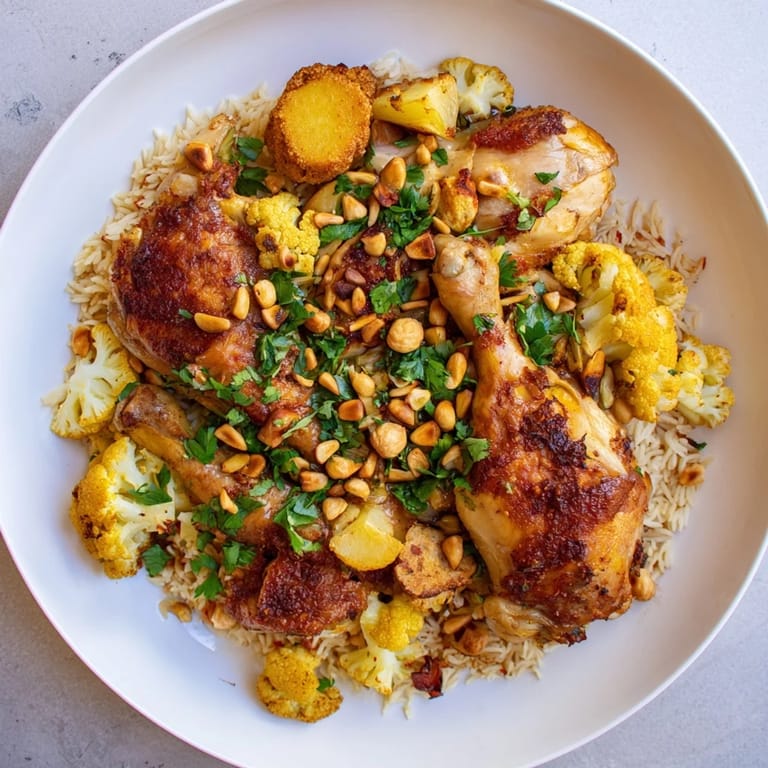
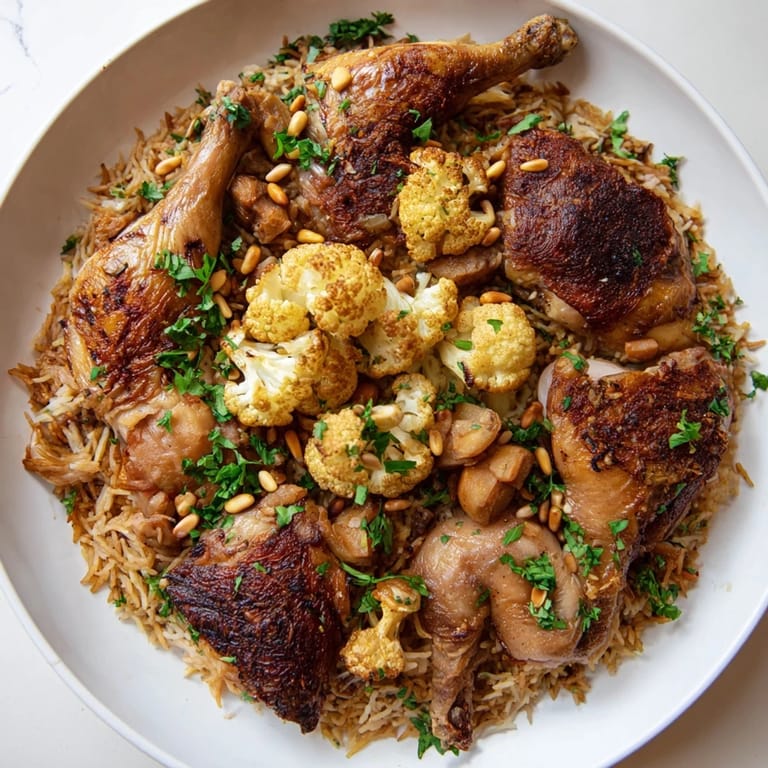
- Place a large serving platter over the pot and, in one confident motion, invert the pot so the platter catches the dish. Gently lift away the pot to reveal your maklouba—golden, layered, and absolutely stunning.
- Finish with celebration:
- Scatter toasted pine nuts and fresh parsley across the top while it's still warm. The garnish is functional—it adds texture and freshness—but it's also the final flourish that says you made something special.
 Pin It
 I'll never forget my aunt watching the maklouba emerge perfectly from the pot for the first time, then looking at me with this expression of pure joy. She said it looked like something from a painting, and in that moment I realized why this dish has survived generations—it's not just delicious, it's an act of care made visible.
The Magic of Layering
Maklouba means 'upside down' in Arabic, and that's exactly what makes this dish so special. The layers each develop differently as they cook—the bottom potatoes become soft and soaked in broth while staying slightly crispy on the exterior, the chicken steams gently and releases flavor into every grain of rice, and the cauliflower holds onto its texture despite being buried under everything else. The inversion isn't just for presentation; it's the moment where all these individual components become something unified and gorgeous. When you flip it, the most flavorful, golden layer—what was the bottom—becomes the crown on top. That's not accident; that's intentional design.
Variations That Work
I've experimented with maklouba in different seasons and with different ingredients, and it's remarkably forgiving. Eggplant works beautifully if you slice it thin and fry it until it's nearly translucent, then layer it in place of or alongside the cauliflower. Carrots add a subtle sweetness and don't need quite as much frying time. For a vegetarian version, simply skip the chicken and use vegetable broth instead of chicken stock, and no one will feel like something essential is missing. I've even added a small pinch of saffron to the broth on special occasions, and it transforms the dish into something even more luxurious. The bones and spices do the heavy lifting, so the foundation remains solid no matter what you adjust.
Serving and Storage Wisdom
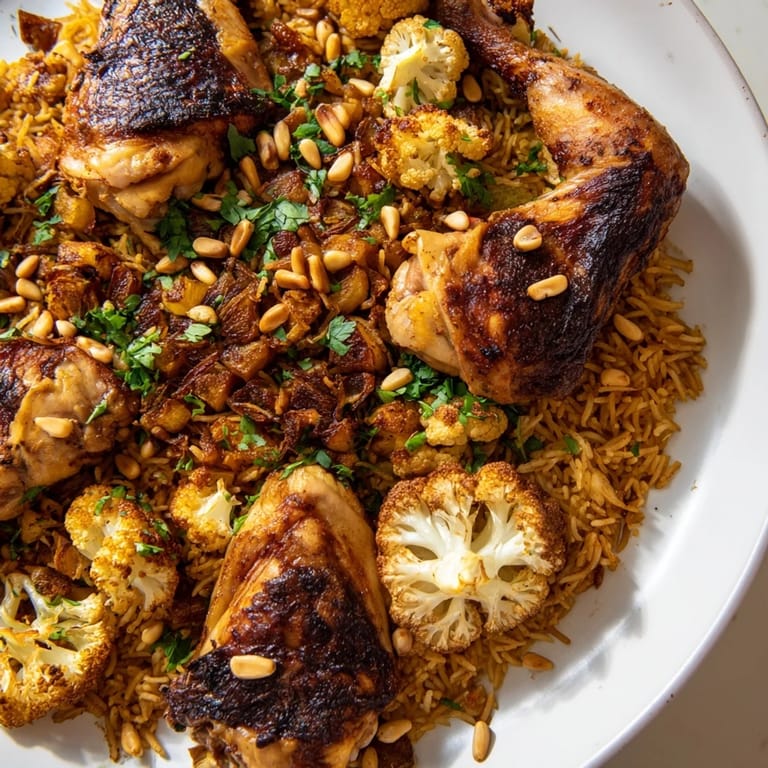
Maklouba is best served immediately after inversion while it's still steaming and the layers haven't had time to settle back into each other. A dollop of cool, tangy yogurt on the side creates a beautiful contrast, or serve it alongside a crisp Arabic salad with tomatoes, cucumbers, and a squeeze of fresh lemon. The leftovers actually improve overnight in the refrigerator as the flavors continue to meld—gently reheat it in a covered pot over low heat with a splash of water to restore moisture, and it tastes even better the next day.
- Store leftovers in an airtight container in the refrigerator for up to three days.
- You can freeze the entire finished maklouba, though the texture of the rice becomes slightly softer upon thawing.
- Never reheat in the microwave, as it cooks unevenly; the stovetop method preserves the structure and flavor much better.
 Pin It
 This is the kind of dish that transforms a regular dinner into something people talk about for months. It's absolutely worth making, and it's far less intimidating than it appears.
Recipe FAQs
- → What is the best rice to use for maklouba?
Basmati rice is preferred for its long grains and fragrant flavor, which complements the spices and layering techniques.
- → How do you fry the vegetables for this dish?
Cauliflower florets and sliced potatoes are fried in vegetable oil until golden and crispy, then drained on paper towels to remove excess oil.
- → Can the chicken be substituted or omitted?
Yes, for a vegetarian variation, omit chicken and use vegetable broth, adding layers of eggplant or carrots for extra flavor.
- → What spices are essential to authentic maklouba?
Ground cumin, coriander, cinnamon, turmeric, allspice, cardamom, and bay leaves create the signature warm and aromatic profile.
- → How is the dish served after cooking?
After cooking, the pot is carefully inverted onto a large platter, unveiling the layered ingredients arranged beautifully for serving.