 Pin It
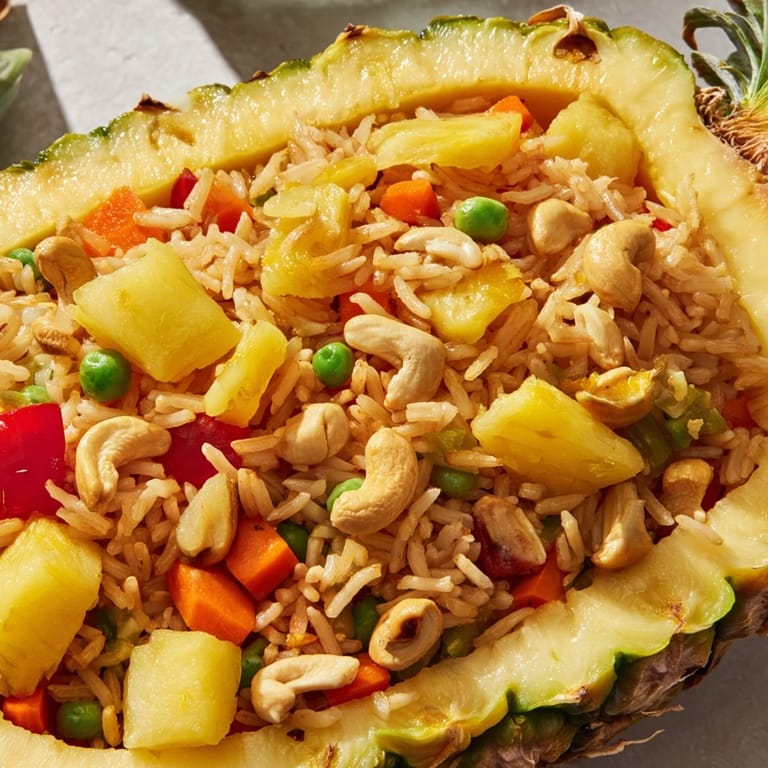
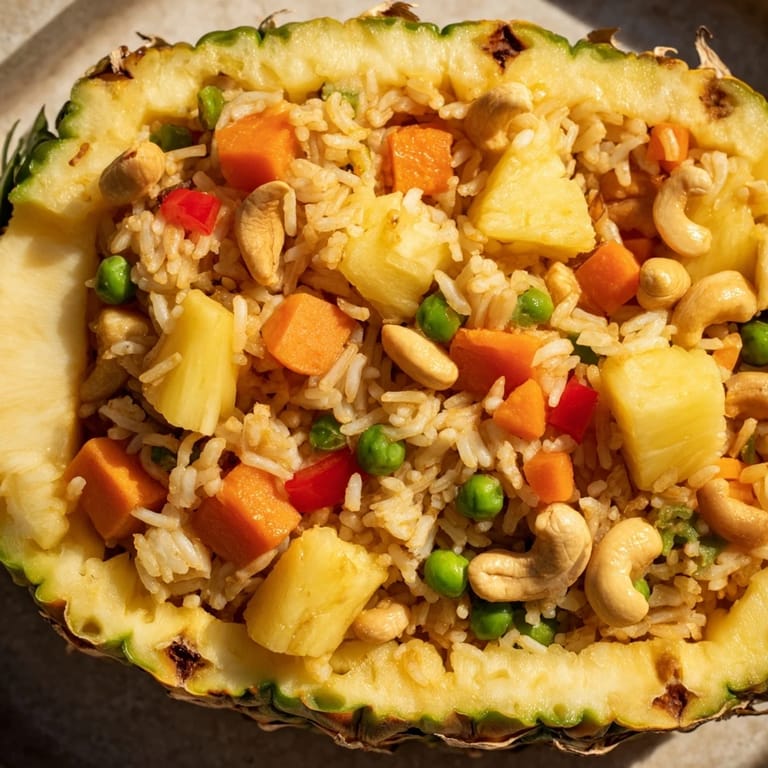
 My wok was smoking when I first attempted this dish, the curry powder hitting the hot oil with a sharp, golden hiss that made me step back. I'd bought the pineapple on impulse at the market, drawn by its sweet smell and the vendor's insistence that it was perfectly ripe. Carving out the shell felt like surgery at first, juice running down my wrists, but once I filled it with that glossy, fragrant rice, I understood why this dish exists. It's not just dinner, it's theater. Every time I make it now, I think about how something so simple can look like you spent hours on it.
I served this at a small dinner party once, and my friend barely let me finish plating before she started taking photos. The pineapple shells sat on a wooden board, steam rising from the rice, cilantro scattered on top like confetti. She said it looked like something from a resort in Phuket. I didn't tell her I'd burned the first batch of rice to the bottom of the wok and had to start over. The second attempt came together in minutes, and no one ever knew.
Ingredients
- Large ripe pineapple: This is your bowl and your sweetness, so choose one that feels heavy for its size and smells fragrant at the base.
- Day-old jasmine rice: Fresh rice turns to mush in the wok, but day-old rice has just enough dryness to fry up fluffy and separate.
- Vegetable oil: A neutral oil that can take high heat without smoking out your kitchen.
- Onion and garlic: The aromatic foundation that makes everything else smell like it belongs together.
- Carrot and red bell pepper: They add crunch, color, and a slight sweetness that plays well with pineapple.
- Eggs: Scrambled right in the wok, they add richness and little golden pockets of flavor throughout the rice.
- Frozen peas: They thaw in seconds and bring a pop of green without any prep work.
- Roasted cashews: Their buttery crunch is essential, don't skip them or swap for something softer.
- Scallions: A fresh, sharp finish that cuts through the richness right at the end.
- Raisins or golden sultanas: Optional, but they add little bursts of sweetness that surprise you.
- Soy sauce and fish sauce: The salty, umami backbone that makes fried rice taste like fried rice.
- Curry powder: Just a teaspoon transforms this into something unmistakably Thai.
- White pepper: It has a different heat than black, more floral and less sharp.
- Cilantro and lime: The final touch that makes every bite feel bright and alive.
Tired of Takeout? 🥡
Get 10 meals you can make faster than delivery arrives. Seriously.
One email. No spam. Unsubscribe anytime.
Instructions
- Carve the pineapple shells:
- Slice the pineapple in half lengthwise, keeping the leafy crown intact because it's part of the drama. Use a sharp knife to carve out the flesh, leaving about half an inch of shell so it holds its shape and doesn't collapse under the weight of hot rice.
- Prep the aromatics:
- Heat your wok until a drop of water sizzles and evaporates instantly, then add the oil, onion, and garlic. Stir constantly so the garlic doesn't burn, just let it turn golden and fill your kitchen with that familiar, toasty smell.
- Stir-fry the vegetables:
- Toss in the carrot and bell pepper, keeping everything moving in the wok so they soften but still have a little snap. This is where the color starts to build.
- Scramble the eggs:
- Push the vegetables to one side and pour the beaten eggs into the empty space. Let them sit for a few seconds until they start to set, then scramble them gently and mix everything together.
- Add the rice and mix-ins:
- Break up any clumps of rice with your spatula and spread it across the hot wok. Add the peas, diced pineapple, cashews, and raisins, stirring constantly so every grain gets coated and nothing sticks.
- Season and toss:
- Pour in the soy sauce, fish sauce, curry powder, white pepper, sugar, and a pinch of salt. The curry powder will bloom in the heat and turn everything a beautiful golden color.
- Finish and serve:
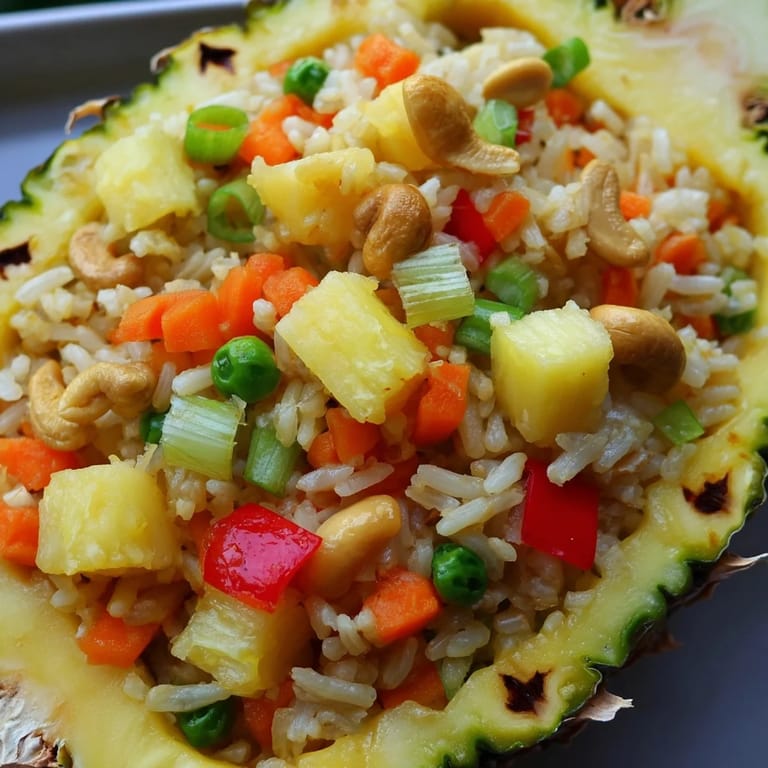
- Toss in the scallions at the very end, just enough to soften them slightly. Spoon the rice into the pineapple shells, garnish with cilantro, and serve with lime wedges on the side for squeezing.
 Pin It
 The first time I brought this to a potluck, someone asked if I'd ordered it from a restaurant. I just smiled and said it took half an hour. They didn't believe me until I walked them through it later, standing in my kitchen, showing them how fast it all comes together once the prep is done. That's the secret, it looks and tastes like effort, but it's really just heat, timing, and a little bit of showmanship.
Choosing the Right Pineapple
Look for a pineapple that gives slightly when you press the sides and smells sweet at the base near the stem. If it smells fermented or the leaves pull out too easily, it's overripe. I once bought one that looked perfect but had no smell at all, and the rice ended up lacking that essential sweetness. The fruit should feel heavy, that means it's juicy. If you're nervous about carving it, practice on a cheaper one first or watch a quick video, once you do it once, it becomes second nature.
Making It Your Own
This recipe is forgiving and adaptable in the best way. I've added leftover roast chicken, tossed in shrimp during the vegetable step, and once used diced tofu when I had vegetarian guests. If you want it spicy, add Thai chilies with the garlic or serve it with Sriracha on the side. I've skipped the raisins before when I didn't have any, and it was still great. You can even swap the cashews for peanuts or almonds, though cashews really do have the creamiest texture.
Serving and Storing Tips
Serve this immediately while the rice is still hot and the pineapple shell is warm to the touch. If you're making it ahead, keep the rice in a covered container and reheat it in the wok with a splash of water before spooning it into the shells. Leftovers keep in the fridge for up to two days, though the pineapple shell gets a little soggy if you store the rice inside it. I usually scoop the rice into a separate container and save the shell for composting.
- Reheat leftovers in a hot skillet with a tiny bit of oil to bring back the texture.
- If you're serving a crowd, double the recipe and use two pineapples for dramatic effect.
- Lime juice squeezed over the top right before eating brightens everything up.
 Pin It
 This dish never fails to make people smile, whether it's a Tuesday night dinner or a weekend gathering. It's proof that a little extra effort in presentation can turn a simple meal into a memory.
Recipe FAQs
- → Can I prepare this dish ahead of time?
Yes, you can prepare the filling several hours in advance and refrigerate it. Simply reheat gently in a wok before spooning into the pineapple shells just before serving to maintain the shell's texture and freshness.
- → What type of rice works best for fried rice?
Day-old jasmine rice is ideal because it's drier and grains separate easily during stir-frying. Avoid using freshly cooked rice as it tends to clump. If you only have fresh rice, spread it on a plate to cool and dry before cooking.
- → How do I hollow a pineapple without damaging the shell?
Use a sharp serrated knife to cut the pineapple in half lengthwise, keeping the crown attached. Carefully use a melon baller or small sharp spoon to scoop out the flesh, staying about 1/2 inch from the outer edges. Work slowly to avoid puncturing the shell.
- → Can I make this vegan?
Absolutely. Omit the eggs and fish sauce, using tamari instead of regular soy sauce for gluten-free assurance. The dish remains flavorful with the curry powder, cashews, and fresh seasonings. Tofu can be added for extra protein if desired.
- → What proteins pair well with this dish?
Cooked shrimp, diced chicken breast, and tofu are excellent additions. Stir-fry your protein separately until cooked, then fold it into the rice mixture in step 5. Allow about 100-150g protein per serving for a balanced main course.
- → How do I prevent the fried rice from becoming mushy?
Use day-old cooked rice and stir-fry over medium-high heat. Avoid overmixing and adding too much moisture from sauces. Keep cooking times brief once ingredients are combined, typically 2-3 minutes, to maintain texture and prevent the rice from breaking down.