 Pin It
 The first time I made potato and vegetable soup, I'd just moved into my first apartment with a kitchen smaller than most closets. The radiator clanked loudly as snow piled against the windowsill, and I craved something that would warm me from the inside out. With just a handful of vegetables threatening to wilt in my fridge and potatoes sprouting eyes in the cupboard, I cobbled together this soup that has since become my ultimate comfort food.
Last winter, my neighbor had surgery and couldn't cook for herself. I made a huge pot of this soup, packed it into containers, and walked across the icy sidewalk to deliver it. The steam fogged up my glasses when she opened the door, and we both laughed as she accepted the soup with grateful hands. Two weeks later, she returned my containers with a handwritten copy of her grandmother's bread recipe tucked inside.
Ingredients
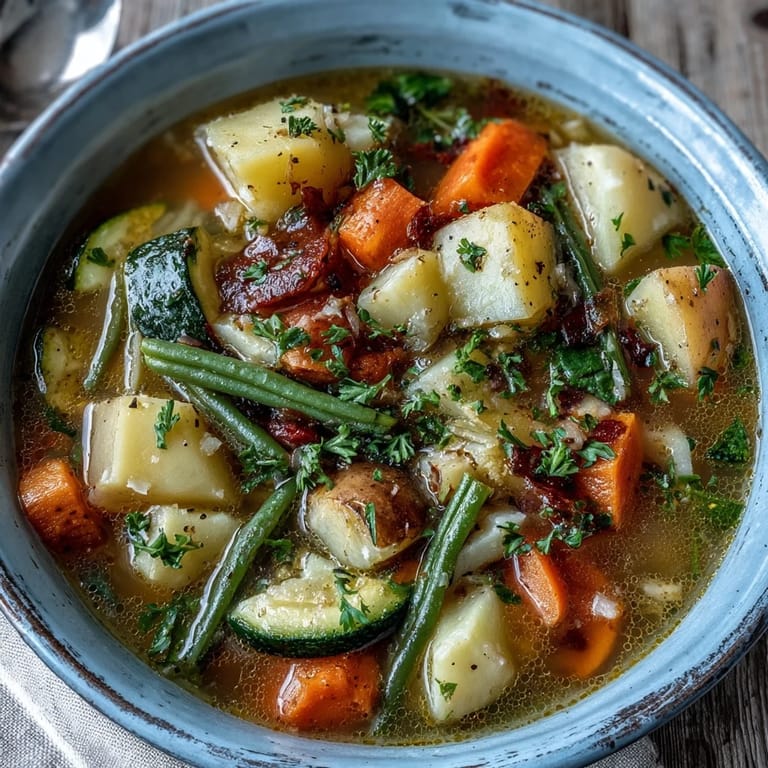
- Potatoes: I prefer waxy varieties like Yukon Gold that hold their shape rather than dissolving completely into the broth, giving you satisfying chunks to bite into.
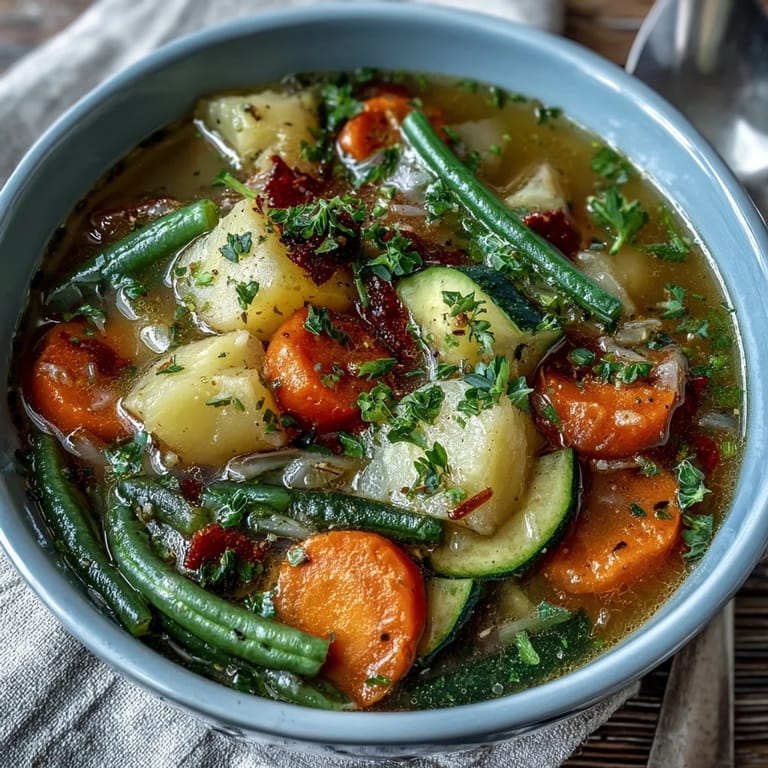
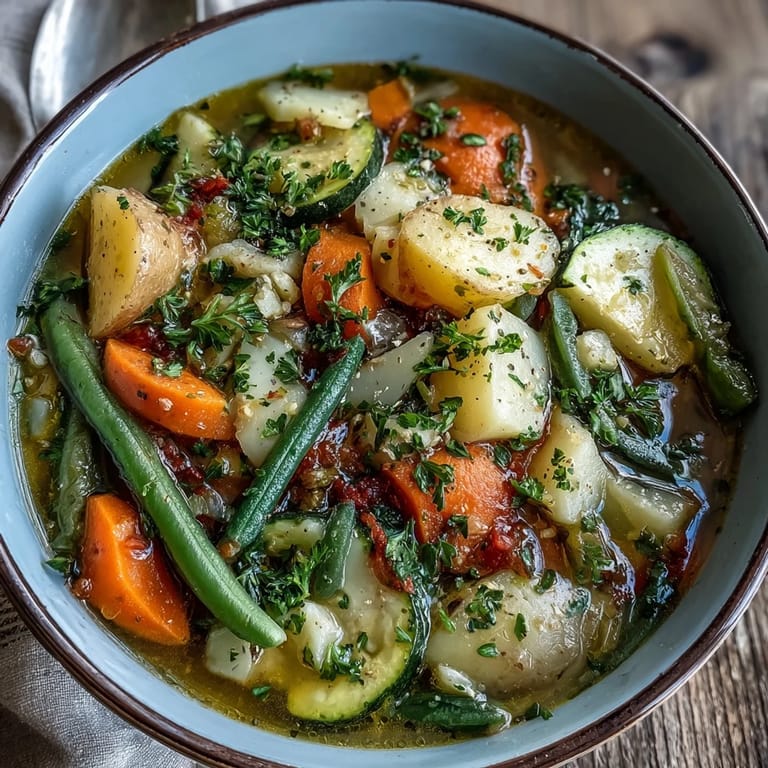
- Seasonal vegetables: The beauty of this soup is its flexibility - I've made summer versions with zucchini and green beans, and winter versions with root vegetables and cabbage.
- Vegetable stock: On busy days I use store-bought, but when I have veggie scraps saved in my freezer, homemade stock brings an incredible richness.
- Bay leaf and dried herbs: These humble pantry staples work magic, transforming simple vegetables into something that tastes like it's been simmering all day.
- Frozen peas: My secret weapon added at the end for a pop of sweetness and bright green color that lifts the whole dish.
Tired of Takeout? 🥡
Get 10 meals you can make faster than delivery arrives. Seriously.
One email. No spam. Unsubscribe anytime.
Instructions
- Build your flavor base:
- Heat olive oil in a large pot and add your onion, carrots, and celery, creating that aromatic foundation that fills your kitchen with promise. Watch for the onions to turn translucent and slightly golden at the edges before moving to the next step.
- Wake up the garlic:
- Toss in minced garlic and stir just until that heady aroma rises from the pot. Be careful not to let it brown or it might turn bitter.
- Introduce the vegetables:
- Add potatoes, green beans, and zucchini, giving everything a good stir to coat with oil and aromatics. This brief sauté before adding liquid helps lock in flavors.
- Create your broth:
- Pour in vegetable stock and sprinkle in herbs and seasonings, watching the liquid transform from clear to golden as it takes on the essence of your vegetables. The bay leaf might seem insignificant, but it adds a subtle depth that you'd miss if it weren't there.
- Simmer patiently:
- Let the soup bubble gently, partially covered, until you can easily pierce a potato with the tip of a knife. The kitchen will fill with steamy comfort as the vegetables soften and flavors meld together.
- Finish with freshness:
- Stir in those bright green peas that need just minutes to heat through. Their sweetness will balance the savory depth of your soup.
- Serve with care:
- Ladle into warmed bowls, scatter with fresh parsley if you have it, and watch as the steam rises. This is the moment to breathe deeply and appreciate the simple pleasure you've created.
 Pin It
 On a particularly chaotic Tuesday when deadlines loomed and emails flooded my inbox, I stepped away from my computer to make this soup. The rhythmic chopping of vegetables became a form of meditation, and by the time the soup was simmering, my racing thoughts had settled. That evening, eating a bowl at my desk, I realized this recipe had become more than sustenance - it was self-care in a bowl.
Seasonal Adaptations
Over years of making this soup across different seasons and in different kitchens, I've discovered it's more framework than formula. In spring, I lighten it with asparagus tips and fresh peas instead of frozen. Summer brings the opportunity for sweet corn kernels cut straight from the cob and cherry tomatoes that burst in the broth. Autumn calls for chunks of butternut squash alongside the potatoes, while winter versions often feature hearty greens like kale stirred in during the final minutes.
Making It a Meal
While perfectly satisfying on its own, this soup welcomes accompaniments that turn it into a feast. I've served it with cheese toasts floating on top that slowly melt and add richness. A scoop of cooked grains like farro or barley transforms it into a more substantial dinner. Sometimes I place a poached egg atop each bowl, and when broken, the yolk creates a silky richness that elevates the humble vegetables.
Storage and Leftovers
One rainy Sunday, I made a double batch of this soup and discovered that the leftovers tasted even better the next day, after the flavors had time to deepen and meld. Since then, I often make extra deliberately, cooling it completely before refrigerating in airtight containers where it stays fresh for up to four days.
- For longer storage, freeze the soup without the peas, adding them fresh when you reheat for best color and texture.
- If the soup thickens too much during storage, add a splash of stock or water when reheating.
- Consider blending a portion of leftover soup for a completely different experience - half creamy, half chunky.
 Pin It
 This humble vegetable soup has seen me through seasons of change, becoming both comfort and celebration on my table. I hope it finds its way into your kitchen rhythm too, adapting to what you have and what you need, just as all the best recipes do.
Recipe FAQs
- → What vegetables work best in this soup?
Potatoes, carrots, celery, onions, zucchini, and green beans create a classic foundation. You can easily swap in seasonal favorites like spinach, kale, corn, or diced tomatoes based on what's available.
- → How long does the soup stay fresh?
Store cooled soup in airtight containers in the refrigerator for up to 4 days. The flavors often develop and deepen after a day. Reheat gently on the stovetet, adding a splash of broth if needed.
- → Can I freeze this soup?
Yes, this soup freezes beautifully for up to 3 months. Let it cool completely before transferring to freezer-safe containers. Leave some space at the top as liquids expand when frozen. Thaw overnight in the refrigerator.
- → How can I add more protein?
Stir in canned beans like cannellini or chickpeas during the last 10 minutes of cooking. Shredded chicken or white beans also work well. For a creamy protein boost, add a dollop of Greek yogurt just before serving.
- → What makes the broth more flavorful?
Quality vegetable stock makes a significant difference. Simmering with a bay leaf, dried thyme, and parsley builds depth. For extra richness, finish with a splash of cream or grated Parmesan just before serving.