 Pin It
 My neighbor knocked on my door one Saturday morning holding a bag of nori and asking if I knew how to make temaki. I didn't, but we figured it out together over tea, laughing every time a cone fell apart in our hands. By the third try, we had it down, and those crispy-edged, rice-stuffed cones became our weekend ritual. There's something about eating sushi with your hands that feels both indulgent and playful. It's the kind of meal that turns into an event without any fuss.
I made these for a small dinner party once, and instead of plating them, I set out bowls of fillings and let everyone roll their own. The kitchen got messy, rice stuck to everything, but people lingered at the counter, talking and laughing while they worked. One friend overstuffed hers and it split, and she just ate it with a fork, unbothered. That night taught me that the best meals aren't always the prettiest ones.
Ingredients
- Sushi rice (short-grain Japanese rice): This is the heart of the roll, sticky enough to hold but never gummy if you rinse it well and let it breathe after cooking.
- Rice vinegar: It adds that bright, slightly sweet tang that makes sushi rice taste like sushi rice, not just plain rice.
- Avocado: Use one that's ripe but still firm so it slices cleanly and doesn't turn to mush when you bite in.
- English cucumber: Julienned thin, it gives a cool crunch that balances the soft rice and creamy avocado.
- Cooked crab meat: Real or imitation both work beautifully, shred it gently so it nestles into the folds of the cone.
- Mayonnaise: A small spoonful mixed into the crab makes it luxurious, but skip it if you want to keep things light.
- Nori sheets: Roasted seaweed that crisps and crackles, buy it fresh and store it sealed or it will go limp.
- Toasted sesame seeds: Optional but they add a nutty pop that makes each bite more interesting.
- Soy sauce, pickled ginger, wasabi: The classic trio for dipping and palate cleansing, don't skip the ginger.
Tired of Takeout? 🥡
Get 10 meals you can make faster than delivery arrives. Seriously.
One email. No spam. Unsubscribe anytime.
Instructions
- Rinse the rice:
- Rinse sushi rice under cold water, swishing it around until the water runs clear and not cloudy. This removes excess starch and keeps the grains from clumping into a sticky mess.
- Cook the rice:
- Combine rice and water in a saucepan, bring to a boil, then lower the heat, cover, and simmer for 15 minutes before letting it rest off the heat for 10 more. The resting time is when the magic happens, so don't peek.
- Season the rice:
- Mix rice vinegar, sugar, and salt in a small bowl until dissolved, then fold it gently into the warm rice with a paddle. Let it cool to room temperature so it doesn't steam the nori later.
- Prep the crab:
- If you like it creamy, mix the crab with a tablespoon of mayonnaise. Otherwise, leave it plain and let the sweetness shine through.
- Assemble the cone:
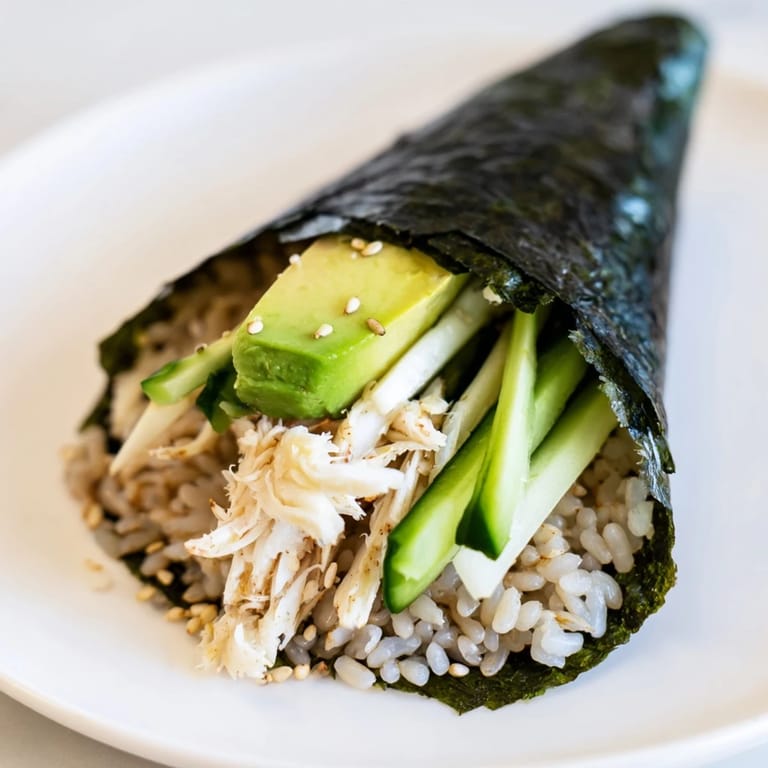
- Place a half sheet of nori shiny side down on your palm, spread 2 to 3 tablespoons of rice diagonally across one corner in a thin layer. Don't overfill or it won't roll properly.
- Add the fillings:
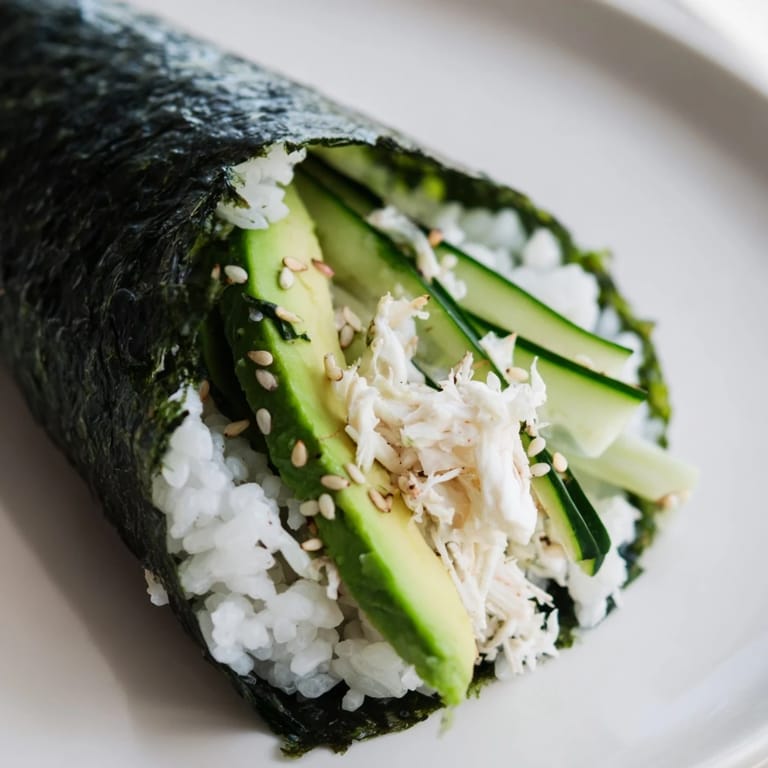
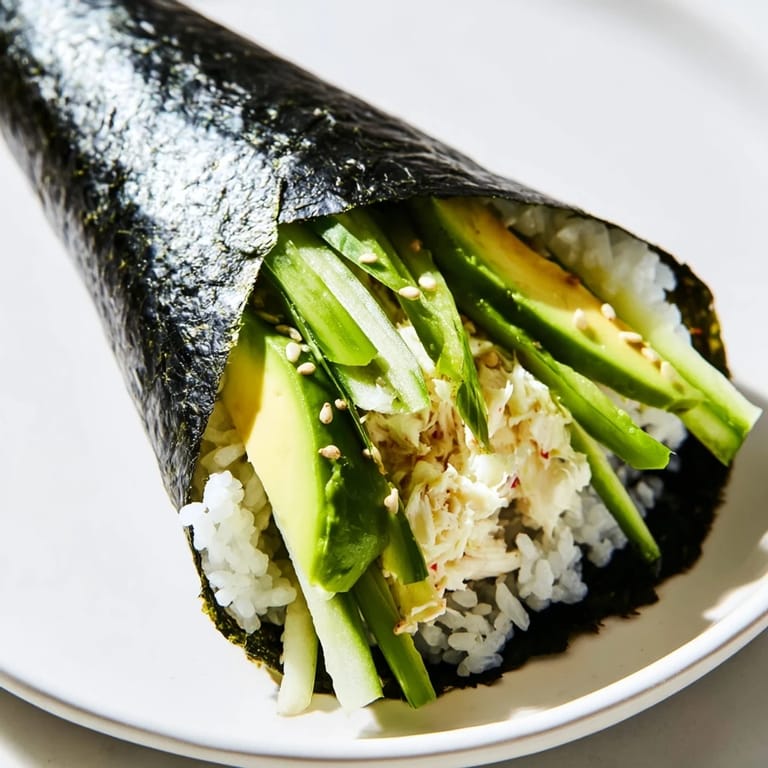
- Layer avocado, cucumber, and crab on top of the rice, then sprinkle with sesame seeds if you want. Keep the fillings toward the rice so they stay tucked in when you roll.
- Roll into a cone:
- Starting from the rice filled corner, roll the nori tightly into a cone shape, sealing the edge with a few grains of rice. It should feel snug but not squished.
- Repeat and serve:
- Make the remaining rolls and serve them immediately with soy sauce, pickled ginger, and wasabi on the side. Eat them while the nori is still crisp.
 Pin It
 There was an afternoon when I made these alone, just for myself, and ate them standing at the counter with the window open. The breeze carried in the smell of cut grass, and I realized how rare it was to slow down and actually taste what I was eating. Those cones were simple, but they reminded me that good food doesn't need an occasion. Sometimes it's enough to just feed yourself something you love.
Choosing Your Fillings
The beauty of hand rolls is that you can swap out fillings based on what's in your fridge or what you're craving. I've used smoked salmon, cooked shrimp, even leftover teriyaki chicken, and they all work as long as you balance textures. Add something creamy, something crunchy, and something with a little bite, and you'll end up with a cone that feels complete. Once I threw in thinly sliced radish and it added this peppery snap that surprised me in the best way. Trust your instincts and don't be afraid to experiment.
Getting the Rice Right
Sushi rice can be tricky if you've never made it before, but once you get the rhythm, it becomes second nature. The key is rinsing until the water is nearly clear, cooking it covered without lifting the lid, and folding in the vinegar mixture while the rice is still warm but not hot. I used to rush this step and end up with rice that tasted flat or clumped together. Now I take my time, and the rice comes out glossy and just sticky enough to hold its shape without turning gummy.
Serving and Storing Tips
Hand rolls are best eaten fresh, ideally within minutes of rolling them, because the nori loses its crispness quickly once it's in contact with rice. If you're serving a group, set up a little station with all the components and let people build their own as they go. It keeps the nori crunchy and turns the meal into something interactive and fun.
- Store leftover rice in the fridge covered tightly, but bring it back to room temperature before using.
- Keep nori sealed in its package or an airtight container so it doesn't absorb moisture from the air.
- If you have extra fillings, they make a great rice bowl the next day with a drizzle of soy sauce.
 Pin It
 These hand rolls have become one of those recipes I return to when I want something that feels special but doesn't demand too much from me. They're forgiving, adaptable, and always taste like a small celebration.
Recipe FAQs
- → What type of rice should I use for hand rolls?
Use short-grain Japanese sushi rice, which has the right stickiness and texture to hold together when rolled. Regular long-grain rice won't provide the same binding quality needed for hand rolls.
- → Can I prepare the sushi rice in advance?
Yes, you can cook the rice a few hours ahead and store it at room temperature covered with a damp cloth. However, assemble the rolls shortly before serving, as nori will soften and lose its crispness over time.
- → What's the best way to prevent the nori from cracking?
Ensure the nori is fresh and handle it gently. Store it in an airtight container in a cool, dry place. If sheets crack, you can slightly toast them before use for added flexibility.
- → How do I know when my sushi rice is properly seasoned?
The vinegar mixture should be gently folded into the warm rice until evenly distributed. The rice should taste slightly sweet and tangy with a subtle umami flavor. Taste a small amount to ensure the balance is right.
- → What are good substitutes for crab meat?
Cooked shrimp, smoked salmon, or even cooked chicken work wonderfully. For a vegetarian option, try marinated tofu or additional vegetables like pickled radish and shredded carrots.
- → Why is my nori becoming soft and chewy?
Nori absorbs moisture from the rice and fillings over time. To maintain crispness, serve immediately after assembly. If preparing ahead, store the components separately and assemble just before serving.