 Pin It
 The first time I tasted muhammara, I was sitting cross-legged on a worn cushion in Damascus, watching my neighbor's hands move with the kind of practiced speed that only comes from making something a hundred times before. She charred those red peppers directly over a gas flame, the smell hitting me like a warm wall as the skins blackened and blistered. There was something almost meditative about it—the way she let them cool, the casual peel, the quiet confidence that this humble dip was about to become something unforgettable. I've been chasing that moment ever since, and this recipe captures it perfectly.
I made this for a potluck last winter when I was still figuring out the balance of flavors, and I'll never forget my friend Sarah's reaction. She took one bite and immediately went back for more, then dragged the bowl toward herself like she was protecting it. That's when I realized muhammara isn't just an appetizer—it's a conversation starter, something warm and bold enough to make people slow down and actually taste what they're eating.
Ingredients
- Red bell peppers (3 large): These are the heart of everything—their natural sweetness balances the spice and tang. Don't skip the charring step; it adds a smoky depth that raw peppers can't deliver.
- Walnuts (1 cup, lightly toasted): Lightly toasting them before blending brings out an earthiness that raw walnuts miss. It's a small step that changes everything about the final texture and flavor.
- Pomegranate molasses (2 tbsp): This is the secret weapon—tart and complex, nothing like sweet pomegranate juice. If you can't find it, a mix of lemon juice and a pinch of sugar won't quite capture the same magic, but it's better than nothing.
- Garlic (2 cloves): Fresh and raw here—it gives a gentle bite without overwhelming the delicate pepper flavor.
- Breadcrumbs (2 tbsp): They act as a binder and add subtle body. Gluten-free versions work beautifully if you need them to.
- Cumin (1 tsp): This warm spice ties everything together with a subtle earthiness.
- Smoked paprika (1/2 tsp): It deepens the roasted pepper flavor and adds complexity.
- Aleppo pepper or red chili flakes (1/2 tsp): Start conservative here and taste as you go—heat preferences are deeply personal.
- Extra virgin olive oil (2 tbsp, plus more for drizzling): Use something you actually enjoy tasting; it shows.
- Lemon juice (1–2 tbsp): Fresh lemon brightens everything. Bottled works in a pinch, but fresh makes a noticeable difference.
- Sesame seeds (1 tbsp, optional): Toasted sesame adds a nutty finish and a tiny bit of textural interest on top.
- Salt and pepper: Season to taste at the end—this is where you make it your own.
Tired of Takeout? 🥡
Get 10 meals you can make faster than delivery arrives. Seriously.
One email. No spam. Unsubscribe anytime.
Instructions
- Char those peppers:
- Heat your oven to 220°C (425°F) and lay the whole red peppers on a baking tray. Roast for 20–25 minutes, turning them occasionally so every side gets some color. You're looking for blackened, blistered skin—that's where the flavor lives. The kitchen will smell incredible.
- Let them steam and soften:
- Transfer the hot peppers to a bowl and cover it with plastic wrap or a plate. Let them sit for 10 minutes while the steam loosens the charred skin, making it peel off like they want to shed it. Once they're cool enough to touch, peel away the skin, remove the seeds and stems, and try not to snack on the soft, sweet flesh.
- Build the base in the food processor:
- Add the roasted peppers, lightly toasted walnuts, garlic, breadcrumbs, cumin, smoked paprika, Aleppo pepper, salt, and black pepper to your food processor. Pulse a few times—you want a coarse, chunky texture at this point, not a smooth paste.
- Add the bright, tangy notes:
- Pour in the pomegranate molasses, olive oil, and lemon juice, then process until the mixture comes together into something smooth but still with some character and texture. Taste a small spoonful and adjust—more pomegranate molasses for tang, more lemon for brightness, more heat if you're feeling bold.
- Finish with style:
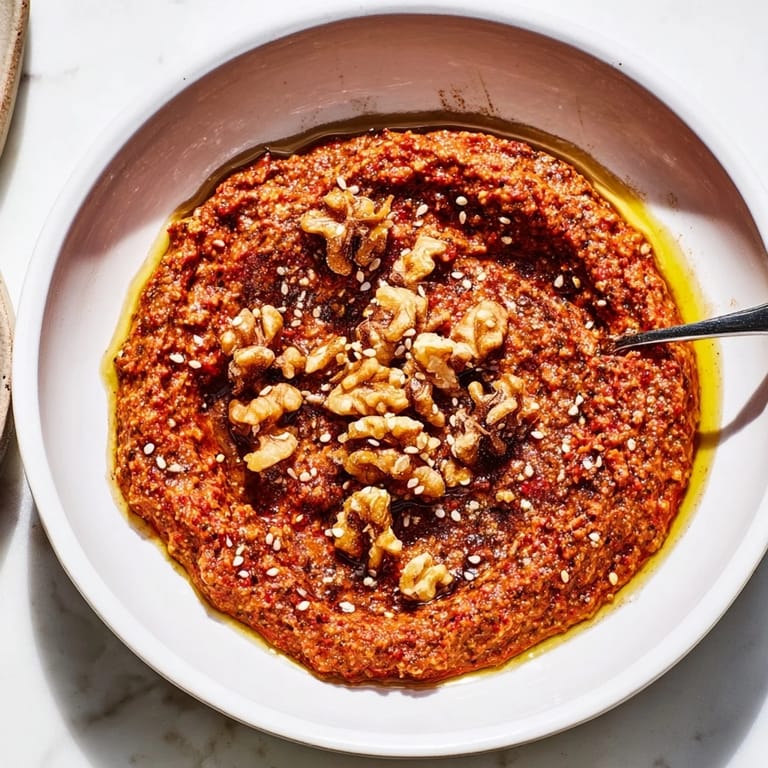
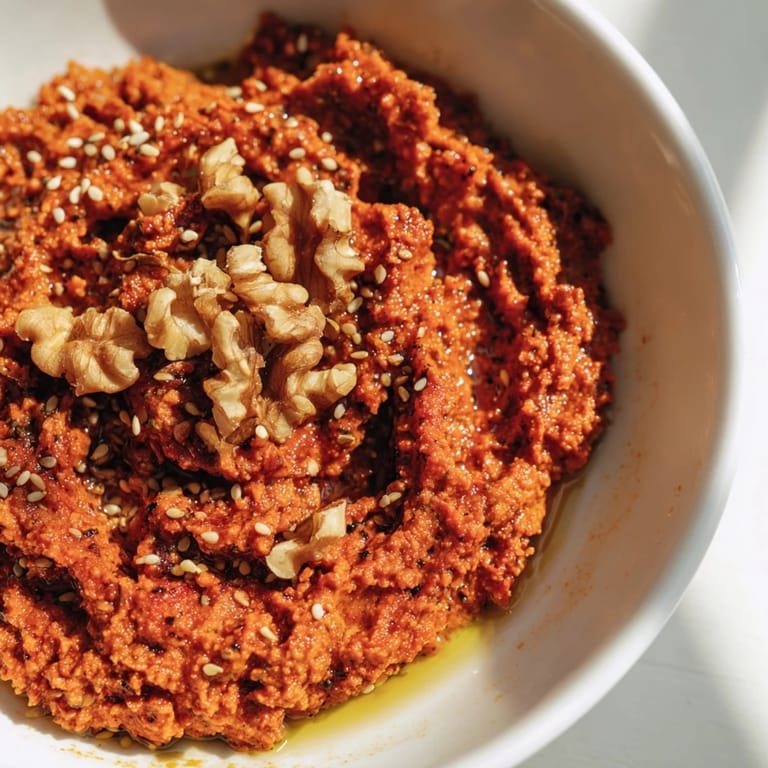
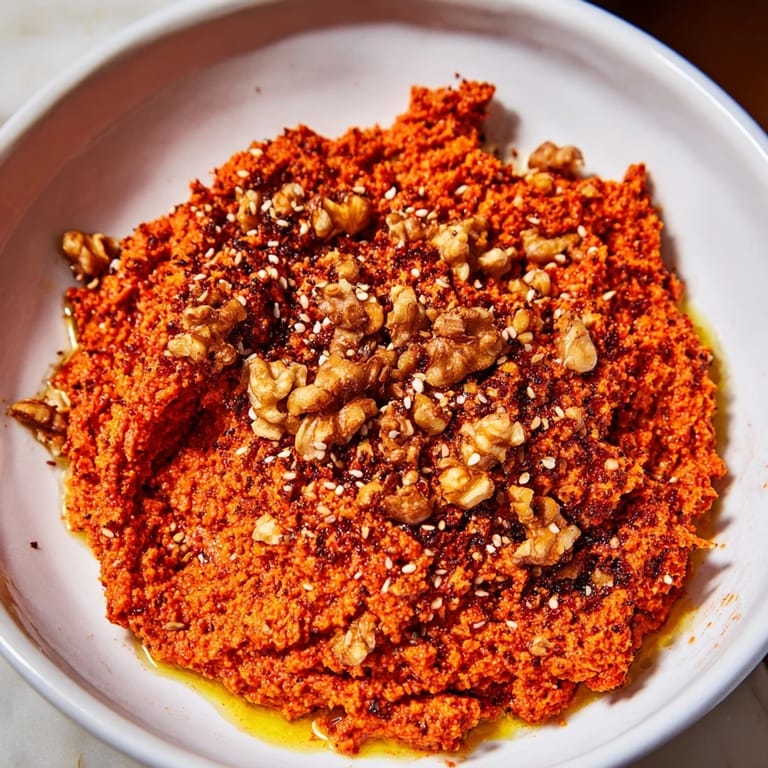
- Transfer everything to a shallow bowl, make a slight well in the center with the back of a spoon, and drizzle with a little extra olive oil. Sprinkle the toasted sesame seeds on top if you have them. Serve with warm pita bread, crackers, or a pile of fresh vegetable sticks for dipping.
 Pin It
 One afternoon, my cousin brought muhammara to a family gathering and set it on the table without fanfare. Within minutes, it was the center of attention—people were tearing pita bread, dipping vegetables, and making small sounds of contentment. That's when I understood that sometimes the simplest things, made with care and good ingredients, are what people actually remember about an afternoon together.
The Story Behind the Spice
Muhammara has been a cornerstone of Syrian and Levantine cuisine for centuries, passed down through families and refined in home kitchens where recipes live more in the hands and palate than on written pages. The combination of roasted peppers and pomegranate molasses reflects a cooking philosophy built around layering flavors—sweet, tangy, warm, and smoky all working together. Every family has their own version, their own ratio of spices and their own story about who made it first.
Playing with Heat and Flavor
The beauty of muhammara is that it invites you to play with it. If you like more heat, add extra Aleppo pepper or a pinch of cayenne. If you prefer it sweeter, add a touch more pomegranate molasses. If you're grilling that night anyway, char the peppers directly over the flames for an even deeper, smokier character. I've made it with roasted red peppers from a jar when I was in a hurry, and while it's not quite the same as freshly charred, it still tastes genuinely good and asks very little of you in return.
Serving and Storage Wisdom
Muhammara is happiest when it's just come together and still has some warmth to it, but it's equally delicious the next day when the flavors have had time to settle and deepen. It keeps beautifully in the refrigerator for up to five days, covered, and the olive oil on top helps protect it and keep it fresh.
- Serve it alongside hummus and baba ghanoush as part of a proper mezze spread, letting people build their own flavor journey with each dip.
- Warm it gently in the oven if it's been cold, or just drizzle it with a little more fresh olive oil and let it come to room temperature.
- Make it a day or two ahead if you're hosting—one less thing to worry about, and the flavor will only have improved.
 Pin It
 Make this muhammara when you want to feel like you're cooking from somewhere far away, but you're really just standing in your own kitchen with good ingredients and a few minutes to spare. It's that kind of dish—humble enough for a weeknight, impressive enough for guests, and honestly, just a little bit magical.
Recipe FAQs
- → How do I roast peppers for the dip?
Roast red bell peppers at 220°C (425°F) on a baking tray for 20-25 minutes until skins are charred and blistered. Then steam them covered to loosen skin before peeling.
- → Can I adjust the heat level?
Yes, increase or decrease Aleppo pepper or red chili flakes according to your preferred spice level.
- → What alternatives exist for breadcrumbs?
Gluten-free breadcrumbs can be used to maintain texture while keeping the spread gluten-free.
- → How long does this dip keep?
Stored in the fridge, it remains fresh for up to five days, allowing flavors to deepen over time.
- → What dishes pair well with this spread?
It works wonderfully on mezze platters alongside hummus, baba ghanoush, olives, or as a topping for pita and vegetable sticks.