 Pin It
 The first time I tasted merguez, I was sitting at a cramped outdoor market in Tunis, a paper cone of warm sausage in my hands, the spices hitting my nose before they hit my tongue. That smoky, fiery blend of harissa and cumin stayed with me for months, until I decided to hunt down how to make it myself. What started as a hazy memory became an obsession with getting the spice balance just right, learning to feel when the meat mixture had that perfect sticky consistency that promised a juicy, flavorful link.
I made these for a dinner party once, and the moment someone bit into one, the whole room went quiet for about three seconds—then someone asked for seconds. That's when I knew the balance of spices was singing rather than just pleasant, and that's when merguez went from "that thing I make" to "the thing people ask me to make."
Ingredients
- Ground beef and lamb (500 g total): The mixture of beef and lamb creates complexity and richness you won't get from one alone; beef adds structure while lamb brings that distinctive warm flavor.
- Harissa paste (2 tbsp): This is your soul ingredient—it's the voice of the whole dish, so buy real Tunisian harissa if you can find it, and taste it first to know how much heat you're bringing.
- Cumin, coriander, smoked paprika, fennel, caraway (1 tbsp each, or to taste): These aren't just background noise; each one contributes a different note, so measuring carefully matters, even if you think you don't need to.
- Cayenne pepper (1 tsp): Start with this amount and adjust downward if heat isn't your thing, because you can always add more but you can't take it back.
- Fresh cilantro and parsley (2 tbsp each): These add a bright, fresh counterpoint to all that warmth and prevent the sausages from tasting one-dimensional.
- Cold water (2 tbsp): This tiny amount helps bind everything together without making the mixture dense or heavy.
- Sausage casings (1.5 m): Sheep casings are thinner and more delicate than pork casings, giving you snappier, more elegant sausages, but you can absolutely skip them if the prospect feels overwhelming.
Tired of Takeout? 🥡
Get 10 meals you can make faster than delivery arrives. Seriously.
One email. No spam. Unsubscribe anytime.
Instructions
- Combine your meat foundation:
- In a large bowl, mix the ground beef and lamb together gently but thoroughly until they're evenly blended. Don't overwork it or the sausages will be dense; you're just introducing them to each other.
- Layer in the flavor:
- Add the minced garlic, harissa paste, cumin, coriander, paprika, fennel, caraway, cayenne, salt, and black pepper all at once. Use your hands or a sturdy spoon to mix everything until the meat is evenly coated and fragrant, usually a few minutes of focused mixing.
- Finish with freshness:
- Stir in the cilantro and parsley, then add the cold water a little at a time until the mixture feels sticky and cohesive enough to hold together without being wet. This is how you know you're ready to stuff.
- Prepare your casings (if using):
- Rinse the sausage casings gently under cool water, then soak them in a bowl of room-temperature water for at least 10 minutes—they'll become pliable and much easier to work with. If you're feeling nervous, this step buys you confidence.
- Stuff with care:
- Fit a sausage stuffer or a piping bag with a wide nozzle and carefully fill the casings with the meat mixture, working slowly so you don't trap air bubbles. Twist the filled casing into 12–15 cm links, and if one bursts, it's not a tragedy—just set that one aside and shape it into a patty instead.
- Shape without casings (if preferred):
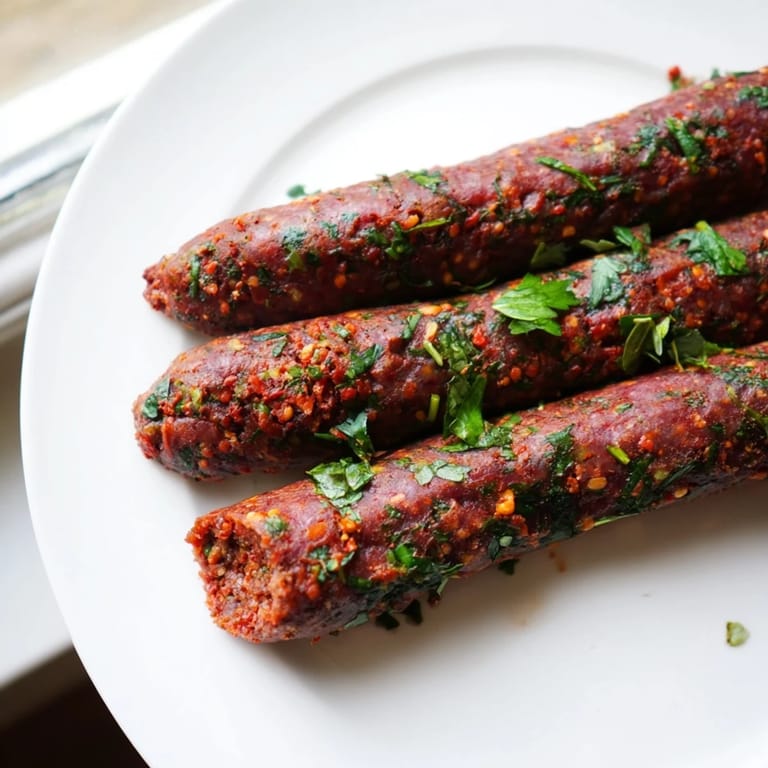
- If you're skipping the casings, use wet hands to shape the mixture into sausage-sized logs and refrigerate them for 30 minutes—the cold time helps them hold their shape when they hit the heat.
- Get your heat ready:
- Preheat your grill or grill pan over medium-high heat until it's hot enough that a drop of water sizzles immediately. You want that confident sizzle when the sausages hit the grates.
- Grill until golden:
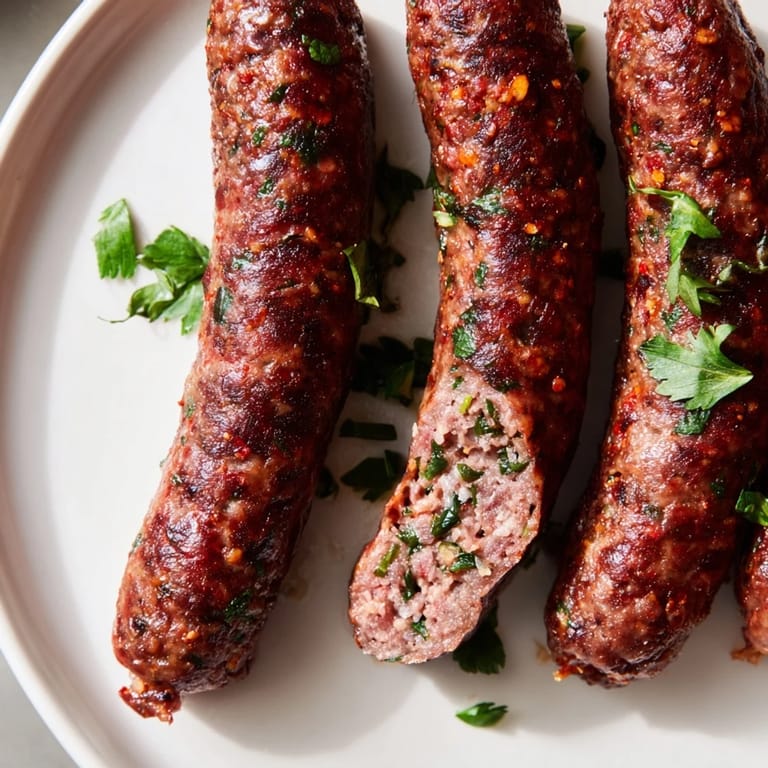
- Place the sausages on the grill and cook for 8–10 minutes total, turning every couple of minutes so they brown evenly without burning. They're done when they're deep golden brown and cooked through, with no pink inside.
- Rest and serve:
- Let them rest for a minute or two—they'll continue cooking slightly and the juices will redistribute, making them even more tender when you bite in.
 Pin It
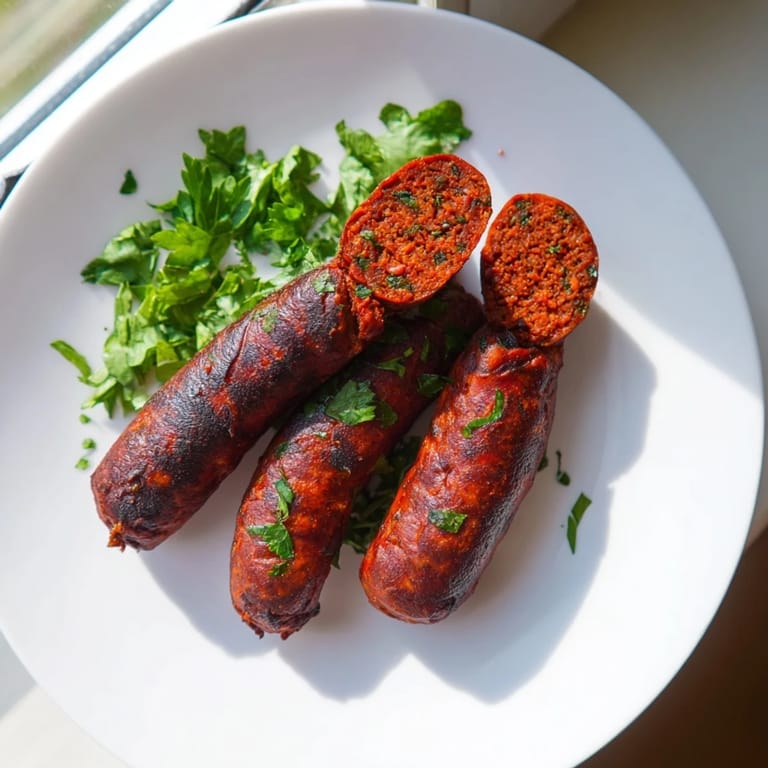
 There's a moment when you're grilling these and the smell of harissa and smoked paprika fills the air around you, when you realize you've created something that tastes like a place, like a memory that isn't even yours. That's when merguez stops being just a recipe and becomes an invitation to somewhere warm and alive.
Serving and Pairings
Serve these sausages warm, and the venue is entirely up to you. Tuck them into warm flatbread or a crusty baguette with a squeeze of lemon and some crisp lettuce. Lay them over fluffy couscous with a simple vegetable stew. Or skip the carbs altogether and serve them alongside a bright salad and cool yogurt sauce. I've learned that merguez is less about being fussy and more about being flexible—it works anywhere you want authentic North African warmth.
The Casing Question
Yes, you can absolutely make merguez without casings, and no, it's not cheating. If the idea of stuffing casings makes you anxious, shape the mixture into patties or thick logs, refrigerate them, and grill them just the same way. The texture will be slightly different—a bit more rustic—but the flavor will be absolutely there. I learned this the hard way when my first attempt at casing-stuffing was more disaster than success, and yet those casing-free versions were gobbled up just as quickly.
Heat and Adjustments
Harissa heat varies wildly depending on the brand and country of origin, so taste your harissa paste before you commit the full two tablespoons to the mix. Tunisian harissa tends to be hotter than some commercial blends, and your guests' tolerance matters. You can always build heat gradually, adding more cayenne pepper to reach your perfect level of fire. I've also discovered that serving a cool, tangy yogurt sauce alongside tames the heat beautifully for people who want to enjoy the sausage without sweat on their foreherow.
- Start conservative with spice and let your guests add more rather than hoping they like extreme heat.
- A dollop of plain yogurt or a minty sauce cools down the fire without diluting the flavor.
- Merguez stays juicy and forgiving even if you veer slightly hotter or milder than the recipe suggests.
 Pin It
 Making merguez at home transforms you from someone who eats sausages to someone who understands them. Once you taste your own version, restaurant merguez will never quite measure up again.
Recipe FAQs
- → What meats are used for authentic merguez?
Traditionally, merguez combines ground beef and lamb to balance flavor and juiciness.
- → How is the spice blend prepared?
The mix includes garlic, harissa paste, cumin, coriander, smoked paprika, fennel, caraway, cayenne, salt, and pepper for a rich and aromatic profile.
- → Can merguez be cooked without casings?
Yes, shaping the mixture into logs or patties and refrigerating them helps maintain their form when grilling.
- → What cooking method brings out the best flavor?
Grilling over medium-high heat until browned and cooked through enhances the smoky and spicy notes in the sausage.
- → What side dishes complement merguez?
Serve with flatbread, couscous, fresh salads, or a minty yogurt sauce to balance the sausage's bold spices.
- → How to adjust the heat level in merguez?
Modify cayenne pepper and harissa amounts to achieve milder or spicier flavors according to taste.