 Pin It
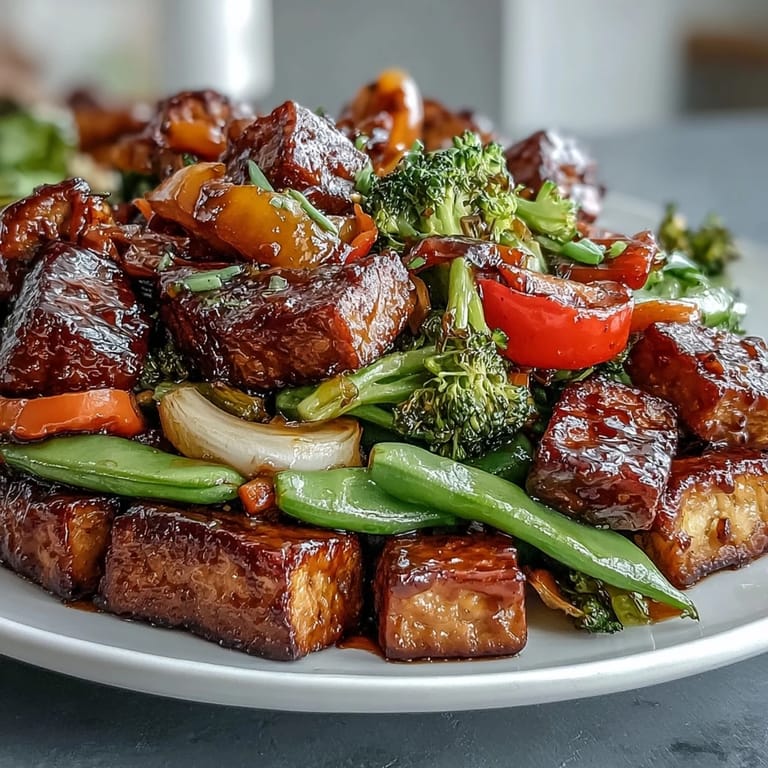
 One Tuesday evening, I was staring at a block of tempeh in my fridge wondering what on earth to do with it, when my neighbor mentioned she'd been craving something Asian but didn't want to order takeout. That's when it clicked: a stir-fry that actually made tempeh taste like something I'd genuinely want to eat. The nutty, slightly crispy cubes paired with vegetables that still had snap to them, all caught in this glossy, savory sauce—it became the dish I make when I want to feel both virtuous and completely satisfied.
I made this for a dinner party once, nervous that my non-vegan friends would politely push it around their plates. Instead, they went quiet for a moment, genuinely focused on eating, and one of them asked if I'd made the sauce from scratch. The compliment hit differently because nobody was performing gratitude—they just actually loved it. That meal taught me that good food doesn't need permission to exist, vegan or otherwise.
Ingredients
- Tempeh, 250g cut into 1cm cubes: Buy it refrigerated, not from the freezer section, and press it gently between paper towels before cooking—it releases moisture and crisps up beautifully when it's drier.
- Red and yellow bell peppers: The color here isn't just pretty, it's actually flavor—yellow peppers are sweeter, red ones more complex, so using both gives the dish real dimension.
- Medium carrot, julienned: Cut it thin so it cooks in the same timeframe as everything else; thick chunks will stay tough while the peppers soften.
- Sugar snap peas, 100g trimmed: These are the secret to keeping texture alive in the dish, so don't overcook them or you'll lose what makes them special.
- Broccoli florets, 100g: Break them into small pieces so they cook evenly and get little crispy edges in the hot oil.
- Spring onions, sliced: Add these at the very end so they keep their fresh bite and don't turn into limp strings.
- Garlic and ginger, 2 cloves and 2cm piece: Fresh is non-negotiable here—minced fine so they distribute into the oil and perfume the whole pan instantly.
- Soy sauce, 3 tbsp: Use tamari if gluten matters to you; it tastes just as salty and savory without the grain.
- Rice vinegar, 1 tbsp: This brightness cuts through the richness and keeps the dish from feeling heavy.
- Maple syrup or agave, 1 tbsp: A touch of sweetness balances everything, but don't increase it or the sauce becomes cloying.
- Toasted sesame oil, 1 tsp: A little goes a long way—this is the secret ingredient that makes people ask what you did differently.
- Cornstarch, 1 tsp: This thickens the sauce just enough to coat everything instead of pooling at the bottom of the pan.
- Vegetable oil, 2 tbsp: Use something neutral and high-heat safe; sesame oil would burn, so save that for the sauce.
- Sesame seeds and cilantro, optional garnish: Worth doing if you have them—they add a final layer of texture and fresh herbal note.
Tired of Takeout? 🥡
Get 10 meals you can make faster than delivery arrives. Seriously.
One email. No spam. Unsubscribe anytime.
Instructions
- Make your sauce first:
- In a small bowl, whisk soy sauce, water, rice vinegar, maple syrup, sesame oil, and cornstarch together until the cornstarch dissolves and there are no lumps. Set it somewhere within arm's reach of the stove because once you start cooking, you won't have time to hunt for it.
- Sear the tempeh until golden:
- Heat 1 tablespoon of vegetable oil in your largest skillet or wok over medium-high heat, then add tempeh cubes and let them sit for a minute before stirring—this builds color and nuttiness. Cook for 4–5 minutes total, stirring occasionally, until the sides look golden and slightly crispy, then scoop everything onto a clean plate.
- Bloom the aromatics in the remaining oil:
- Add the second tablespoon of oil to the still-hot pan, then immediately add your minced garlic and ginger. Let them sizzle and perfume the oil for just 30 seconds—this is where all that deep, warm flavor comes from, so don't skip it even though it feels quick.
- Stir-fry the vegetables until crisp-tender:
- Toss in your bell peppers, carrots, snap peas, and broccoli, stirring constantly for 4–5 minutes. You're looking for the moment when they've softened slightly but still have resistance when you bite into them; overcooked stir-fry is just sad cooked vegetables.
- Bring everything together in the sauce:
- Return the tempeh to the pan, give your sauce bowl a quick stir to reincorporate the cornstarch, then pour it over everything and toss for 1–2 minutes until the sauce thickens slightly and clings to the tempeh and vegetables. The wok should sound busy and smell incredible at this point.
- Finish with spring onions and garnish:
- Pull the pan off heat, stir in your spring onions so they stay fresh and green, then top with sesame seeds and cilantro if using. Serve immediately with rice or noodles because it loses its magic if it sits around.
 Pin It
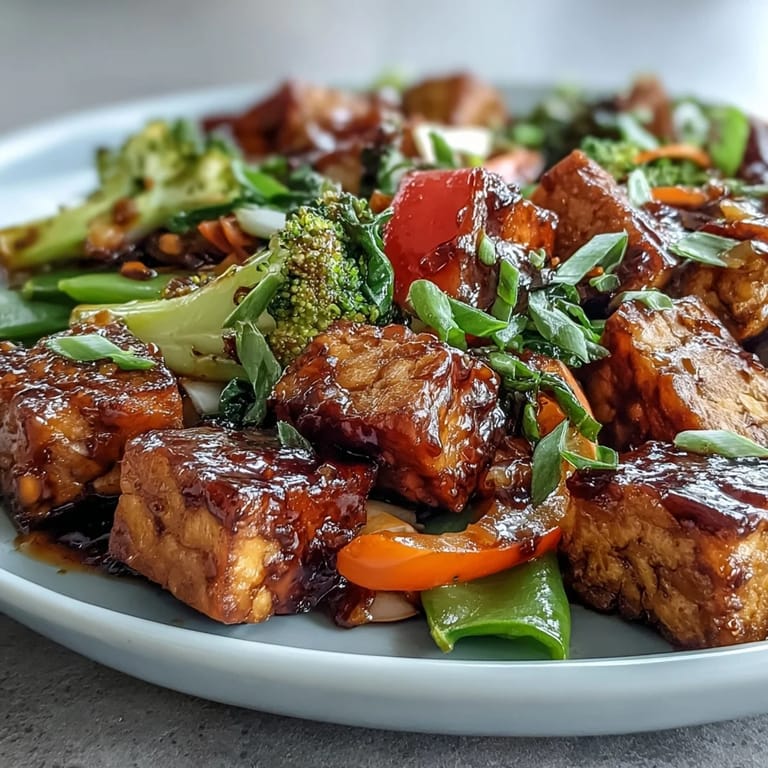
 There's a moment in every stir-fry, right when you pour the sauce in, where the pan suddenly smells like a restaurant kitchen and you feel like you actually know what you're doing. That's the magic that keeps me making this dish.
Why Tempeh Works Better Than You Think
Tempeh gets a bad reputation because most people haven't cooked it properly, serving it soft and mealy when it's actually meant to have texture. When you cut it into cubes and give it high heat, the outside crisps up while the inside stays slightly chewy, which creates this contrast that actually tastes interesting. The nutty, almost mushroom-like flavor comes through only when you're not fighting against its natural state, and that's what a stir-fry does perfectly.
The Science of the Sauce
The reason this sauce works isn't just flavor, it's also physics: the cornstarch thickens the liquid just enough that it clings to everything instead of running off, while the sesame oil adds richness, the vinegar adds brightness, and the sweetness balances the salt. If you tried to make this with soy sauce alone, you'd end up with a watery puddle; the combination is what makes it actually coat your food and taste complete.
How to Make It Yours
Once you've made this once exactly as written, you'll start seeing variations everywhere: add sliced mushrooms for earthiness, throw in baby corn for sweetness, swap broccoli for bok choy if you want something more delicate. The framework is so solid that you can swap almost any vegetable and the dish still works because the tempeh and sauce are doing all the heavy lifting. I've made this with whatever was getting soft in my crisper drawer and it's been delicious every single time, which is the mark of a truly forgiving recipe.
- Heat your pan until a drop of water sizzles violently before you add oil—this is the temperature that actually browns tempeh.
- If your vegetables are cut unevenly, thick pieces will be raw when thin ones are overcooked, so take a breath and slice everything about the same size.
- Taste the sauce before it goes into the pan and adjust while it's still raw—once it's cooked in you can't fix it easily.
 Pin It
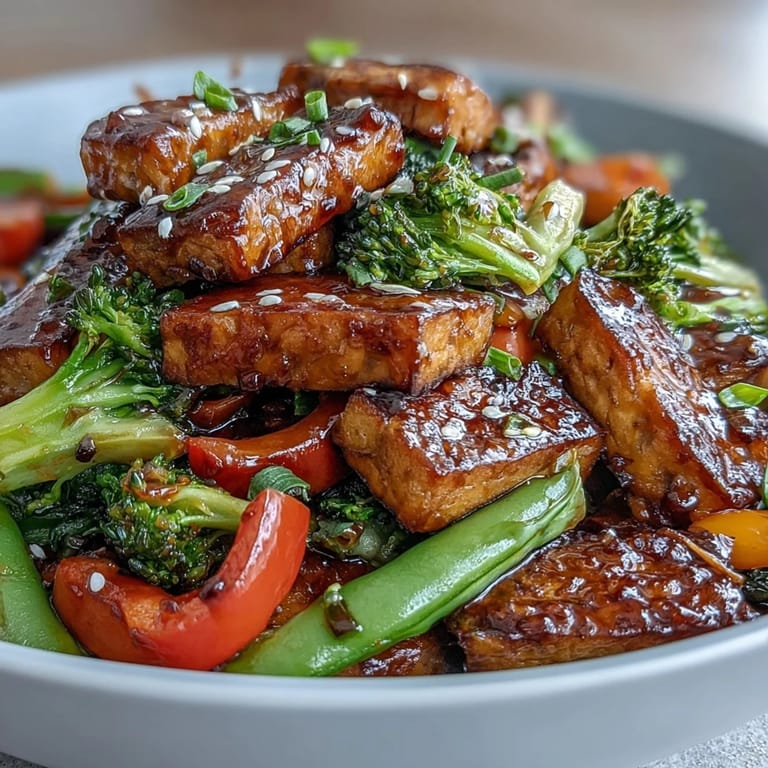
 This stir-fry became one of those dishes I make without thinking about it anymore, the way some people make pasta or scrambled eggs. It's reliable, it tastes like you actually cooked, and it makes you feel good after you eat it.
Recipe FAQs
- → What vegetables work best in this stir-fry?
Bell peppers, carrots, sugar snap peas, and broccoli work beautifully together, offering different textures and colors. You can also add mushrooms, baby corn, or zucchini based on what's in season or your personal preference.
- → How do I prevent tempeh from being dry?
Cut the tempeh into uniform cubes and pan-fry until golden on all sides. The sauce will add moisture and flavor, coating the tempeh evenly. Avoid overcrowding the pan when cooking the tempeh for proper browning.
- → Can I make this gluten-free?
Yes, simply substitute regular soy sauce with tamari, which is naturally gluten-free. All other ingredients are gluten-free, making this easy to adapt for those with dietary restrictions.
- → How should I store leftovers?
Store in an airtight container in the refrigerator for up to 3 days. Reheat gently in a skillet or microwave, adding a splash of water if the sauce has thickened too much. The vegetables will soften slightly but remain delicious.
- → What can I serve with this stir-fry?
Steamed jasmine rice is the classic pairing, but soba noodles, brown rice, or quinoa work equally well. For a lighter option, serve over cauliflower rice or enjoy on its own for a low-carb meal.
- → Can I add more protein?
This already provides 15g of protein per serving from tempeh. For additional protein, you could add edamame, cashews, or serve with a side of tofu. The tempeh alone makes it quite satisfying as a complete meal.