 Pin It
 My neighbor handed me a jar of tahini she'd bought by mistake, thinking it was hummus. I laughed, then stared at it for days before deciding to pair it with salmon and whatever green herbs were wilting in my crisper. The oil bath method felt risky at first, all that olive oil shimmering in the dish, but the salmon came out so tender it practically dissolved on the fork. That accidental jar became the star of a dish I now make whenever I want to impress without the stress.
I made this for a small dinner party on a rainy Saturday, and everyone went quiet after the first bite. One friend asked if I'd trained in a professional kitchen. I hadn't, but I let her believe it for a moment before confessing it was just slow, gentle heat and a little herby paste. The compliments lasted longer than the leftovers.
Ingredients
- Salmon fillets: Choose center-cut pieces with even thickness so they cook at the same rate, and make sure they're pin-boned or you'll be picking tiny bones mid-bite.
- Olive oil: You need enough to mostly cover the fish, but don't worry, you'll strain and reuse it for roasting vegetables or sautéing greens later.
- Lemon zest: Fresh zest adds brightness without the acidity that can start to cook the fish before you want it to.
- Pistachios: Chop them finely by hand for texture, a food processor turns them to powder too quickly and you lose that satisfying crunch.
- Tahini: Use a well-stirred, runny tahini, the kind that pours easily, or the crust will be too thick and pasty.
- Fresh herbs: Parsley, dill, and mint together create a bright, layered flavor that feels vibrant and alive, not flat or one-note.
- Garlic: Grate it finely so it melts into the paste instead of sitting in harsh little chunks.
- Honey: Just a teaspoon balances the bitterness of tahini and the sharpness of lemon without making anything sweet.
- Ground cumin: A whisper of warmth that ties the whole crust together and makes people wonder what the secret is.
Tired of Takeout? 🥡
Get 10 meals you can make faster than delivery arrives. Seriously.
One email. No spam. Unsubscribe anytime.
Instructions
- Set up the confit bath:
- Preheat your oven low and slow to 100°C, then nestle the salmon snugly in a small ovenproof dish. Season with salt, pepper, and lemon zest, then pour olive oil until the fillets are mostly submerged, leaving just the tops peeking out.
- Poach the salmon gently:
- Slide the dish into the oven and let it sit undisturbed for 25 to 30 minutes. The oil will barely shimmer, and the salmon will turn opaque and tender, flaking at the gentlest nudge of a fork.
- Make the tahini-pistachio crust:
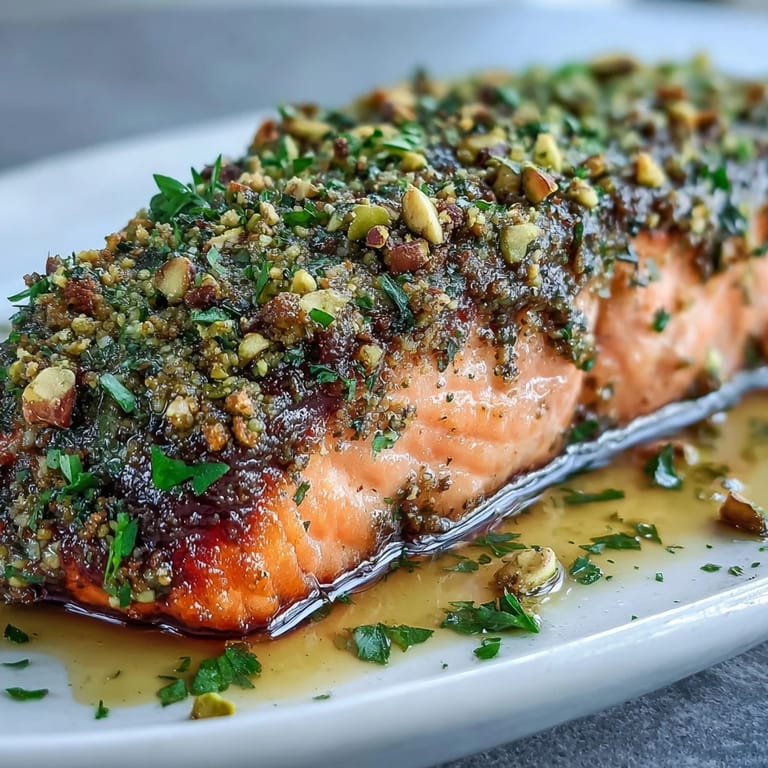
- While the salmon cooks, chop your pistachios finely and mix them with tahini, grated garlic, all three herbs, lemon juice, honey, cumin, salt, and pepper. Stir until it looks like a thick, spreadable paste with visible green flecks.
- Lift and rest the salmon:
- When the fillets are done, use a spatula to carefully transfer them to a paper towel-lined plate. Let them rest for a minute or two to shed excess oil.
- Top with the crust:
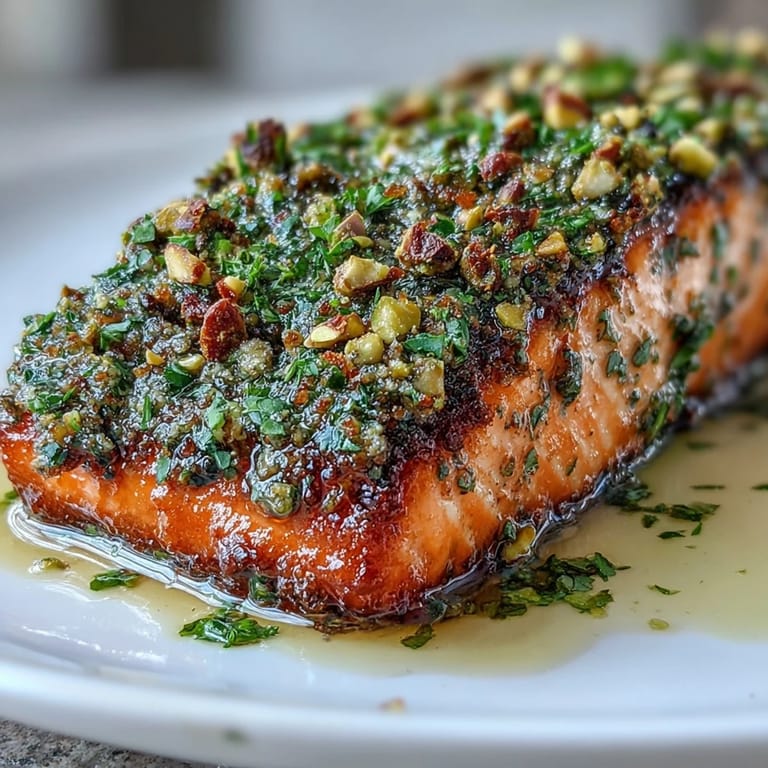
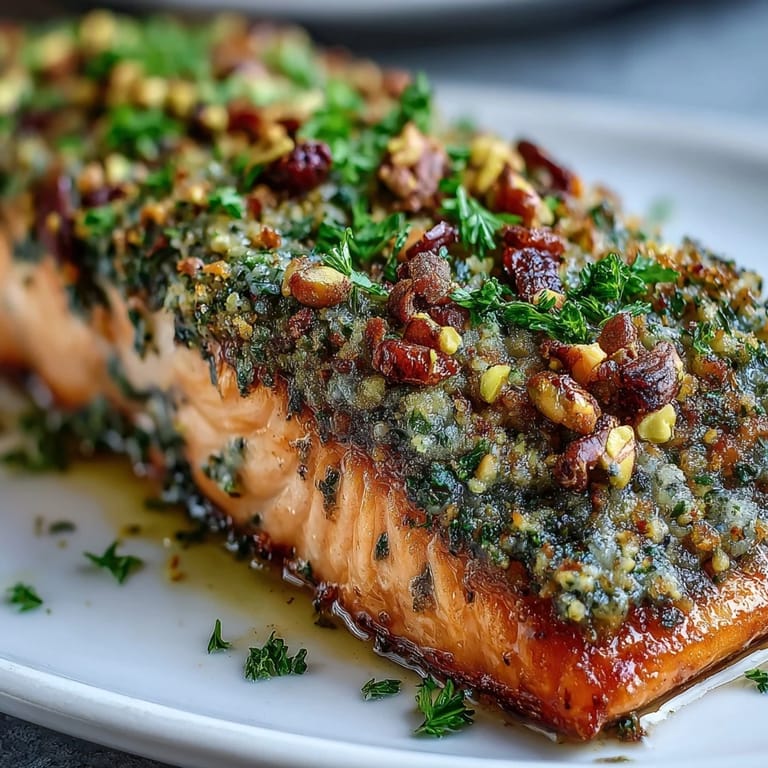
- Spoon a generous layer of the tahini-pistachio mixture over each fillet, pressing gently so it clings. You want full coverage, edge to edge, for maximum flavor and texture contrast.
- Serve and garnish:
- Plate the salmon warm or at room temperature, tucking lemon wedges alongside and scattering extra chopped herbs on top. Finish with a thin drizzle of olive oil for shine and richness.
 Pin It
 The first time I served this, my sister scraped every last bit of crust off her plate with a piece of flatbread and asked for the recipe on the spot. She's never asked me for a recipe before. That's when I knew this wasn't just dinner, it was a keeper, the kind of dish that makes people lean in and pay attention.
Serving Suggestions
I like to serve this with a simple arugula salad dressed in lemon and olive oil, the peppery greens cut through the richness of the tahini. Warm flatbread or pita works beautifully for scooping up any crust that falls off, and roasted cherry tomatoes on the side add a burst of sweetness that plays well with the cumin. Sometimes I'll add a small bowl of yogurt spiked with garlic and dill for anyone who wants an extra creamy element on the plate.
Storage and Reheating
Leftover salmon keeps well in the fridge for up to two days, covered tightly. I actually prefer it cold the next day, flaked over a grain bowl or tucked into a wrap with cucumbers and more herbs. If you want to rewarm it, do so gently in a low oven or let it come to room temperature naturally, high heat will dry it out and undo all that careful confit work.
Make It Your Own
If pistachios aren't your thing, swap them for toasted almonds or walnuts, both work beautifully with tahini. You can also play with the herbs, basil and cilantro make the crust brighter and more summery, while tarragon adds a subtle anise note that feels elegant. For a little heat, stir in a pinch of Aleppo pepper or red chili flakes to the crust mixture.
- Try adding a tablespoon of pomegranate molasses to the crust for a sweet-tart twist.
- Use the leftover confit oil to dress roasted vegetables or toss with pasta and garlic.
- For extra crunch, pop the crusted fillets under the broiler for 60 seconds before serving.
 Pin It
 This dish taught me that slow cooking isn't about patience, it's about trust. Trust the low heat, trust the oil, and trust that something this simple can taste this good.
Recipe FAQs
- → What does confit mean in cooking?
Confit is a gentle cooking method where food is slowly poached in fat or oil at low temperatures, resulting in incredibly tender, moist results. For salmon, this means meltingly soft fillets that stay juicy throughout.
- → Can I make the tahini-pistachio crust ahead of time?
Yes, prepare the crust mixture up to 2 days in advance and store it covered in the refrigerator. Bring to room temperature before spreading on the salmon for easier application.
- → What can I substitute for pistachios?
Almonds or walnuts work beautifully as alternatives. Finely chop them and use the same quantity. Each nut will bring a slightly different flavor profile to the crust.
- → How do I know when the salmon is perfectly cooked?
The salmon is ready when it's just opaque throughout and flakes easily with a fork. It should still be moist and tender, not dry. The low temperature ensures it won't overcook.
- → Can I reuse the confit oil?
Absolutely. Strain the cooled oil through a fine-mesh sieve or cheesecloth and store in an airtight container in the refrigerator. Use it for sautéing vegetables, making vinaigrettes, or future confit preparations.
- → What side dishes pair well with this salmon?
Serve with crisp green salads, roasted vegetables, warm flatbreads, couscous, quinoa, or lemon-dressed greens. The rich salmon pairs beautifully with bright, acidic, or herbaceous sides.