 Pin It
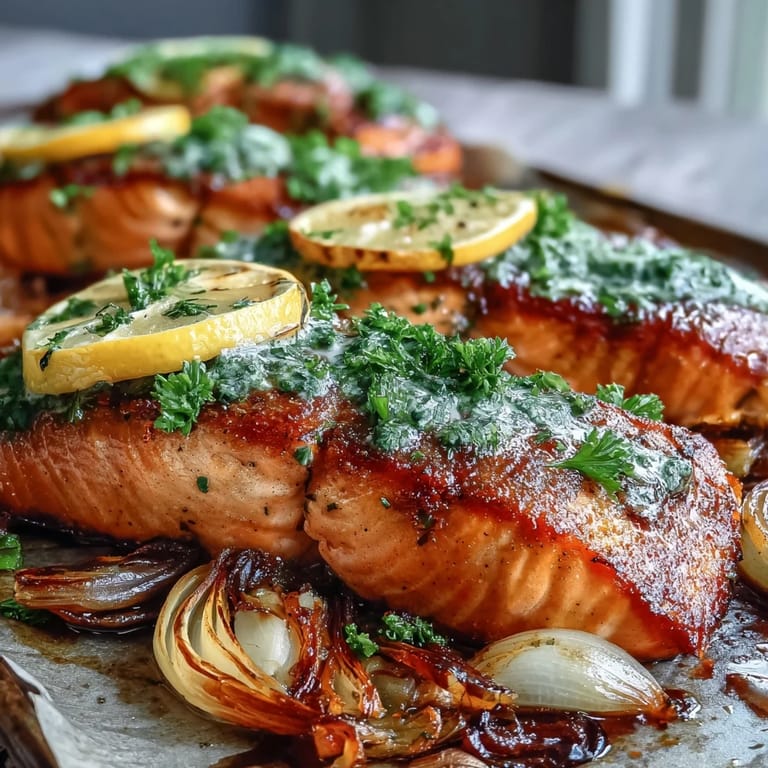
 I used to think cooking fish meant hovering over a stovetop with a spatula, terrified of the salmon sticking or falling apart. Then one weeknight, completely exhausted, I tossed everything onto a single baking sheet and walked away. What came out of that oven was better than anything I'd fussed over before. The leeks had gone sweet and tender, the onions caramelized at the edges, and the salmon stayed perfectly moist under those thin lemon slices. That accidental simplicity became my favorite way to cook fish.
I made this for a friend who swore she didn't like fish, and she ate every bite without realizing what she was enjoying. The leeks were the secret weapon, sweet and mild, almost melting into the pan. She kept asking what made it taste so good, and I just smiled and said good olive oil. Really, it was the way the vegetables soaked up all the flavors while the salmon stayed tender and flaky. Now she asks me to make it every time she visits.
Ingredients
- Salmon fillets, skin-on: The skin protects the fish from drying out and crisps up beautifully if you sear it later, though I usually leave it as is for ease.
- Leeks: These turn silky and sweet when roasted, much gentler than regular onions, and they soak up the olive oil like little flavor sponges.
- Red onion: Adds a slight sharpness and gorgeous color to the pan, plus it caramelizes in a way that makes everything taste richer.
- Olive oil: Use a good one for roasting the vegetables, it makes a real difference in how everything browns and flavors meld.
- Lemon slices: They look pretty, sure, but they also keep the salmon moist and add little bursts of citrus when you bite into them.
- Fresh flat-leaf parsley: The star of the dressing, bright and grassy, it wakes up the whole dish with just a few spoonfuls.
- Garlic: Just one small clove minced fine, enough to add depth without overpowering the delicate fish.
- Dijon mustard: A tiny bit gives the dressing body and a subtle tang that ties the lemon and parsley together.
- Capers: Salty, briny little pops of flavor that make the dressing feel fancy without any extra effort.
- Lemon zest and juice: Fresh is key here, bottled juice just doesn't have the same brightness or fragrance.
- Extra-virgin olive oil: For the dressing, this is where you want your best bottle, it carries all the flavors and coats the salmon beautifully.
Tired of Takeout? 🥡
Get 10 meals you can make faster than delivery arrives. Seriously.
One email. No spam. Unsubscribe anytime.
Instructions
- Get the oven ready:
- Preheat to 400°F so it's nice and hot when the vegetables go in. A properly heated oven makes all the difference in getting those edges caramelized.
- Prep the vegetables:
- Spread the leeks and red onion on a large baking sheet in a single layer, drizzle with olive oil, season with salt and pepper, and toss with your hands to coat evenly. Don't crowd them or they'll steam instead of roast.
- Start roasting:
- Slide the sheet into the oven and let the vegetables roast for 10 minutes. You'll start to smell the onions sweetening and the leeks softening.
- Add the salmon:
- Pull the pan out, nestle the salmon fillets skin-side down right among the vegetables, and lay lemon slices over the top. The vegetables cushion the fish and keep it from sticking.
- Finish roasting:
- Return the pan to the oven and roast for 12 to 15 minutes, until the salmon is just cooked through and flakes easily. The edges of the vegetables should be golden and tender.
- Make the dressing:
- While everything roasts, combine parsley, garlic, Dijon, capers, lemon zest, olive oil, and lemon juice in a small bowl and stir well. Taste and adjust the salt and pepper until it sings.
- Serve:
- Transfer the salmon and vegetables to plates and spoon the bright green dressing generously over the top. Serve immediately while everything is hot and fragrant.
 Pin It
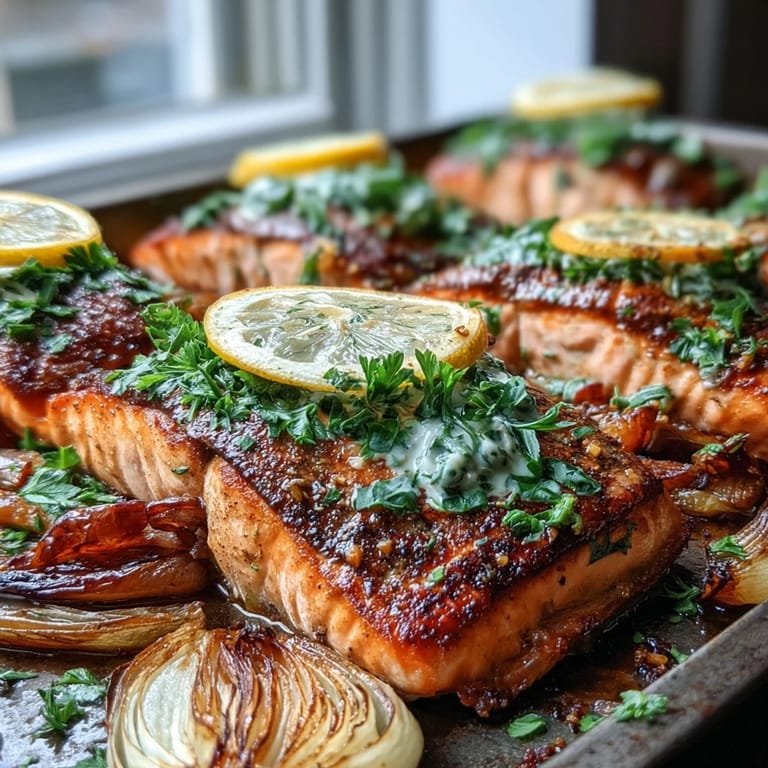
 The first time I served this at a dinner party, I plated it straight from the oven and drizzled that parsley dressing over the top at the table. Everyone went quiet for a moment, then someone said it tasted like something from a restaurant. I didn't tell them how little effort it actually took. Sometimes the best cooking is just knowing when to step back and let good ingredients do their thing.
Choosing Your Salmon
I always look for fillets that are bright in color and smell like the ocean, not fishy or sharp. Skin-on is my preference because it protects the flesh and crisps up if you want to sear it later, though for this recipe it just keeps everything moist. If your fishmonger has wild-caught, grab it, the flavor is deeper and the texture firmer. Farmed salmon works too and is often more affordable, just make sure it looks fresh and firm to the touch. I've also swapped in trout or even thick cod fillets when salmon wasn't available, and the recipe held up beautifully.
Getting the Most Out of Leeks
Leeks hide a lot of dirt between their layers, so I always slice them first, then soak the rounds in a bowl of cold water and swish them around. The grit sinks to the bottom and the clean leeks float on top, making it easy to scoop them out. Don't throw away the dark green tops, I save them in the freezer for making stock. When roasted, leeks become incredibly sweet and almost creamy, they're nothing like raw onions. They're also more delicate, so make sure to cut them into even rounds so they cook at the same rate as the onions.
Variations and Serving Ideas
This dish is flexible enough to change with the seasons or whatever you have on hand. I've added cherry tomatoes in the summer, they burst and add a sweet acidity that pairs beautifully with the parsley dressing. In the fall, I sometimes toss in chunks of butternut squash with the leeks for a heartier feel. The dressing is where you can really play around, swap the parsley for cilantro or basil, add a pinch of red pepper flakes for heat, or stir in a spoonful of Greek yogurt for creaminess.
- Serve it over a bed of couscous or quinoa to soak up the dressing and vegetable juices.
- Pair it with a simple arugula salad dressed with lemon and olive oil for a light, balanced meal.
- Leftovers are excellent flaked over toast with a poached egg the next morning.
 Pin It
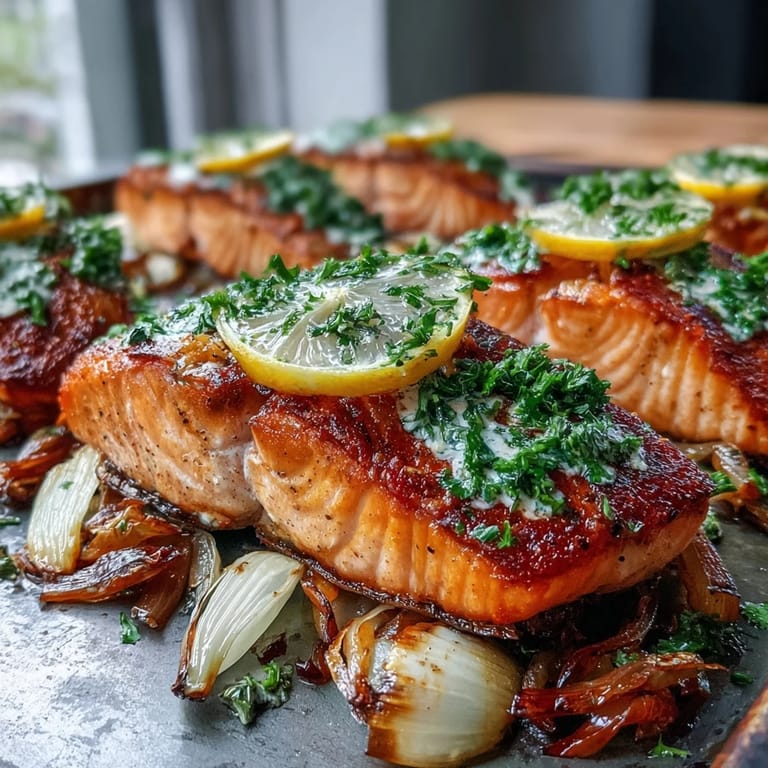
 This recipe taught me that the best meals don't always need a long ingredient list or complicated techniques, just good timing and a little trust. I hope it becomes one of those dishes you turn to on busy nights when you still want something that feels special.
Recipe FAQs
- → Can I use frozen salmon fillets?
Yes, but ensure they are completely thawed and patted dry before roasting to achieve the best texture and prevent excess moisture on the pan.
- → What can I substitute for leeks?
You can use sliced fennel, baby bok choy, or additional onions. Adjust cooking time slightly depending on the vegetable's density.
- → How do I know when the salmon is done?
The salmon should flake easily with a fork and reach an internal temperature of 145°F. It will appear opaque throughout with a slightly translucent center for medium doneness.
- → Can I make the parsley dressing ahead?
Absolutely. The dressing can be prepared up to 2 days in advance and stored in an airtight container in the refrigerator. Stir well before serving.
- → What other fish works well with this method?
Trout, cod, halibut, or sea bass are excellent alternatives. Adjust cooking time based on fillet thickness—thicker cuts may need a few extra minutes.
- → How should I store leftovers?
Store cooked salmon and vegetables separately from the dressing in airtight containers for up to 3 days. Reheat gently in the oven at 300°F to maintain texture.